

Essential Daily Living Aids for Seniors: 2026 Guide
Table of Contents
- Quick Comparison: Essential Daily Living Aids at a Glance
- Mobility and Transfer Aids: Walkers, Bed Rails, and Support Belts
- Bathroom Safety and Hygiene Equipment for Fall Prevention
- Adaptive Equipment for Home Safety: Kitchen, Dining, and Dressing Tools
- Daily Living Aids for Arthritis: Reducing Joint Strain at Home
- Home Modifications for Aging in Place: DIY vs. Professional Installation
- Maintenance and Cleaning: Keeping Daily Living Aids Reliable
- The Emotional Side of Using Daily Living Aids
- Frequently Asked Questions
Last Updated: September 15, 2026
Quick Comparison: Essential Daily Living Aids at a Glance
Essential daily living aids keep everyday tasks, from standing up to getting dressed, within reach for seniors and their caregivers. This guide from EnhDme covers the categories that matter most and how to choose well.
The right daily living aids do more than prevent falls: they protect independence, reduce caregiver strain, and give families a plan for aging in place. Below we cover mobility, bathroom, kitchen, and dressing aids, plus maintenance and the emotional side most guides skip.
CDC older adult fall prevention resources
| Category | What It Solves | Who It's For | Typical Setup |
|---|---|---|---|
| Mobility and transfer aids | Standing, walking, bed transfers | Balance or strength loss | Tool-free, minutes |
| Bathroom safety equipment | Wet-area falls, low seating | Hip, knee, or arthritis limits | Tool-free brackets |
| Kitchen and dining tools | Grip strain, spills | Arthritis, tremor | No installation |
| Dressing and grooming aids | Bending, fine motor tasks | Post-surgical, stiffness | No installation |
| Home modifications | Reach, thresholds, lighting | Aging in place | DIY or pro |
Mobility and Transfer Aids: Walkers, Bed Rails, and Support Belts
A rolling walker with a padded seat is the single most useful purchase for most families, covering walking, resting, and carrying in one frame. Look for lockable hand brakes, a seat height that lets your parent sit with feet flat on the floor, and wheels that roll smoothly from carpet to pavement.

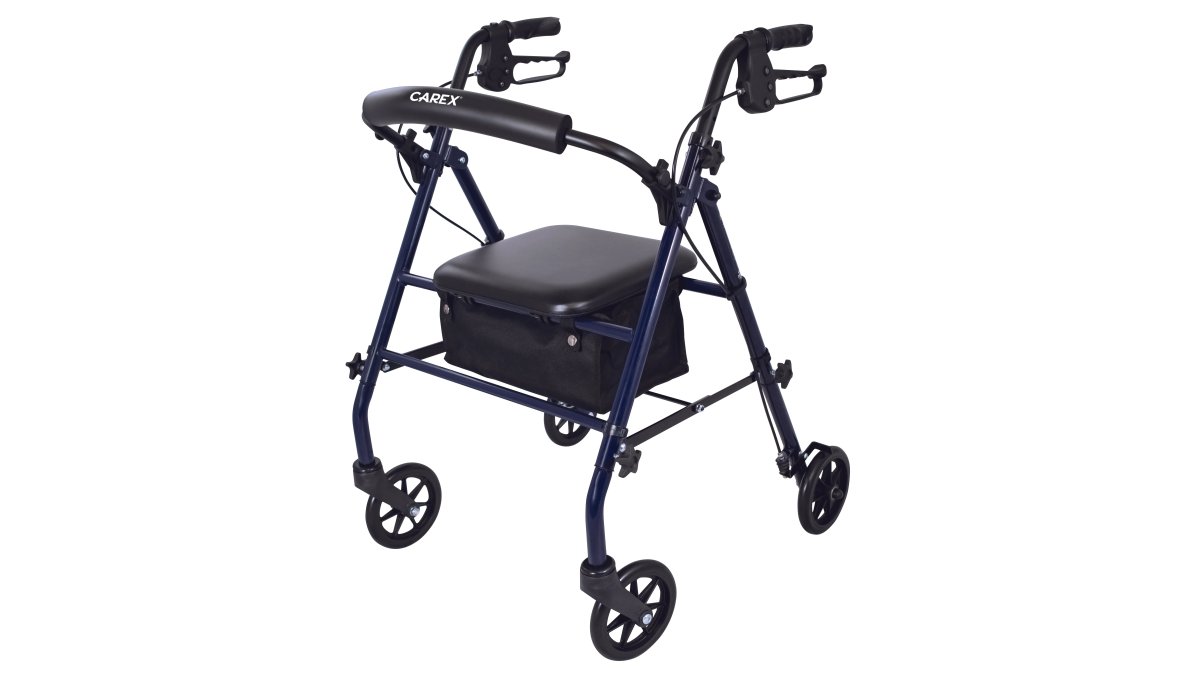
Rolling Walkers with Seats: Stability for Longer Outings
Steel frames feel steadier than aluminum under heavier users, and the weight difference rarely matters indoors. Check the weight rating, seat width, and whether the frame folds flat for the car.
Bed Assist Handles and Gait Belts for Safe Transfers
Bed rails that slide under the mattress install without tools and give a firm grip for sitting up. Gait belts give the caregiver something secure to hold during transfers, protecting both people. Gripping a parent's arm or clothing instead is a common mistake; a proper belt takes seconds and prevents shoulder injuries.
Bathroom Safety and Hygiene Equipment for Fall Prevention
The bathroom is where most at-home falls happen, and almost all are preventable with two or three inexpensive changes. A shower chair, a raised toilet seat, and a grab bar cover the three riskiest moments: stepping in, sitting down, and standing back up.
Shower Chairs and Bath Seats: Adjustable Support in Wet Areas
An adjustable shower chair with a backrest and drainage holes lets your parent sit through a full shower without fatigue. Adjust the legs so the seat sits level, and confirm the rubber tips sit flat on the tub floor. A bath lift helps if lowering into the tub is the hard part.
Raised Toilet Seats and Commode Chairs: Dignity and Independence
A raised toilet seat with adjustable armrests adds height and use in one step, which matters after hip or knee surgery. For bedrooms far from a bathroom, a bedside commode removes a nighttime walk entirely. Choose one with non-skid feet and a removable back bar so it can also fit over an existing toilet.

Adaptive Equipment for Home Safety: Kitchen, Dining, and Dressing Tools
Adaptive equipment for home safety works best when it targets one specific motion your parent struggles with. Bending to the floor, gripping a jar lid, and steadying a spoon are three different problems, each with a cheap, targeted fix.
Long-Handled Shoe Horns and Dressing Aids
A 23-inch metal shoe horn lets your parent put on shoes from a seated position with no forward bending, which matters after hip surgery or with chronic back pain. Rigid metal holds its shape against stiff heels where plastic versions bend or snap. Button hooks and sock aids handle the rest of the dressing routine.
Mealtime Bibs and Overbed Tables for Comfortable Dining
A waterproof, machine-washable adult bib with a crumb pocket cuts laundry and protects dignity during meals. An overbed table that pivots and tilts brings the surface to a recliner or bed without a forward lean, making eating and reading comfortable again.
Daily Living Aids for Arthritis: Reducing Joint Strain at Home
Daily living aids for arthritis should reduce force and range of motion, not just add a gadget. Jar openers, built-up handles, and reachers all work on the same principle: they move the effort from small joints to larger ones.
Start with the tasks that cause pain, not the ones that look difficult. Many families buy a drawer full of aids and use two. Test a jar opener on the tightest lid in the house, and check that any reacher can lift a full can before you rely on it. Occupational therapists can advise on specific grip and reach limits.
Home Modifications for Aging in Place: DIY vs. Professional Installation
Home modifications for aging in place split cleanly into two groups: things you can do in an afternoon, and things that need a licensed contractor. Getting that line right saves money and prevents injuries.
The DIY-Friendly List
These projects are within reach for a handy homeowner with basic tools:
- Plug-in night lights along the path from bedroom to bathroom. Choose warm, low-glare models with a dusk-to-dawn sensor.
- Handheld showerhead with a 6-foot hose and a suction or screw-mounted holder, so your parent can shower seated without standing to rinse.
- Threshold ramps for doorways with a lip under about 1.5 inches. Rubber or aluminum ramps in the correct rise-to-run ratio are stable and removable.
- Cord and rug management. Tape down or reroute cords, and remove or double-sided-tape loose rugs. This is the highest-value, lowest-cost change in the house.
- Grab bars into solid blocking. If you can locate a stud or installed blocking with a stud finder, a grab bar screwed into it is a sound DIY job. Use the fasteners the bar came with, and never substitute drywall anchors.
- Lever-style door and faucet handles to replace round knobs, reducing grip strain for arthritic hands.
- Rocker-style light switches to replace small toggles, and illuminated switch plates for nighttime visibility.
The Hire-a-Pro List
These projects involve structure, electricity, or load-bearing elements, and a mistake can be dangerous:
- Grab bars where there is no blocking. A pro can open the wall, add blocking, and patch it cleanly.
How to Decide
Ask three questions before starting any project:
A Room-by-Room Walkthrough Checklist
Budgeting Time and Sequencing
Maintenance and Cleaning: Keeping Daily Living Aids Reliable
A Monthly Five-Minute Safety Check
Cleaning by Material
Keeping a Simple Log
When to Retire an Aid
The Emotional Side of Using Daily Living Aids
National Institute on Aging resources for caregivers
Frequently Asked Questions
What are the most common daily living aids for seniors?
The most common daily living aids for seniors include rolling walkers with seats, bed assist handles, raised toilet seats, shower chairs, long-handled shoe horns, and mealtime bibs. These tools address mobility, bathroom safety, dressing, and dining. The right combination depends on individual needs, such as arthritis, balance issues, or recovery from surgery. Start with aids that address the most urgent safety concern, then add others as needed.
How do I choose adaptive equipment for home safety?
Focus on three factors: the user's specific mobility or dexterity challenge, the layout of your home, and the weight capacity of the aid. For example, a bed assist handle works well for someone who struggles to sit up, while a gait belt helps caregivers during transfers. Check product specifications carefully and consult an occupational therapist if you are unsure which adaptive equipment for home safety fits your situation.
What daily living aids for arthritis reduce joint strain?
Long-handled shoe horns, jar openers, button hooks, and two-handled cups are especially helpful for arthritis because they reduce the need to bend, grip tightly, or twist joints. A raised toilet seat with armrests also lowers knee and hip strain during bathroom visits. Look for tools with padded grips and lightweight construction. These daily living aids for arthritis let users complete daily tasks with less pain and more independence.
How can I make home modifications for aging in place on a budget?
Start with low-cost changes: add grab bars in the bathroom, remove loose rugs, improve lighting in hallways, and install a raised toilet seat. These small updates can significantly reduce fall risk. For larger projects like widening doorways or installing a stair lift, get quotes from licensed contractors and compare costs. Prioritize modifications that address the areas where your family member struggles most.
How do I clean and maintain daily living aids?
Most daily living aids wipe clean with mild soap and water or standard disinfectant wipes. Aluminum and steel frames resist rust, but check rubber tips and suction cups regularly for wear. Replace worn parts promptly to maintain safety. For fabric items like gait belts and bibs, follow the manufacturer's washing instructions. A monthly inspection of all aids helps catch loose bolts, cracked plastic, or worn grips before they cause problems.
Leave a comment