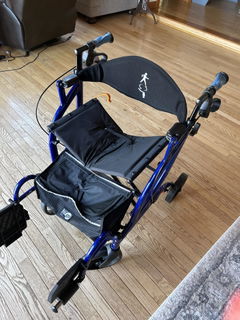
MedaCure Wings Bariatric Wheelchair, 22-30 in, 500-700 lb
A Heavy-Duty Bariatric Wheelchair, from 22" to 30" Wide
A standard wheelchair that’s too narrow or not rated high enough is uncomfortable and unsafe. The MedaCure Wings K7 Bariatric Wheelchair is built on a reinforced heavy-gauge steel frame with a double crossbrace and steel side panels, in seat widths from 22" to 30". The 22" and 24" models are rated for 500 lbs, and the 26", 28", and 30" models for 700 lbs.
Padded, removable desk-length arms let the chair pull up to a table and come off for side transfers. Large 24" rear wheels let the user push themselves, an integrated rear step bar helps a caregiver tip the chair over curbs, and the whole chair folds for storage and transport. Choose swing-away footrests with extra-wide footplates, or elevating leg rests for someone who needs their legs raised.
Key Features
- Bariatric capacity: 500 lbs on 22" and 24" seats; 700 lbs on 26", 28", and 30" seats.
- Reinforced steel frame: heavy-gauge steel with a double crossbrace, steel side panels, and a chip-resistant silver vein finish.
- Padded desk-length arms: removable for side transfers; desk length lets the chair pull up to a table.
- Two leg rest options: swing-away detachable footrests with extra-wide composite footplates, or adjustable elevating leg rests.
- 24" rear wheels: composite mag wheels with dual-axle positions, for self-propelling.
- 8" front casters: solid rubber tires on reinforced aluminum forks.
- Push-to-lock brakes: chrome steel wheel locks.
- Curb-assist step bar: helps a caregiver tip the chair over curbs and bumps.
- Heavy-duty nylon upholstery: padded, flame-retardant, mildew-resistant, and easy to sanitize.
- Folding frame: folds for storage and transport.
Choose the seat width by measuring the person across the widest part of their hips or thighs while seated, then add about 2", so they fit without rubbing the side panels. The 26" and wider models also have a deeper 20" seat. Before ordering a wide chair, measure every doorway it needs to pass through: a bariatric wheelchair is several inches wider overall than its seat. Choose elevating leg rests only if the person needs their legs raised; swing-away footrests are lighter and simpler for everyday use.
Technical Specifications
- Seat Widths22", 24", 26", 28", 30"
- Seat Depth18" (22"–24" models); 20" (26"–30" models)
- Weight Capacity500 lbs (22"–24"); 700 lbs (26"–30")
- FrameReinforced heavy-gauge steel, double crossbrace, steel side panels
- ArmsPadded, removable, desk length
- Leg RestsSwing-away footrests or elevating leg rests
- Rear Wheels24" composite mag, dual-axle positions
- Front Casters8" solid rubber, aluminum forks
- BrakesPush-to-lock, chrome steel
- UpholsteryPadded heavy-duty nylon, flame-retardant, mildew-resistant
- FoldingYes
- ManufacturerMedaCure
- SeriesWings K7
Which seat width do I need?
Measure the person across the widest part of their hips or thighs while seated, and add about 2". Choose the seat width closest to that number without going under it.
Swing-away footrests or elevating leg rests?
Swing-away footrests are standard and swing out of the way for transfers. Elevating leg rests lift and support the legs, for someone whose doctor or therapist has said their legs need to be raised.
Will it fit through my doorways?
A wheelchair is several inches wider overall than its seat, because of the wheels and side frames. Measure doorways before ordering, especially for the 26" and wider models.
⚠ WARNING: This product can expose you to chemicals known to the State of California to cause cancer and birth defects or other reproductive harm. For more information go to www.P65Warnings.ca.gov.
Disclaimer: Specifications are provided for reference and may be updated by the manufacturer without notice. Weight capacity includes anything the user is wearing or carrying. Follow the owner’s manual for use and transfers.