

5 Best Pressure Relief Mattresses for Bedbound Patients
The Surface Beneath Them: Protecting Skin Through the Long Hours in Bed
When someone you love spends most of the day and night in bed, the mattress does quiet, constant work. The right one helps protect fragile skin between every turn you make. Here's how the main types differ, and which of five proven systems fits your situation.
Every year, about 2.5 million Americans develop pressure ulcers, and roughly 60,000 die as a direct result. For a family caring for someone bedbound at home, those numbers can feel close. Turning, skin checks, and good nutrition are the core of prevention. The right mattress is what keeps working in the hours between.
Last Updated: October 15, 2026
What Pressure Relief Mattresses Do for Bedbound Patients
When someone spends most of their day and night in bed, the mattress underneath becomes one of the most important pieces of equipment in their home.
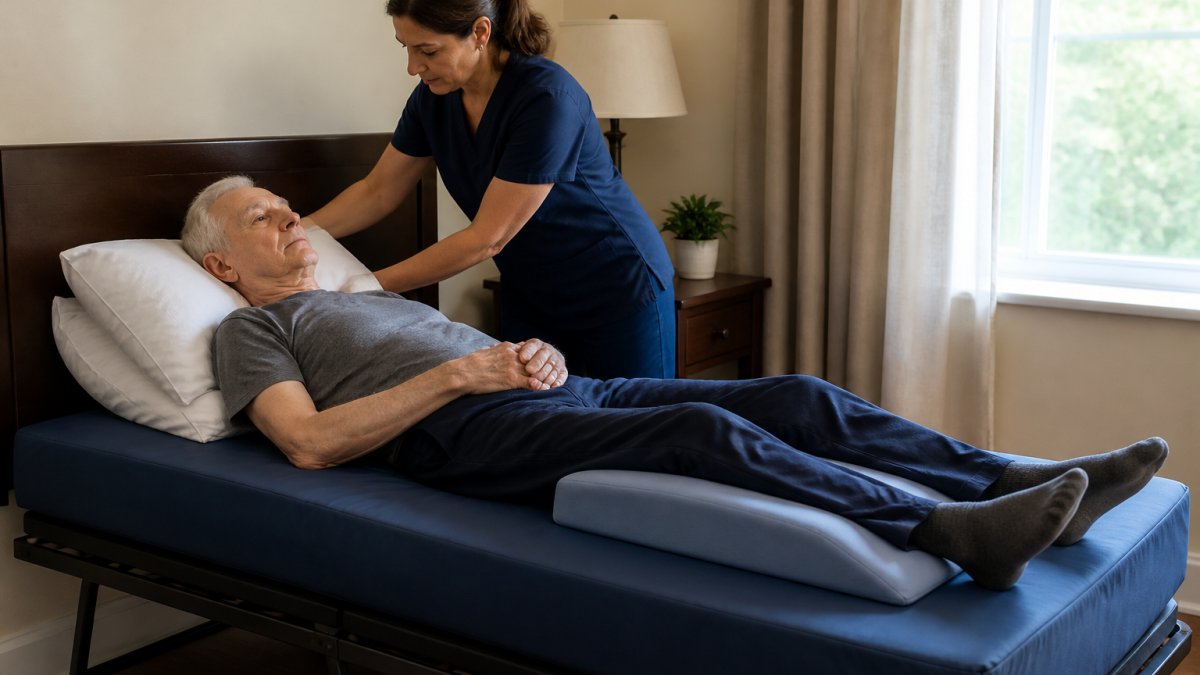
Pressure relief mattresses redistribute body weight across a wider surface area, reducing the concentrated pressure points that develop on standard mattresses. This matters most for people with limited mobility who cannot reposition themselves.
At EnhDme, we've worked with families managing long-term bed rest, and pressure relief mattresses consistently make a noticeable difference in daily comfort and skin condition. The best pressure relief mattresses combine support technologies: air cells that adjust to weight, specialized foam layers, or both for maximum adaptability.
The most common mistake is assuming all therapeutic mattresses work the same way. They don't. Understanding the difference between alternating pressure systems, low air loss surfaces, and foam-based redistribution will help you match the right technology to your specific situation.
How Alternating Pressure Mattresses Work
An alternating pressure mattress uses air cells connected to an electric pump that continuously inflates and deflates them in a programmed sequence. This creates a dynamic surface that shifts weight-bearing zones, so no single area of skin carries pressure for long.

The pump cycles the air cells so some inflate while others deflate, then reverses. This constant movement redistributes pressure and encourages circulation to areas that would otherwise experience compression, making it a genuine therapeutic tool for people bedbound for weeks or months.
The key advantage is that alternating pressure systems work continuously without any action from the person in bed. Many also include adjustable settings so caregivers can tune firmness and cycle speed to match comfort preferences and skin sensitivity.
Alternating pressure mattresses are generally recommended for people at higher risk of pressure injuries, or those who already have skin damage that needs active support during healing. If someone is bedbound and cannot reposition themselves, an alternating pressure system offers some of the most active pressure management available at home. Ask their doctor or nurse which type fits their risk level.
Understanding Low Air Loss Mattress Systems
A low air loss mattress combines pressure redistribution with continuous airflow. Tiny perforations in the surface allow gentle air circulation that manages moisture and heat, two factors that also wear down skin over time.
When moisture builds up on a standard mattress, skin becomes macerated (soft and waterlogged) and vulnerable. A low air loss system draws moisture away and maintains a drier microclimate, especially valuable for people who perspire heavily or stay in one position where sweat and body heat accumulate.
Many of the best systems for bedbound patients combine alternating pressure with low air loss, delivering dynamic pressure shifting and microclimate management in one surface.
Quick Comparison: Five Top Pressure Relief Mattresses
| Mattress | Type | Best For | Starting Price |
|---|---|---|---|
| Protekt Aire 6000 | All-air alternating pressure | Long-term bed rest, all-air preference | $729.00 |
| Rhythm SoftCaire DX | Alternating + low air loss | Dual therapy, heel protection | $699.00 |
| McKesson Alternating Pressure & Low Air Loss | Professional-grade hybrid | Quiet operation, facility settings | $569.00 |
| Drive Medical Balanced Aire | Convertible hybrid | Flexibility between powered/non-powered | $1,314.00 |
| Protekt Supreme Support Self-Adjusting | Non-powered air cells | Quiet, no electricity needed, 5 sizes | $799.00–$1,499.00 |
1. Protekt Aire 6000: All-Air Support for Long-Term Bed Rest
This all-air mattress uses cell-on-cell construction where support comes entirely from interconnected air cells rather than a foam base. The entire surface adjusts to body contours through air pressure alone, creating deep, even immersion without bottoming out.
Protekt Aire 6000 Alternating Pressure Mattress

Alternating pressure with low air loss, a digital pump, and a quick-release valve for rapid deflation. Comes in 80" and 84" lengths, with optional raised-rail versions, starting at $729 for the complete system.
View the Protekt Aire 6000It includes a digital pump with adjustable settings and a quick-release valve for rapid deflation.
What works: The all-air design delivers consistent support without the foam breakdown that happens over time on hybrid systems. The quilted, water-resistant cover wipes clean easily, and two length options accommodate taller individuals.
What to consider: All-air systems require electricity, so power outages mean you need a backup plan. The mattress is heavier than foam alternatives, and replacement parts are specific to your configuration. The product page doesn't list a weight capacity, so confirm it before ordering.
Best for: People who want maximum pressure redistribution from an all-air surface and have reliable electricity access.
2. Rhythm SoftCaire DX: Dual Therapy with Heel Protection
This system combines alternating pressure with low air loss using 20 durable air cells in a two-layer structure. The top layer alternates pressure while the lower layer maintains constant support, so the mattress stays supportive even during a power outage.
The digital pump delivers 8 liters per minute of airflow with auto-sensing technology that adjusts pressure based on body weight.
Rhythm SoftCaire DX Alternating Pressure Mattress
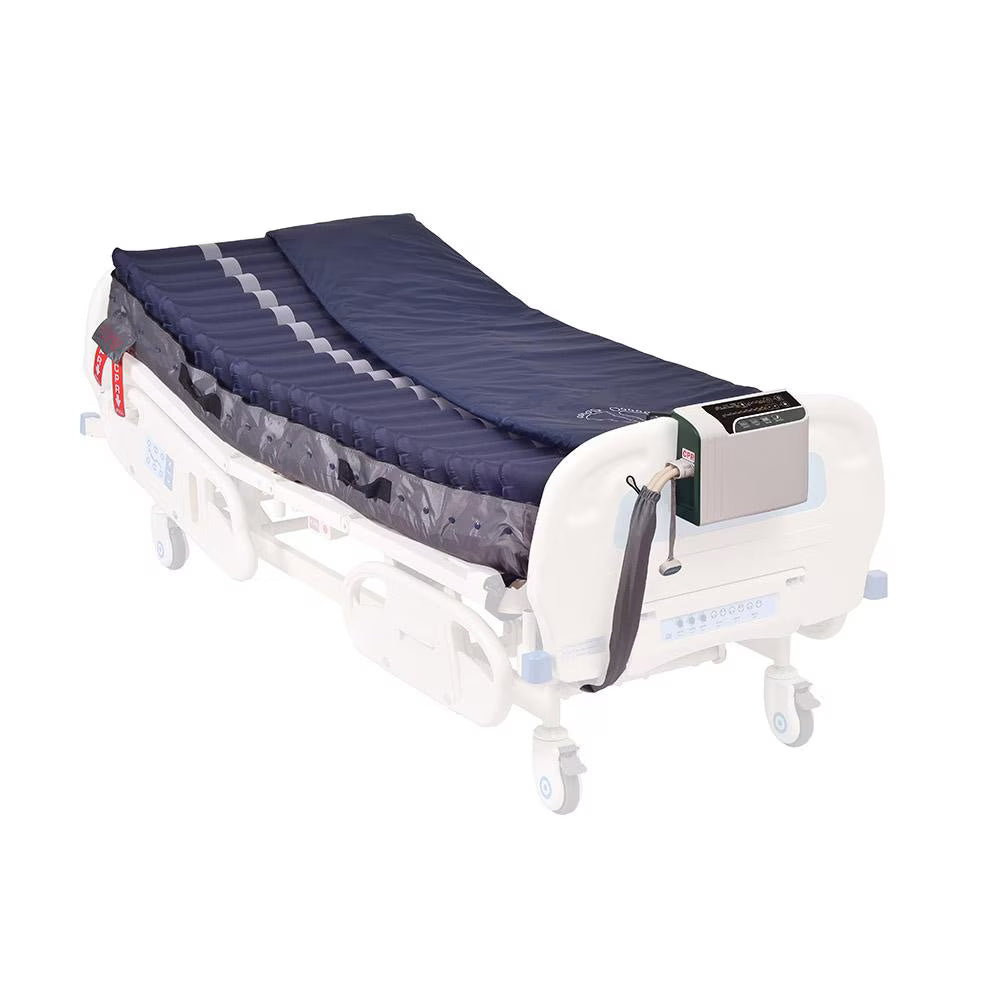
A heel-float setting deflates single cells to take pressure off the heels, and a one-handed CPR quick-release deflates the mattress fast. It holds up to 450 lb, with a bariatric version rated to 660 lb.
View the SoftCaire DXWhat works: The dual-therapy approach addresses both pressure shifting and microclimate management.
What to consider: This premium system has more features than many bedbound patients need, and the digital pump adds complexity.
Best for: Caregivers wanting comprehensive pressure management with auto-sensing and heel protection, and people who need both active pressure relief and moisture management.
3. McKesson Alternating Pressure & Low Air Loss: Quiet, Professional-Grade Support
This system pairs active air cell technology with continuous airflow management for professional-grade use in residential and facility settings.
Customizable digital controls let caregivers adjust cycle frequencies and firmness independently. The fluid-resistant cover is low-friction and vapor-permeable for easy cleaning, and a rapid CPR deflation valve sits at the head section.
McKesson Alternating Pressure & Low Air Loss Mattress System – 350 lb
An 80" x 36" x 8" mattress with a quiet compressor, an LED control panel for pressure and cycle settings, and a zippered, wipe-clean cover. A complete system for $569.
View the McKesson SystemWhat works: The quiet compressor is genuinely valuable in home environments, customizable controls give caregivers precise adjustment, and professional-grade materials suggest durability for long-term use.
What to consider: The 350-pound capacity is lower than some alternatives, so heavier individuals may need a different system. Like all powered systems, it requires reliable electricity, and the advanced interface means more settings to learn.
Best for: Home care situations where quiet operation matters, or facilities managing multiple patients.
4. Drive Medical Balanced Aire: Convertible Hybrid for Flexibility
This mattress offers genuine flexibility: it functions as a self-adjusting non-powered mattress or converts into a powered alternating pressure system when you connect its pump.
The core contains 12 tri-laminated foam-filled air cells that self-adjust to body weight and position without electricity. When active therapy is needed, you connect the included 8 LPM pump to convert to powered alternating pressure.
Drive Medical Balanced Aire Self-Adjusting Convertible Mattress with Pump Kit
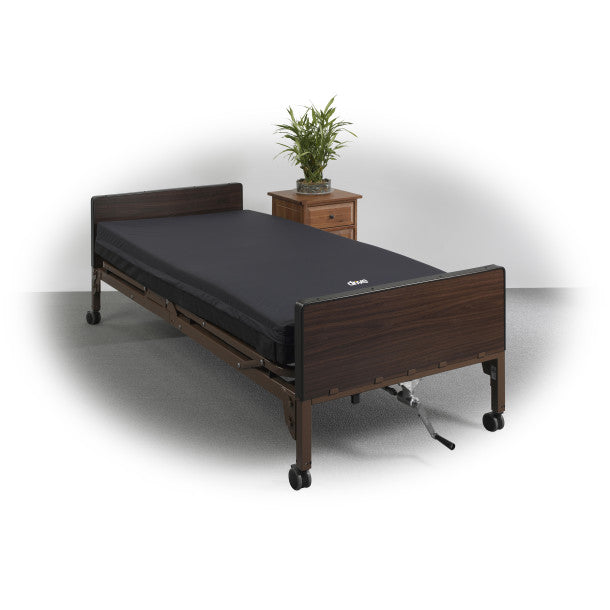
Twelve foam-filled air cells under a 2.5" memory foam topper, plus an 8 LPM pump in the kit for when you need active alternating pressure. Holds up to 500 lb in the standard width.
View the Balanced AireWhat works: The convertible design means one mattress adapts as care needs change, and non-powered mode provides peace of mind during power outages.
What to consider: The higher price reflects the dual-mode capability and premium foam topper. Its 500-pound capacity is among the higher ratings in this group, but two operating modes require understanding both setups.
Best for: Situations where care needs may evolve, people who want maximum flexibility and a non-powered backup, and those who need a higher weight capacity.
5. Protekt Supreme Support: Quiet, Non-Powered Support
This mattress works without a pump. Ten interconnected air cells with pressure-equalizing valves move air between cells as your loved one shifts, so the surface adjusts to them on its own. A gel-infused memory foam top layer helps draw away heat, and a sloped heel section shifts pressure from the heels toward the calves.
Protekt Supreme Support Self-Adjusting Mattress
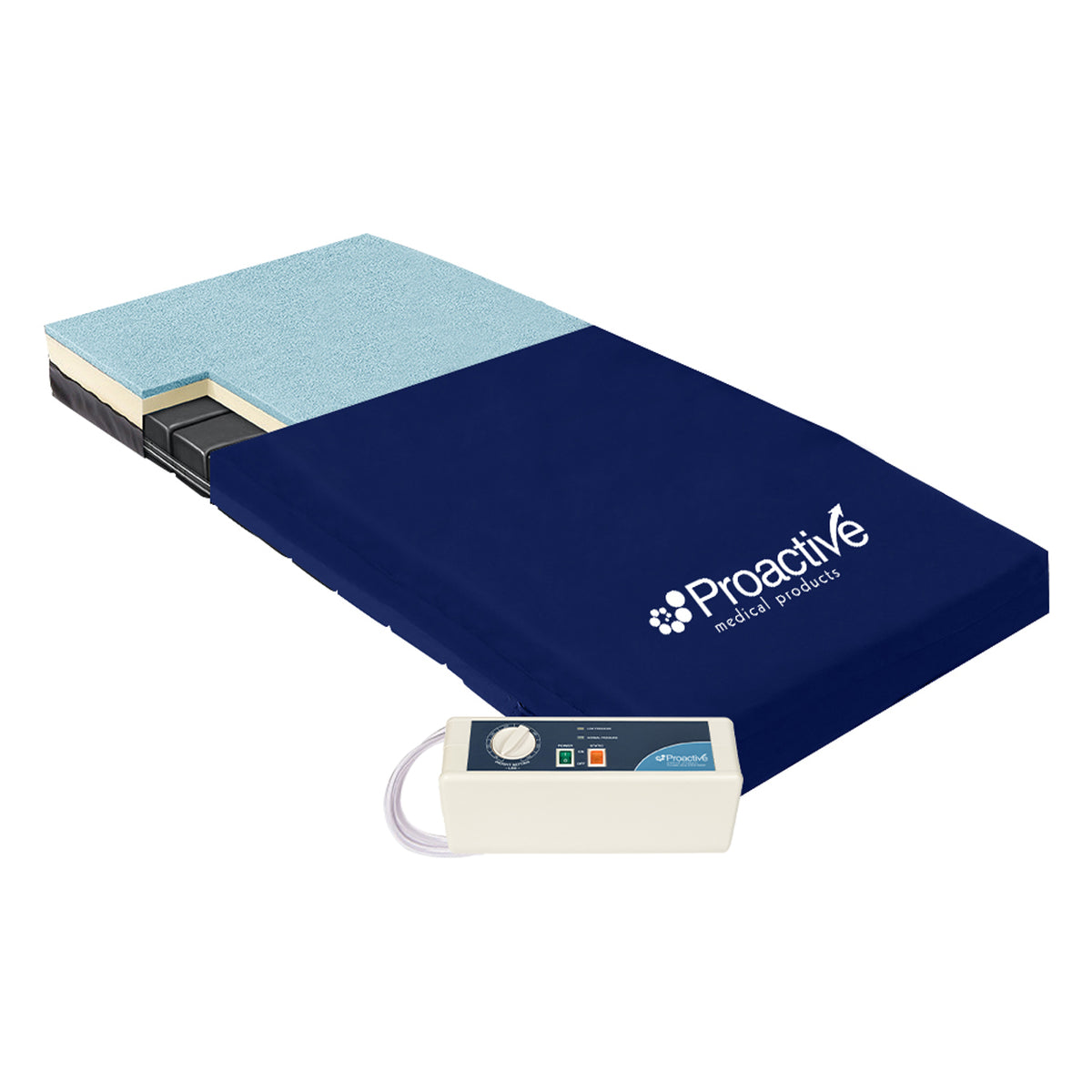
Five sizes from 35" x 80" to 54" x 80", with weight capacity up to 700 lb depending on width. An optional pump, sold separately, can add alternating pressure later.
View the Supreme SupportWhat works: No pump noise, no cords, and nothing to fail in a power outage. Wide sizes suit larger beds and bariatric needs.
What to consider: Without a pump, it doesn't actively cycle pressure, so it may not be enough on its own for someone at very high risk or with existing skin damage. Measure the bed frame before ordering.
Best for: People at moderate risk who want quiet, low-maintenance support, and families who need a wider or higher-capacity mattress.
Choosing a Pressure Relief Mattress by Care Needs and Risk Level
Selecting the right mattress depends on three factors: how long someone will be bedbound, their current skin condition, and whether they can reposition themselves independently. A doctor, home health nurse, or wound care nurse can assess pressure injury risk and recommend a surface.
-
For long-term bed rest (weeks to months or indefinite)
An alternating pressure system becomes a genuine investment in skin health.
-
For people with higher weight capacity needs
The convertible hybrid supports up to 500 pounds, and the Protekt Supreme Support is rated up to 700 pounds in its wider sizes.
-
For quiet operation in shared spaces
A whisper-quiet pump is the standout choice. Pump noise matters more than people expect when multiple people share a bedroom.
-
For maximum flexibility
A convertible design lets you start non-powered and add a pump later if needs change, avoiding the expense of replacing the entire mattress.
The most common mistake is choosing based on price alone without matching the mattress type to actual care needs. A budget foam mattress might feel adequate initially but may not give enough pressure relief for someone bedbound long-term. Conversely, a high-end alternating system is overkill for someone who can reposition independently. Match the technology to the situation.
What to Expect: Setup, Daily Use, and Maintenance
Powered mattress systems arrive ready to use, with setup typically taking 15-20 minutes. Lay the mattress on the existing bed frame, connect the pump's air hose, hang the pump at the foot of the bed, and plug it in.
Daily use is straightforward: the person rests on the mattress while the pump handles the pressure cycling. Many systems include adjustable modes such as static firmness for transfers, alternating pressure for extended rest, and maximum firmness for sitting up.
Maintenance is minimal but important. Check air hoses weekly for kinks that block airflow, wipe the cover with a damp cloth for spills, and wash removable covers following the manufacturer's instructions.
Foam mattresses require even less maintenance: rotate them as the manufacturer recommends (many therapeutic foam mattresses are one-sided and shouldn't be flipped), wipe spills immediately, and use a removable, washable cover to extend their useful life.
An air mattress can sit higher than the one it replaces, and it compresses at the edges. If the bed has rails, check that they still rise well above the mattress surface and that no gaps open between the rail and the mattress, where a person could become trapped. Ask the supplier about rail height before you set up.
is the high end of what it can cost to care for a single pressure ulcer in the U.S., with even the low end above $20,000. Daily turning, skin checks, and the right surface are far easier on everyone than treating a wound once it forms.
Why EnhDme Customers Choose These Mattresses
When family caregivers and home care agencies work with us, they're looking for equipment they can trust to perform consistently and improve daily comfort. The mattresses in this guide represent the balance that matters most: proven pressure redistribution technology and features that address the real challenges of bedbound care.
Each option available through EnhDme's support mattress collection comes with detailed product documentation and our team's guidance on matching the right system to your situation.
The difference between a mattress that gives real pressure relief and one that simply feels comfortable is significant, and for someone bedbound it can affect whether skin stays healthy or starts to break down. That's why we prioritize equipment that delivers real therapeutic benefit.
"The mattress works around the clock. Your turns, your skin checks, and your watchful eye are what make it enough."
Key Takeaways
- Alternating pressure mattresses actively shift weight-bearing zones through continuous air cell cycling, making them a common choice for long-term bedbound care and existing pressure injuries.
- Low air loss systems manage moisture and heat through surface airflow, protecting skin in ways pressure relief alone cannot.
- Convertible systems offer flexibility: start non-powered and add a pump later if care needs change, avoiding the cost of replacing the entire mattress.
- Match the mattress type to care duration: as a general guide, foam for short-term rest, alternating pressure for long-term bedbound situations, and dual-therapy for people with skin damage. Let their care team confirm the choice.
- Quiet operation matters in shared bedrooms, so a whisper-quiet pump is worth considering if sleep disruption is a concern.
- Weight capacity varies significantly, from 350 pounds up to 700 pounds in this group.
- Setup is simple, with most powered systems ready to use within 15-20 minutes without special tools.
- Maintenance is minimal: check hoses, wipe covers, and wash removable covers regularly to extend mattress life.
Managing bedbound care at home is demanding work, and the right mattress makes a genuine difference in the person's comfort and your ability to reduce complications. Each option here represents a different approach to pressure relief, all available through EnhDme's collection and backed by our team's experience helping caregivers navigate these decisions.
If you're uncertain which system matches your situation, our team can walk you through the features that matter most for your care needs. Browse the EnhDme support mattress collection to see the full range of options and detailed specifications. The right mattress isn't just about comfort. It's about protecting skin health and making long stretches in bed manageable for everyone involved in the care.
Frequently Asked Questions
What is the difference between an alternating pressure mattress and a low air loss mattress?
An alternating pressure mattress has cells that inflate and deflate in sequence to continually shift where weight rests on the surface, improving circulation. A low air loss mattress circulates gentle air through the surface to manage heat and moisture. Many systems combine both therapies. Alternating pressure works through movement; low air loss works through airflow. The choice depends on the patient's skin condition and comfort needs.
How do I choose a pressure relief mattress for a bedbound patient?
Start with pressure injury risk level: higher-risk patients benefit from powered alternating pressure systems, while lower-risk patients may do well with quality foam or self-adjusting air mattresses. Check weight capacity and bed frame compatibility next. Then consider caregiver factors: how often will the cover need cleaning, how loud is the pump, and how easy is setup? Visit the EnhDme store collection pages to compare options side by side with full specifications.
Can a pressure relief mattress prevent bedsores?
A pressure relief mattress reduces risk by redistributing weight and improving circulation, but it works best alongside regular repositioning by caregivers. No mattress alone prevents bedsores; the combination of a good support surface, frequent position changes, skin checks, and proper hygiene is what actually works. A mattress is one part of a complete pressure injury prevention plan, not a substitute for active caregiver involvement.
What features should caregivers look for in a pressure relief mattress?
Look for a removable, fluid-resistant cover that's easy to clean; a quiet pump if it's powered; clear digital controls or no controls needed if it's passive; quick-release or CPR deflation valves for emergencies; and a weight capacity that matches the patient. Heel protection, firm edge support for transfers, and temperature-regulating materials also matter for daily comfort.
Shop Support Mattresses & Overlays
Alternating pressure, low air loss, and self-adjusting mattresses for comfortable, skin-friendly bed rest at home.
Shop NowFamily Caregiver Resources
Guidance, tools, and support from EnhDme to help you care safely and take a real break.
Explore Resources
For more than 25 years, Valerie has seen home care from every side of the front door. She built and led a home care agency, cared for her own parents, and has long championed older adults and the families who love them. Today she brings that hard-won perspective to EnhDme, helping caregivers find the equipment and supplies that make home a safer, gentler place to give and receive care.
Sources
Agency for Healthcare Research and Quality. Preventing Pressure Ulcers in Hospitals: 1. Are We Ready for This Change?
AARP & National Alliance for Caregiving (2025). Caregiving in the US 2025; figures as reported by Home Health Care News.
Leave a comment