

Barrier Creams for Incontinence: 7 Key Benefits
The Minute That Protects Their Skin
Urine and stool are hard on aging skin, and the redness that follows can turn every change into a painful moment for both of you. A thin layer of barrier cream, applied the right way at every change, helps keep that skin calm, dry, and whole.
In a large U.S. study, nearly half of hospital patients living with incontinence had incontinence-associated dermatitis, a sore, red rash caused by urine and stool sitting on the skin. At home, it shows up as redness that never quite clears and skin that looks raw after a long night. A simple, steady routine can make a real difference.
Last Updated: October 22, 2026
What Barrier Creams Do for Incontinence Skin
Barrier creams are topical products that form a protective layer on skin exposed to urine and feces. For anyone providing continence care, they are one of the simplest tools for protecting skin integrity.
At EnhDme, we hear the same worry from family caregivers again and again: redness that never quite clears up, skin that looks sore after a long night. Barrier creams help with both.
Here is the core idea. Urine changes the skin's moisture balance and leaves it vulnerable. Feces adds digestive enzymes that break down the outer layer of skin. Together they cause incontinence-associated dermatitis, a painful rash that can lead to skin breakdown if ignored.
A barrier cream sits between the skin and the irritant. It repels moisture, resists wash-off, and gives the skin a chance to recover. The National Association for Continence guidance on skin care notes that consistent skin protection is a cornerstone of continence care at home.
The benefits of using barrier creams for incontinence come down to a few practical wins:
- Protection from urine and feces between changes
- Less redness and soreness during cleansing
- Fewer moisture lesions on fragile elderly skin
- Support for skin moisture balance instead of over-hydration
- A calmer daily routine for caregiver and senior alike
Barrier creams do not treat a rash. They help prevent one. Apply them to clean, dry skin before irritation starts, not after it appears.
How to Apply Barrier Cream for Incontinence
Applying barrier cream takes about a minute. The technique matters more than the product.
Start with gentle cleansing. Use a soft cloth or no-rinse cleanser and avoid scrubbing. Pat the skin dry completely. Cream will not adhere to damp skin, and trapped moisture under a barrier layer can make maceration worse.
Then follow this routine:
- Wash your hands and put on gloves.
- Clean the skin and pat it fully dry.
- Squeeze a small amount of cream onto your gloved finger.
- Apply a thin, even layer to the at-risk area. You should still see skin through it.
- Let it settle for a few seconds before closing a brief or absorbent product.
- Wash your hands again.
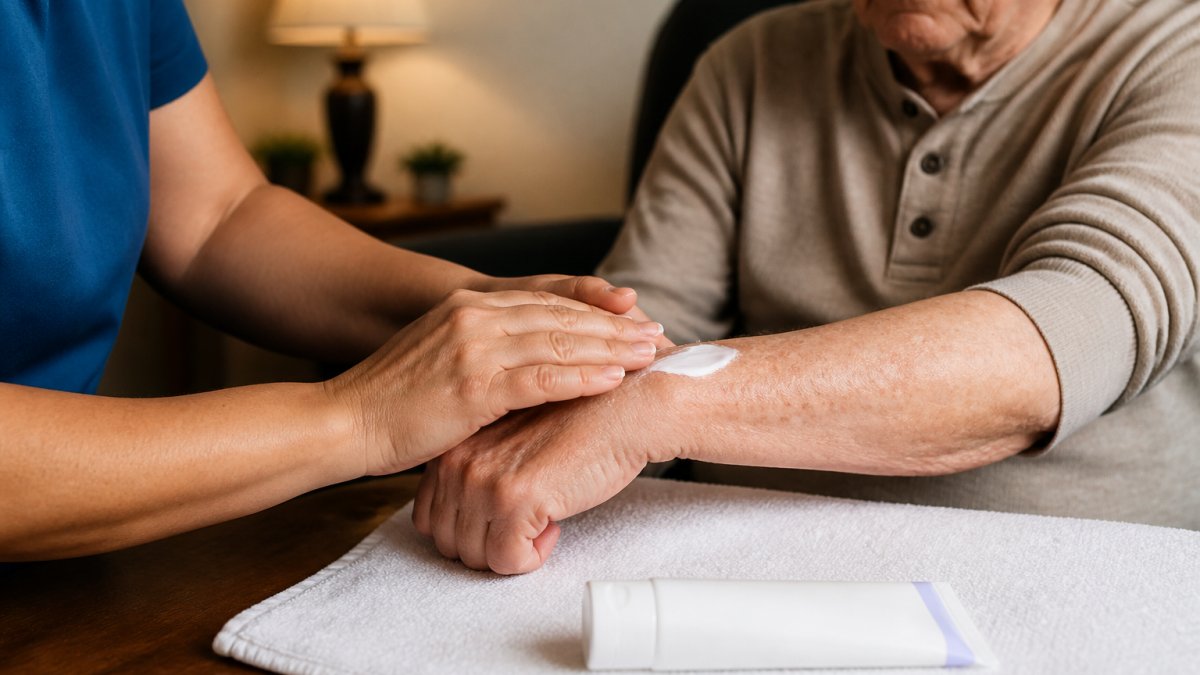
A common mistake is slathering it on thick. Too much cream clogs absorbent products and reduces their ability to wick moisture away. Thin is better.
Our McKesson Thera Silicone Skin Guard Protectant Cream is fragrance-free and made for perineal care, which suits sensitive skin. It costs $7.96 for a 4 oz. tube.
McKesson Thera® Silicone Skin Guard Protectant Cream

An unscented, silicone-based protectant made for perineal care. It spreads thin, so it is easy on fragile skin and less likely to clog a brief or pad.
View the CreamIf you are applying cream over a skin fold, lift the fold gently and let it air dry for a moment first. Moisture hides in creases, and that is where moisture lesions start.
How Often to Apply Barrier Cream
Most caregivers should reapply barrier cream at every pad or brief change, and at least once during the night if the person wakes. But frequency is not one-size-fits-all. The right routine depends on how often the person is incontinent, what absorbent products you use, how fragile the skin is, and who is doing the caring.
Here is how the routine shifts across common care situations:
-
Self-care with light incontinence
Apply a thin layer after each episode and after washing. A small mirror or a handheld spray can help with hard-to-reach areas. Reapply whenever the skin feels damp.
-
Caregiver-assisted care
Build application into the change routine so it is not skipped on busy days. Cleanse, dry completely, apply a thin layer, and close the brief. Check the skin at each change and note any new redness.
-
Bedbound care
Changes may be less frequent, so a longer-wearing ointment or film may suit better than a light cream. Check skin at every repositioning, not just at changes, since moisture can build up between turns.
-
Frequent episodes
When changes happen many times a day, a lighter cream reapplied each time is usually easier on skin than a heavy product applied once. Heavy layers can trap moisture and clog absorbent products.
Watch for these signals that it is time to reapply:
- The skin feels damp when you check it
- The cream has worn off after a bowel movement
- Redness is returning
- The brief or pad has been saturated
Some products advertise long-lasting or 12-hour protection. Treat those claims with realistic expectations. A cream may stay put, but a bowel movement will always require cleansing and reapplication. No product replaces checking the skin.
Skin assessment should be part of your routine. Check the skin at each change, note any new redness, and track it. A simple daily log of what you see helps you spot trends and gives a healthcare provider useful information if irritation persists. If redness spreads or worsens despite consistent care, that is a sign to seek professional assessment rather than simply applying more cream.
Incontinence-Associated Dermatitis Prevention
Prevention beats treatment every time. Incontinence-associated dermatitis prevention rests on four habits: gentle cleansing, thorough drying, consistent skin protection, and frequent absorbent product changes.
The Wound, Ostomy and Continence Nurses Society describes a structured skin care regimen as the standard approach for moisture-associated skin damage. That regimen is not complicated:
- CleanseGently, after each episode.
- DryThe skin, completely.
- ProtectWith a barrier product.
- ChangeAbsorbent products, promptly.
What most guides miss is the order. Many caregivers cleanse, then apply cream to skin that is still slightly damp. That single step undoes much of the protection.
Also, avoid layering powder under cream. Powders can cake and trap moisture, which works against you.
Clean gently, dry completely, apply thin, and do it at every change. The routine matters more than the tube.
If you are looking for a fragrance-free option, we stock the McKesson Thera® Silicone Skin Guard Protectant Cream, Unscented, 4 oz. Tube.
Do not use harsh soaps, alcohol-based wipes, or scrubbing on already irritated skin. These strip the skin barrier further and can turn mild redness into a raw, painful area within days.
What Is the Best Barrier Cream for Elderly Skin?
There is no single best barrier cream for elderly skin. The right choice depends on the person's skin condition, how often they are changed, who is applying the product, and what absorbent products are already in use. What follows is a practical way to decide, rather than a list of features to tick off.
Start with the skin itself. Elderly skin is thinner, loses moisture faster, and tears more easily, so simple, fragrance-free formulas are usually the safest starting point. From there, match the product form to the situation:
-
Cream
Light, easy to spread, and good for daily prevention on intact skin. It needs more frequent reapplication, especially after bowel movements.
-
Ointment
Heavier and longer-lasting, useful for very dry or cracked skin and for people changed less often. It can feel greasy and may be harder to cleanse off.
-
Spray
Helpful when skin is sensitive or painful to touch, since it avoids rubbing. Coverage can be less even, so apply in a light, overlapping pattern.
-
Film
A thin, long-wearing layer that suits people who need protection to last between less frequent changes. It can sting on broken skin, so avoid it on open areas.
A few practical checks before you commit:
- Fragrance-free and dye-free reduces irritation risk on fragile skin.
- Silicone or petrolatum base tends to resist wash-off better than water-based lotions.
- Thin enough to spread easily matters more than thickness; a heavy layer can clog absorbent products and reduce their ability to wick moisture away.
- Compatible with your absorbent products. Some creams and ointments can affect how a brief or pad absorbs, so test on a small area first.
A common pattern among caregivers is to buy one product and use it for every situation. That usually works until it doesn't. If the person has both intact skin days and irritated skin days, it helps to keep two products on hand: a lighter cream for daily prevention and a heavier ointment or film for longer stretches or drier skin.
Where a cream falls short: it will not fix an active infection or a deep wound. Those need a healthcare provider. If you are unsure which form fits your situation, ask a healthcare provider or a wound care nurse early rather than waiting for irritation to worsen.
At EnhDme, we stock caregiver-tested skin care because we know how much a good routine matters. Compare our two fragrance-free protectants, the lighter McKesson Thera Silicone Skin Guard Protectant Cream for daily prevention and the heavier Medline Remedy Zinc Protectant Paste for drier skin or longer stretches, and match one to the absorbent products you already use.
When Barrier Cream Is Not Enough
Barrier cream is a prevention tool, not a cure. Some skin problems need professional assessment.
Contact a healthcare provider if you notice:
-
Redness that spreads or worsens despite consistent care
If a steady routine isn't helping, something else may be going on.
-
Open areas, blisters, or weeping skin
Broken skin needs a treatment plan, not just another layer of cream.
-
A rash with satellite spots around the edges
Small spots beyond the main rash can be a sign of a yeast (fungal) infection.
-
Signs of infection such as warmth, swelling, or pus
These can mean germs have gotten into damaged skin.
-
Pain that keeps the person awake
Pain strong enough to disturb sleep means the skin needs a closer look.
These signs may point to a fungal infection, a pressure injury, or another condition that needs specific treatment. A cream alone will not resolve it.
of hospital patients with incontinence in the same multisite study also had a pressure injury over the tailbone and buttocks. Researchers found that incontinence-associated dermatitis was linked to these injuries even after accounting for limited mobility.
There is also a product-choice question worth knowing. Creams, ointments, sprays, and films each suit different situations:
| Product Type | Best For | Watch Out For |
|---|---|---|
| Cream | Daily prevention, easy spreading | Needs frequent reapplication |
| Ointment | Very dry or cracked skin | Can be greasy and heavy |
| Spray | Sensitive or painful skin | Less even coverage |
| Film | Long wear, thin protection | Stings on broken skin |
If you are unsure which fits your situation, ask a healthcare provider or a wound care nurse. That conversation is worth having early.
Conclusion
Caring for skin exposed to urine and feces is one of the hardest parts of continence care. It is also one of the most manageable with the right routine.
The benefits of using barrier creams for incontinence are real: less irritation, fewer moisture lesions, and calmer days for everyone involved. Cleanse gently, dry completely, apply a thin layer, and reapply at each change.
EnhDme was founded by caregivers, and we stock skin care and daily living essentials we would trust in our own homes. Our team can help you choose a fragrance-free protectant cream and match it to the absorbent products you already use. Get started with EnhDme and build a skin care routine that protects the person you care for, one change at a time.
Frequently Asked Questions
Should you use barrier cream for incontinence?
Yes, barrier creams are a first-line defense for anyone with urinary or fecal incontinence. They create a protective layer that keeps urine and feces off the skin, reducing irritation and helping prevent incontinence-associated dermatitis. For older adults with fragile skin, a barrier cream is especially important because their skin loses moisture and elasticity, making it more vulnerable to breakdown. Choose a fragrance-free cream and apply it at every change to maintain protection.
How often should you apply barrier cream?
Apply barrier cream at every incontinence episode and with each pad or brief change. If the skin stays clean and dry, you can reapply a thin layer every 12 hours, but never skip a full cleanse and reapplication after a bowel movement. A cream that offers 12-hour protection can simplify routines, but check the skin at each change. If you notice redness or soreness, increase the frequency and speak with a healthcare provider.
What is the best barrier cream for elderly incontinence?
The best barrier cream for elderly skin is one that is fragrance-free, dye-free, and contains a protectant like silicone or zinc oxide. It should stay in place through moisture and washing, and be easy to apply without rubbing. A silicone-based cream, such as McKesson Thera Silicone Skin Guard, is a practical option because it is unscented and forms a breathable barrier. Avoid creams with added perfumes or alcohol, which can dry and irritate thin skin.
Can barrier cream help prevent skin irritation from incontinence?
Yes. Barrier creams reduce skin irritation by blocking urine and feces from direct contact with the skin. They also help maintain the skin's moisture balance, preventing both over-hydration (maceration) and dryness. For best results, cleanse gently, pat dry, and apply a thin, even layer at every change. If irritation persists despite consistent use, it may be a sign of infection or a reaction that needs a healthcare provider's assessment.
Shop Incontinence Care
Briefs, protective underwear, liners, and bed underpads to pair with your skin care routine.
Shop NowFamily Caregiver Resources
Guidance, tools, and support from EnhDme to help you care with confidence and take a real break.
Explore Resources
For more than 25 years, Valerie has seen home care from every side of the front door. She built and led a home care agency, cared for her own parents, and has long championed older adults and the families who love them. Today she brings that hard-won perspective to EnhDme, helping caregivers find the equipment and supplies that make home a safer, gentler place to give and receive care.
Sources
Gray M, Giuliano KK (2018). Incontinence-Associated Dermatitis, Characteristics and Relationship to Pressure Injury: A Multisite Epidemiologic Analysis. Journal of Wound, Ostomy and Continence Nursing, 45(1):63–67.
Ferreira M, Abbade L, Bocchi SCM, et al. (2020). Incontinence-associated dermatitis in elderly patients: prevalence and risk factors. Revista Brasileira de Enfermagem, 73(suppl 3).
Gorina Y, Schappert S, Bercovitz A, et al. (2014). Prevalence of Incontinence Among Older Americans. National Center for Health Statistics, Vital Health Stat 3(36).
AARP & National Alliance for Caregiving (2025). Caregiving in the US 2025.
MedlinePlus, U.S. National Library of Medicine. Skin care and incontinence.
American Nurse Journal. Moisture-associated skin damage: The basics.
National Association for Continence. nafc.org.
Leave a comment