

Can You Use a Rollator on Carpet? A Safe Guide
The Hill Hiding in Your Living Room
On a hard floor, a rollator glides. On thick carpet, every step can feel like pushing uphill. The right wheels, a steadier way of moving and a few changes at home can turn that daily struggle back into an easy walk.
Every year, more than 47,000 older adults land in the emergency room after a fall involving a walker or cane, and most of those falls happen at home. Thousands more involve the floor itself: a curled rug edge, a plush carpet, the lip where carpet meets tile. If your loved one uses a rollator on carpet, the goal isn't to give up the carpet. It's to make every step on it a steady one.
Last Updated: October 20, 2026
Can You Use a Rollator on Carpet? The Short Answer
Yes, you can use a rollator on carpet, but it requires the right equipment and technique. Carpet presents a real challenge because soft surfaces create more rolling resistance than hard floors. The wheels have to work harder to move forward, which means you'll need more pushing effort. A rollator on carpet works best when you choose one with larger wheels and proper design.
The good news: with the right rollator and a few adjustments to how you move, carpet doesn't have to limit your mobility at home. Many people successfully navigate carpeted rooms and hallways every day. The key is understanding which features matter most and how to adapt your technique.
At EnhDme, we help families and caregivers select mobility equipment that actually works in their real homes. Carpet is one of the most common questions we hear, and it's one worth answering properly. Below, we'll walk you through exactly what makes a rollator suitable for carpet, how to use one safely, and what home changes can help.
A rollator can work on carpet if it has larger wheels (8 inches or bigger), proper wheel design, and you use the right technique. Hard flooring alternatives and strategic rugs can also reduce rolling resistance.
How Carpet Thickness and Pile Type Affect Rolling
Carpet thickness matters far more than you might expect. Thin, low-pile carpet feels almost like hard flooring to a rollator, while thick, plush carpet sinks under the wheels and creates drag.
-
Low-pile carpet works best
Short, dense fibers compress easily under wheel pressure, keeping rolling resistance low.
-
High-pile or plush carpet is harder to navigate
Longer fibers don't compress firmly, requiring more pushing effort and reducing stability. Shag carpet is the worst offender.
-
Carpet backing matters too
Thin backing over a hard subfloor is better than thick padding, which cushions underfoot but increases rolling resistance.
Test your rollator on the actual carpet in your home before committing to it. Walk through your main pathways and notice where you feel the most resistance. This tells you where you might need to make changes.
Wheel Size and Design for Best Rollator for Carpet Use
Wheel size is the single biggest factor in rollator performance on carpet. 8-inch wheels are the minimum for carpet use and work reasonably well on low-pile carpet. 10-inch wheels are significantly better: they ride over carpet fibers instead of sinking into them, making them worth the investment if you spend time on any carpet.

Wheel material matters. Solid wheels work better on carpet than pneumatic (air-filled) tires, which can sink and create drag. Solid wheels maintain firm contact and roll more smoothly.
Wheel design also affects performance. Swivel front wheels help with turning in tight spaces, but they can make carpet navigation feel less stable.
EnhDme's collection includes rollators with various wheel sizes and designs. Check out our rollator and walker collection pages to compare options that match your home's flooring.
Step-by-Step Safe Technique on Thick Carpet
Using a rollator on carpet safely comes down to technique. Even with the right equipment, how you move makes a huge difference.
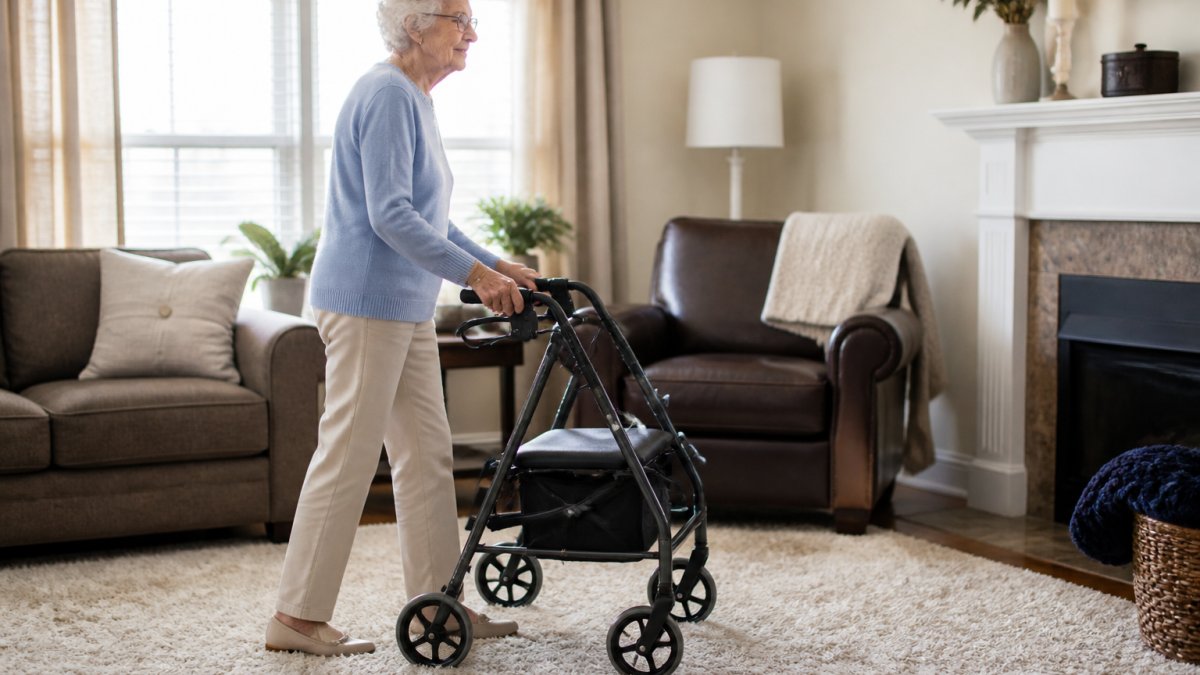
- Position yourself correctly. Stand upright with slightly bent elbows for better control and to feel changes in resistance.
- Push, don't pull. A firm, steady push keeps wheels moving and maintains balance; pulling creates instability on soft surfaces.
- Take smaller steps. Shorter strides help you stay balanced and adjust weight distribution more easily.
- Slow down on thick carpet. Moving slowly and deliberately is safer and less tiring.
- Use the brakes intentionally. Engage both brakes fully when you stop. Carpet doesn't hold a rollator in place like hard flooring does.
- Practice turning carefully. Turns require more effort on carpet, so plan ahead and move slowly.
Never rush on carpet. A fall can happen quickly if you lose your footing while pushing harder than expected. Take your time, and rest when you need to.
Rollator vs Walker for Carpet: Which Suits Your Home
Both rollators and traditional walkers can work on carpet, but they interact with soft surfaces in fundamentally different ways. Understanding these differences helps you choose the right tool for your home.
How rollators work on carpet
A rollator's four wheels must overcome carpet's rolling resistance continuously. On low-pile carpet this is manageable; on thick or plush carpet, wheels sink into fibers and soft backing compresses under weight. The advantage: weight distributes across four contact points, improving stability on uneven surfaces, and you can rest on the built-in seat.
How traditional walkers work on carpet
A traditional walker has rubber tips that grip carpet fibers, keeping the device firmly in place while you lift and step. On very thick carpet, this can feel less tiring than continuous pushing since you're not fighting rolling resistance with every movement.
Wheel size matters more than device type
A rollator with 10-inch solid wheels will almost always outperform a traditional walker on carpet because larger wheels ride over fibers instead of sinking into them.
For a rollator, look for wheels 8 inches or larger (10 inches ideal), solid wheels rather than air-filled tires, and hand brakes you can operate easily. For a traditional walker, confirm it has sturdy rubber tips, lightweight construction, and proper height so you don't bend forward.
Most people find that a rollator with larger wheels works better on carpet than a traditional walker, even on thick surfaces. The seat and hand brakes offer safety and rest options that traditional walkers don't. Some households use both: a rollator for hard flooring and main pathways, and a traditional walker for rooms with thick carpet.
What to Do When Your Rollator Gets Stuck on a Rug
A rollator wheel catching on a rug or carpet edge is one of the most common, and most preventable, hazards in homes with mixed flooring.
Rollator wheels catch on fabric when they encounter a raised edge, curled corner, or loose rug, causing an abrupt stop that can throw you off balance.
of rug- and carpet-related fall injuries among adults 65 and older happened at home. Falls were common right at the spot where a rug or carpet meets a bare floor.
ByAcre Carbon Overland All-Terrain Rollator
If your home mixes carpet, rugs and hard floors, and you also walk outdoors, an all-terrain rollator is worth a look. Compare its wheel size and weight against your floors before you decide.
View the RollatorPrevention strategies
-
Remove or relocate loose rugs
The safest option is to take up any rug that's not essential. If you love a particular rug, move it to a room you don't use with your rollator.
-
Secure rugs with non-slip pads
Use rubber or felt pads underneath to prevent shifting, and secure edges with rug tape in high-traffic areas.
-
Replace thick rugs with low-pile runners
Low-pile, firmly woven runners compress under wheel pressure and don't catch as easily. Secure with non-slip pads.
-
Install transition strips at doorways
A transition strip slopes gradually from carpet to hard flooring, allowing wheels to roll over smoothly. These are inexpensive and easy to install.
-
Trim or tape down curled edges
Trim loose threads with scissors, and use rug tape to hold curled edges flat against the floor.
What to do if your rollator gets stuck
- Stop and lock the brakes. Hold still and steady yourself before you do anything else.
- Look at what caught. Check whether it's a rug edge, a fold in the carpet or a threshold lip.
- Back up gently. Release the brakes and roll back a few inches rather than pulling hard or forcing the wheel forward.
- Change your angle. Approach the edge again slowly and straight on, or take another route.
- Ask for help if it won't clear. Don't lift or yank the rollator while you're leaning on it.
Transitions and thresholds
The transition between carpet and hard flooring is a common catching point. A sharp lip (even 1/4 inch high) can stop a rollator wheel.
If you have a sharp threshold in a doorway you use frequently, consider installing a transition strip. These come in various materials (aluminum, rubber, vinyl) and can be adhered or screwed down.
When to ask for help
If your home has multiple rugs, thick carpet, or transitions that make your rollator catch frequently, talk to an occupational therapist or physical therapist. They can assess your specific layout and recommend changes.
EnhDme's team can also help you think through your home setup and suggest rollator features that work best for your flooring. Visit our rollator and walker collection pages to explore options with different wheel sizes and designs.
Never rush over a rug or transition. A caught wheel can cause a sudden stop that throws you off balance. Take your time, and if something feels unsafe, find another route or ask for help.
Home Adaptations and When to Seek Professional Guidance
Small changes to your home can make a huge difference in how well a rollator works on carpet.
- Replace thick carpet in main pathways with low-pile alternatives or hard flooring
- Use area rugs instead of wall-to-wall carpet in key rooms
- Install transition strips at doorways where carpet meets hard floors
- Keep pathways clear of clutter that might catch wheels
- Ensure good lighting so you can see surface changes
When to talk to a professional
If you're struggling with a rollator on your current carpet, a physical therapist or occupational therapist can assess your home and suggest changes. They can also evaluate whether your current rollator is the right fit for your space.
EnhDme's team understands the real challenges of aging in place. We can help you think through which rollator features matter most for your specific home setup. Our collection includes options designed for different surfaces and mobility needs. Visit our rollator and walker pages to explore what might work best for you.
Some people find that combining a rollator with strategic home changes works better than trying to force one solution. A rollator for hard floors and a traditional walker for thick carpet rooms, for example. Or replacing carpet in main pathways while keeping it in bedrooms.
There's no one-size-fits-all answer. Your home layout, the carpet in your rooms, and your own strength and balance all factor in.
Home adaptations often work better than equipment alone. Low-pile carpet, transition strips, and clear pathways make any rollator perform better.
Conclusion
You can absolutely use a rollator on carpet. The right combination of equipment, technique, and home setup makes it work smoothly. Focus on larger wheels, proper pushing technique, and strategic changes to your carpet situation.
The most important step is testing a rollator on your actual home carpet before making a final decision. What works for one person's low-pile carpet might feel difficult on another person's plush flooring. Your real home is the best testing ground.
What works on one family's low-pile carpet can feel like wading through sand on another's. Your real home is the best testing ground.
Frequently Asked Questions
Can a rollator really work on thick carpet without getting stuck?
Yes, a rollator can work on thick carpet, but success depends on wheel size and carpet pile. Larger wheels (8-10 inches) roll more smoothly over plush or thick carpet than smaller ones. Low-pile carpet is easier to navigate than high-pile. The key is choosing the right device for your home and using proper pushing technique. If your carpet is very thick or shag-style, you may need to practice on it first to build confidence.
What's the difference between using a rollator versus a walker on carpet?
A rollator is generally easier on carpet than a standard walker because its wheels roll continuously, while walkers require lifting and placing. However, a rollator demands more control on soft surfaces since the wheels can catch or sink slightly into pile. Walkers provide more stability on carpet but require more physical effort. Your choice depends on your strength, balance, and the specific carpet in your home. A four-wheeled rollator with good brakes is often the best middle ground for carpeted homes.
How can I prevent my rollator from getting stuck on area rugs?
Area rugs and runners create trip hazards and can snag rollator wheels. The safest approach is to remove or secure loose rugs before using your rollator. If you must keep rugs in place, use non-slip rug pads underneath to prevent shifting, and practice navigating transitions slowly. Always check the path ahead for rugs, rolled edges, or wrinkled carpet. If a wheel does catch, stop, assess the situation, and gently back up or adjust your angle rather than pulling hard.
What wheel size works best for carpet in a home?
Larger wheels (8-10 inches) perform better on carpet than smaller ones. Wheels of this size roll over pile and soft surfaces more easily, reducing the pushing effort required. Larger wheels also handle transitions between carpet and hard flooring more smoothly. When shopping for a rollator, check the wheel size specification and, if possible, test it on your actual carpet before purchasing. The EnhDme store offers rollators with various wheel sizes to match different home environments.
At EnhDme, we help families find mobility solutions that work in their actual living spaces. Our rollator collection includes options with larger wheels, lightweight designs, and features built for real homes. Explore our rollator and walker collection to find equipment that matches your needs, and reach out to our team if you have questions about what will work best for your carpet and your mobility goals.
Shop Rollator Walkers
Compare wheel sizes, seat heights and weights to find a rollator that rolls easily on your carpet and hard floors alike.
Shop NowFamily Caregiver Resources
Guidance, tools, and support from EnhDme to help you set up a safer home and care with confidence.
Explore Resources
For more than 25 years, Valerie has seen home care from every side of the front door. She built and led a home care agency, cared for her own parents, and has long championed older adults and the families who love them. Today she brings that hard-won perspective to EnhDme, helping caregivers find the equipment and supplies that make home a safer, gentler place to give and receive care.
Sources
Centers for Disease Control and Prevention. Older Adult Falls Data.
Gell NM, Wallace RB, LaCroix AZ, Mroz TM, Patel KV (2015). Mobility Device Use in Older Adults and Incidence of Falls and Worry About Falling. Journal of the American Geriatrics Society.
Stevens JA, Thomas K, Teh L, et al. (2009). Unintentional Fall Injuries Associated with Walkers and Canes in Older Adults Treated in U.S. Emergency Departments. Journal of the American Geriatrics Society.
Rosen T, Mack KA, Noonan RK (2013). Slipping and Tripping: Fall Injuries in Adults Associated with Rugs and Carpets. Journal of Injury and Violence Research.
Leave a comment