

Home Safety Modifications for Aging Parents: A Practical Guide
Table of Contents
- Start with a Senior Home Safety Assessment
- Remove Trip Hazards and Improve Flooring
- Install Grab Bars and Handrails for Fall Prevention
- Bathroom Safety Equipment for Elderly Parents
- Enhance Lighting and Visibility Throughout the Home
- Widen Doorways and Create Clear Pathways
- DIY vs. Professional Installation: What You Need to Know
- Maintaining Your Home Modifications for Long-Term Safety
- Frequently Asked Questions
Last Updated: September 27, 2026
Making your parent's home safer doesn't require a complete renovation. Small, thoughtful changes can prevent falls and injuries while letting them stay independent. At EnhDme, we offer a curated selection of reliable products from trusted manufacturers to support independent home care. This guide walks you through practical home safety modifications for aging parents that you can tackle step by step.
Start with a Senior Home Safety Assessment
The best way to begin is with a careful walk-through of your parent's home. Look at it from their perspective, not yours. Notice where they move slowly, where they reach for support, and which rooms feel cramped or dark.
Start in the bedroom. Check the path from bed to bathroom. Is it clear? Are there items on the floor? Look at lighting near the bed and along hallways. Then move to the bathroom, kitchen, and stairs. Take notes on what concerns you.
A proper home safety assessment for aging parents identifies real hazards before they cause injury. You're looking for trip risks, poor lighting, slippery surfaces, and areas where balance becomes difficult. If your parent has mobility challenges or recent falls, pay extra attention to these spots.
Remove Trip Hazards and Improve Flooring
Trip hazards are the number one cause of falls at home. Loose rugs, clutter on floors, and uneven surfaces create serious risks. Start by removing throw rugs or securing them firmly with non-slip pads underneath.
Clear pathways through every room. Remove items from hallways, stairs, and frequently traveled routes. Store items on accessible shelves, not on floors. Electrical cords should be taped down or run along walls, never across walkways.
Flooring matters more than most people realize. Hard floors like tile or wood become slippery, especially for someone wearing socks or smooth-soled shoes. Consider these options:
- Non-slip area rugs with secure backing
- Adhesive non-slip strips on slick flooring
- Low-pile carpet in high-traffic areas
- Matte finish flooring instead of glossy
For stairs, add non-slip treads to each step. These adhesive strips or rubber coverings grip shoes and canes. They're inexpensive and install in minutes. If stairs feel steep or narrow, consider stair modifications later, but treads are an immediate safety boost.
Install Grab Bars and Handrails for Fall Prevention
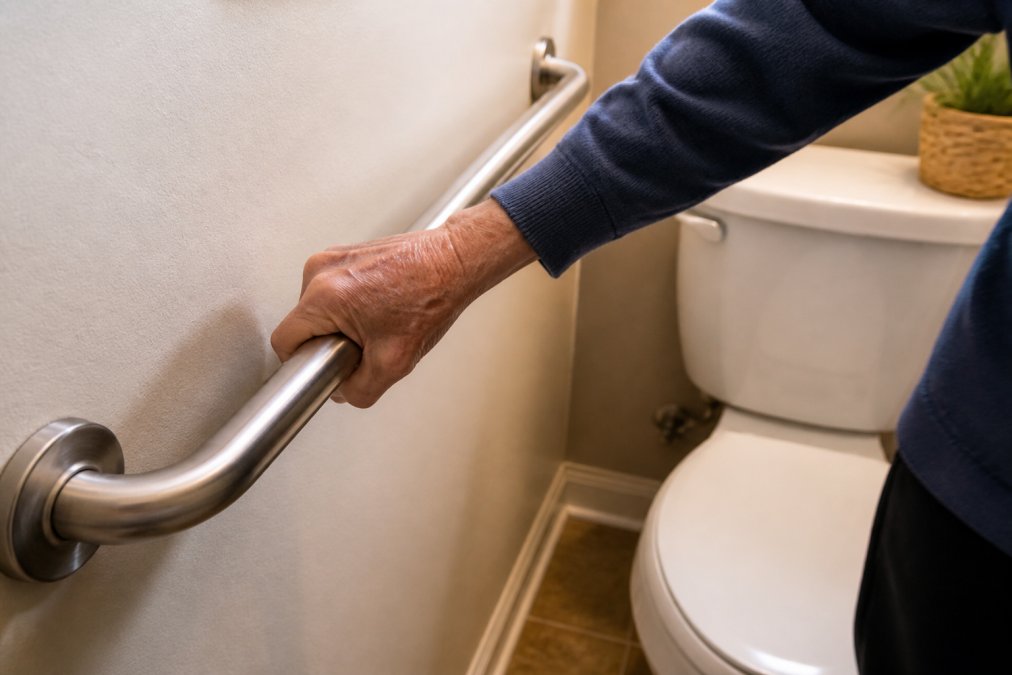
Grab bars and handrails are among the most effective home safety modifications for aging parents. They provide stability and confidence in high-risk areas like bathrooms and stairs. The key is installing them correctly so they actually support weight.
Bathrooms are where most falls happen. Install grab bars near the toilet, in the shower or tub, and along the bathroom wall if space allows. Bars should be 1.25 to 1.5 inches in diameter, easy to grip with a firm hold. Mount them securely into wall studs or use heavy-duty anchors designed for tile or drywall.
For stairs, a handrail on at least one side is essential. Both sides are better if your parent feels unsteady. The rail should be continuous, without breaks or gaps. Your parent's hand should fit comfortably around it. Height typically ranges from 34 to 38 inches from the stair edge.
Bedside handrails help with getting in and out of bed safely. A rotating bedside rail like the Clarke Arcorail offers flexibility, it swings out of the way when not needed but provides solid support when your parent needs to stand. These rails attach to the bed frame and give your parent something stable to hold onto during transfers.

Bathroom Safety Equipment for Elderly Parents
The bathroom is the most dangerous room in the house for falls. Beyond grab bars, several pieces of equipment make a real difference. A shower chair or bath seat lets your parent sit while bathing, removing the balance challenge of standing on a wet, slippery surface. Look for a chair with a backrest and armrests for extra support. The Drive Medical Premium Shower Chair with Back and Arms provides stability and comfort, with a 350-pound capacity and adjustable height so your parent can sit at the right level.
A raised toilet seat makes standing up and sitting down easier, especially for someone with knee or hip problems. It adds height so your parent doesn't have to lower themselves as far. Pair it with toilet support rails like the AquaSense Toilet Support Rails for additional stability. These rails clamp onto the toilet without permanent installation, and they support up to 300 pounds.

Non-slip mats are essential in tubs and showers. Water makes surfaces extremely slippery. A textured mat gives your parent's feet traction and confidence. Replace mats regularly as they wear down.
Adequate lighting is critical in bathrooms. Install bright, shadow-free lighting near the mirror and toilet. A nightlight helps if your parent uses the bathroom during the night. Many falls happen during midnight bathroom trips when someone is groggy and the room is dark.
AquaSense Toilet Support Rails – 300 lb →
| Safety Feature | Purpose | Installation |
|---|---|---|
| Grab bars | Support during transfers | Mount into studs or use heavy anchors |
| Shower chair | Seated bathing stability | No installation needed |
| Raised toilet seat | Easier standing and sitting | Clamps to toilet bowl |
| Non-slip mats | Traction on wet surfaces | Lay flat in tub or shower |
| Nightlight | Safe nighttime navigation | Plug into outlet |
Enhance Lighting and Visibility Throughout the Home
Poor lighting is a silent hazard. Your parent might avoid certain rooms or move carefully because they can't see well. Bright, even lighting makes the home feel safer and actually prevents falls.
Start with hallways and pathways. These areas should be well-lit at all times. Install ceiling fixtures or wall sconces that provide even light without harsh shadows. Avoid single overhead lights that create dark corners.
Bedrooms need good lighting for getting out of bed safely. A bedside lamp that's easy to reach and turn on prevents your parent from walking in darkness. Switches should be near the bedroom door and beside the bed.
Stairs need clear, even lighting. Install fixtures that light each step without creating shadows. Avoid spotlights that create glare. If stairs have a landing, make sure it's well-lit too.
Consider task lighting in the kitchen and bathroom. These rooms require good visibility for safety. Under-cabinet lighting in the kitchen helps your parent see countertops and appliances clearly.
Motion-sensor lights are useful in hallways and bathrooms. They turn on automatically when your parent moves through the room, eliminating the need to find a switch in the dark. This is especially helpful for nighttime bathroom trips.
Widen Doorways and Create Clear Pathways
Doorways that feel tight create anxiety and increase fall risk. If your parent uses a walker, cane, or wheelchair, standard doorways might be too narrow. A typical interior doorway is 32 inches wide. Most mobility devices need 36 inches or more for comfortable passage.
Widening a doorway involves removing the door frame and adjusting the opening.
DIY vs. Professional Installation: What You Need to Know
Some home modifications you can do yourself. Others require professional skill. Knowing the difference saves money and prevents mistakes.
DIY-friendly projects:
- Removing throw rugs and clearing pathways
- Installing non-slip mats and treads
- Adding nightlights
- Installing grab bars into studs (if you're comfortable with basic tools)
- Rearranging furniture for better flow
Projects that benefit from professional help:
- Grab bar installation into tile or complex wall types
- Stair modifications or new handrails
- Widening doorways
- Major lighting upgrades
- Flooring changes
Maintaining Your Home Modifications for Long-Term Safety
Once you've made modifications, they need regular attention. Grab bars can loosen over time. Non-slip mats wear down. Lighting bulbs burn out. A maintenance schedule keeps your parent's home safe long-term.
Frequently Asked Questions
What are the most critical home safety modifications to prevent falls for aging parents?
The highest-priority modifications focus on fall prevention in high-risk areas. Install grab bars in bathrooms near toilets and showers, add handrails on both sides of staircases, remove throw rugs and clutter from walkways, improve lighting in hallways and stairwells, and ensure non-slip flooring in bathrooms. These changes address the environments where most falls occur and can significantly reduce injury risk when combined with assistive devices like shower chairs.
How do I perform a senior home safety assessment on my own?
Walk through your parent's home room by room, looking for trip hazards, poor lighting, slippery surfaces, and areas lacking support. Check each bathroom for grab bar placement, stair safety, and entryway accessibility. Note doorway widths, threshold heights, and whether pathways are clear. Document areas where your parent struggles with mobility or balance. If you're unsure, occupational therapists can conduct a professional assessment, but a thoughtful personal walkthrough often identifies the most obvious safety gaps that need addressing first.
What bathroom safety equipment works best for elderly parents with limited mobility?
Combine multiple layers of support: grab bars installed at appropriate heights, a shower chair with back and arms for stability, toilet support rails for easier transfers, and non-slip mats or flooring. Task lighting above the sink and mirror helps with grooming, while lever-style door handles are easier to operate than round knobs. These modifications work together to reduce fall risk during bathing and toileting, which are high-risk activities for seniors.
Should I hire a professional to install home modifications or do it myself?
Simple modifications like grab bars, handrails, and lighting fixtures can often be DIY projects if you're comfortable with basic tools and have the right materials. However, structural changes like widening doorways, installing ramps, or relocating plumbing require professional contractors. For grab bar installation specifically, proper anchoring into wall studs is critical for safety, if you're uncertain about wall construction or load-bearing capacity, professional installation is worth the investment to ensure your parent's safety.
Leave a comment