

How to Maintain Rollator Wheels: 7 Simple Steps
Small Wheels, Steady Steps
A rollator carries your loved one through every room of the day, and it does it on four small wheels. Hair, grit, and wear build up quietly until the walker drags, wobbles, or stops less surely. Ten minutes and an old toothbrush are usually all it takes to keep it rolling true.
Every year, more than 47,000 older adults end up in a U.S. emergency room after a fall that involved a walker or cane, and nearly nine in ten of those falls involved a walker. Most happened at home. A walker can't do its job on wheels that drag, wobble, or slip, and keeping them in good shape is one of the simplest things you can do for the person who leans on it.
Last Updated: November 9, 2026
Keep rollator wheels clean and dry, and check them regularly. Clear out hair and grit with mild soap and warm water, avoid soaking the bearings, and spin each wheel to confirm it turns freely. Check the brakes and bolts monthly to keep the walker steady and safe.
- Clean wheels with mild dish soap, warm water, and a small brush once buildup appears.
- Use a damp cloth rather than a hose, since too much water can wash out bearing grease.
- Dry the wheels and frame completely to prevent rust at the axle and bolts.
- Spin each wheel by hand and rock it gently to find wobble or loose bolts.
- Replace wheels with cracks, flat spots, or a bearing that stays rough after cleaning.
Why Rollator Wheels Need Regular Care
Your rollator is only as steady as its wheels. Dirt, hair, and grit build up over time and can slow the rolling action, pull the walker to one side, or make the brakes less reliable. A quick check and a regular clean keep the walker moving smoothly and help the person using it stay safe.
Many caregivers find that a short routine works best. A simple wipe-down every week and a closer look every month is often enough for a walker used daily around the house. Walkers used outdoors on grass, gravel, or wet sidewalks may need more attention.
- Clean the wheels when you notice buildup
- Check the wheels before each outing
- Look over the brakes and bolts once a month
of fall injuries involving walkers and canes happened at home, not out in public. The researchers also noted that walking aids often aren't fitted to the user and that many people get no instruction on using them.
What You'll Need for Rollator Wheel Maintenance
Most of the supplies you need are already in the house. You won't need special tools for basic care.
- A small brush or old toothbrush
- Mild dish soap and warm water
- A soft cloth or sponge
- A dry towel
- Scissors or tweezers for tangled hair
- A replacement pair of wheels, if the old ones are worn out
McKesson 5-Inch Universal Walker Wheels

If you plan to replace worn parts, the McKesson 5-Inch Universal Walker Wheels fit 1-inch frames and come as a pair, and the Drive Medical Universal 5-inch Walker Wheels are rated for 350 lb. Browse both on the EnhDme store to find the right fit for your walker.
View the WheelsStep-by-Step: How to Clean Hair Out of Walker Wheels
Hair, carpet fiber, and grit are the most common reasons a rollator starts to drag, squeak, or wobble. The good news is that most of this buildup comes out with household supplies in about ten minutes. Work on a flat surface, lock the brakes, and tip the walker so the wheels are easy to reach.
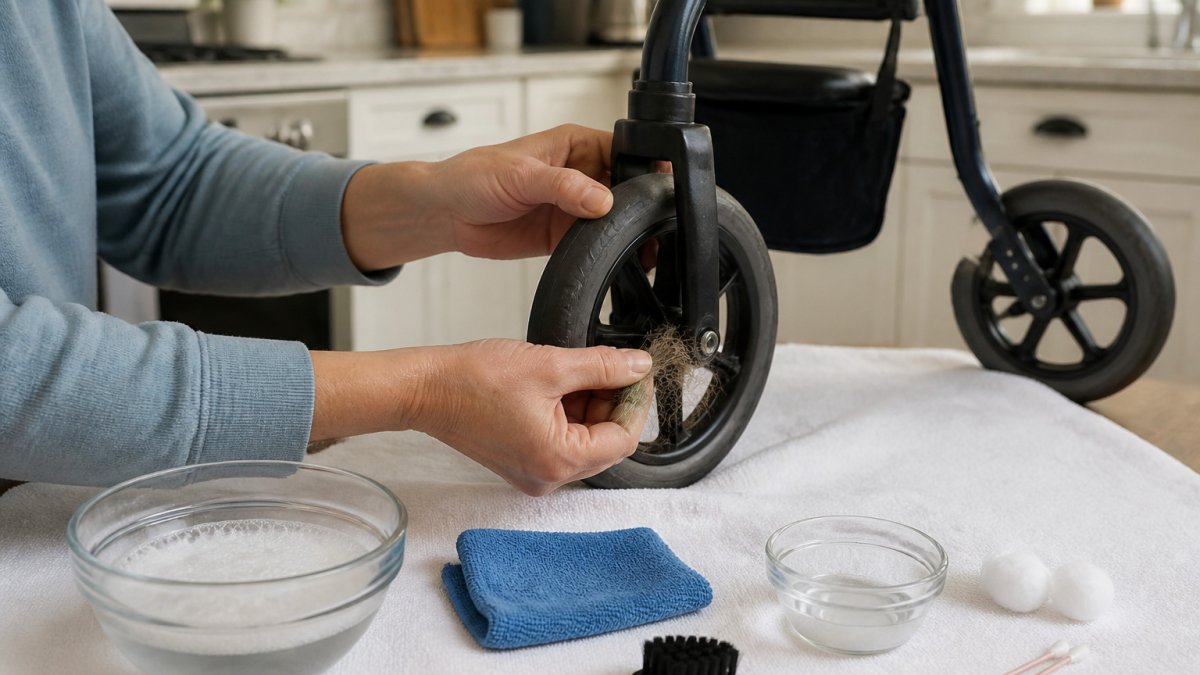
- Clear the big clumps first. Pull away loose hair and debris by hand or snip through thick wraps with blunt scissors. Cut away from the axle rather than pulling hard, which can damage the bearing seal.
- Lift hair out of the axle. Use tweezers, a small hook, or a stiff-bristled brush to unwind hair wrapped around the axle and the swivel stem. Work slowly so you do not scratch the metal.
- Scrub with mild soap and warm water. Dip a small brush or old toothbrush in a mix of a few drops of mild dish soap and warm water. Scrub the tread and the sides of the wheel, then use the brush to work around the fork and axle area.
- Wipe rather than soak. Rinse with a damp cloth, not a running hose. Bearings are packed with grease, and too much water can wash it out and leave the wheel rough to roll.
- Dry completely. Towel-dry the wheels, fork, and frame, then let the walker air-dry before use. Trapped moisture encourages rust at the axle and mounting bolts.
Match the method to the wheel type
Most rollators use solid, non-pneumatic tires, which are tough and tolerate gentle scrubbing well. Some models use pneumatic (air-filled) tires, which need more care: keep sharp tools away from the sidewall, avoid prying at the valve, and check that the tire feels firm before each use. If a pneumatic tire looks low, inflate it to the pressure printed on the sidewall rather than guessing.
What to avoid
Skip harsh solvents, bleach, and abrasive cleansers, which can dry out or crack rubber and dull the finish. Never use a pressure washer on a rollator; the force drives water past the bearing seals and into the frame joints. Avoid oil-based sprays near the tires and brake surfaces, because they leave a slippery film that reduces stopping grip.
If a wheel still drags after cleaning and drying, do not keep soaking it. Persistent drag usually means the bearing needs attention or replacement, and repeated wetting can make it worse.
Once the wheels are clean and dry, spin each one by hand to confirm it turns freely, then move on to the wear and bolt checks. Cleaning is also a good moment to wipe down the frame, handles, and brake levers with the same mild soapy cloth, since grit on the grips and cables affects how reliably the brakes engage.

From EnhDme
Checking Wheels for Wear, Damage, and Loose Parts
After cleaning, give each wheel a close, unhurried look. This is the step most people skip, and it is the one that catches small problems before they turn into a fall risk. Work through the checks below one wheel at a time, and lock the brakes and tip the walker so you can see the tread and the axle clearly.
Spin test
Lift the wheel off the floor and spin it by hand. It should turn freely, quietly, and evenly. A wheel that stops abruptly, wobbles side to side, or makes a grinding or squeaking sound is telling you something is wrong. A common pattern is a wheel that spins fine cold but drags after a few minutes of use, which often points to debris packed inside the bearing housing.
Tread inspection
Run your fingertips around the outer edge. You are feeling for cracks, flat spots, and smooth patches where the tread pattern has worn away. Flat spots usually come from a wheel that has been dragging or from repeated hard stops, and they make the rollator thump and pull to one side. Cracks at the hub or along the sidewall are a replacement signal, not a repair signal.
Axle and bolt check
Hold the wheel steady and try to rock it gently on its axle. Any noticeable play means the axle bolt or the mounting bracket has loosened. Tighten the bolt first and recheck. If the play returns after a short ride, the bearing or the axle itself may be worn.
Swivel check (front casters)
On walkers with swiveling front wheels, turn the caster through its full range by hand. It should pivot smoothly in both directions and return without catching. A caster that sticks or feels gritty usually has hair or grit wound around the swivel stem.
McKesson 5-Inch Universal Walker Wheels – Fits 1" Frames (1 Pair) →
Frame and fork check
Look at the metal fork that holds each wheel. Hairline cracks, bends, or rust bubbling through the finish are signs the assembly has been stressed. Do not try to bend a fork back into shape yourself; a bent fork changes the wheel alignment and can make the walker unstable.
Use this simple decision guide:
-
Tighten and recheck
A loose axle bolt, a slightly loose mounting screw, or minor surface rust.
-
Clean and recheck
Grit or hair in the swivel, or light squeaking that stops after cleaning.
-
Replace the wheel
Cracks, flat spots, smooth worn tread, persistent wobble after tightening, or a bearing that stays rough after cleaning.
-
Stop using and seek professional service
A bent or cracked fork, a cracked frame near the wheel mount, or a wheel that will not stay tight.
Ten minutes with a toothbrush is a small price for a walker your loved one can trust with every step.
A practical habit is to do the full spin-and-rock check once a month for a walker used indoors, and every week or two for one used outdoors on sidewalks, gravel, or grass. If you notice the walker pulling to one side, check both wheels before adjusting anything else, because uneven tread wear is a frequent cause. When a wheel does need replacing, measure the wheel diameter and the frame width before ordering, and choose a replacement pair rated for the user's weight so both sides wear evenly.
Rollator Brake Adjustment: Keeping Stops Reliable
Reliable brakes are key to safe use. Test them before every trip. Squeeze the handles and push the walker gently. It should stop without sliding.
If the brakes feel weak:
- Check that the brake cables are not stretched or frayed
- Tighten any loose brake mounting screws
- Make sure the brake pads or rubber contact the wheel evenly
If the brakes still don't hold after adjustment, stop using the walker and have it checked by a qualified professional.
Use this quick guide to decide what to check and what to do when the brakes feel weak.
| Brake issue | Likely check | Action |
|---|---|---|
| Brakes feel weak | Brake cables | Check for stretching or fraying |
| Brakes feel loose | Mounting screws | Tighten any loose screws |
| Uneven braking | Pads or rubber contact | Make sure contact with the wheel is even |
| Brakes still fail | Overall condition | Stop using and have it checked by a professional |
When to Replace Rollator Wheels
Replacing wheels can be easier than replacing the whole walker. Consider new wheels if the tread is worn smooth, the wheel cracks, or the bearing stays rough even after cleaning.
Some walkers are too worn to repair, especially if the frame is bent or the brakes no longer hold. For those, a new rollator may be the better choice. You can compare options in the EnhDme store collection pages.
If you only need new casters, a universal replacement wheel set from the EnhDme store is a simple fix. Measure the frame before ordering so the fit is right.
If your loved one's needs have changed since the walker was bought, ask a physical or occupational therapist to check the fit before you replace parts or buy a new rollator. Handle height, seat height, and wheel type all affect how steady it feels.
Your Rollator Maintenance Checklist and Next Step
Keep this checklist handy and work through it once a month:
- Wipe down the frame and handles
- Clear hair and debris from every wheel
- Spin each wheel and check for wobble
- Tighten all bolts and screws
- Test the brakes on a flat surface
- Dry the walker fully after cleaning
Caring for a walker takes only a few minutes, but it makes a real difference in daily comfort and safety. When you are ready, visit the EnhDme store to find replacement wheels, rollators, and other mobility essentials that fit your needs.
Frequently Asked Questions
How often should you clean rollator wheels?
Wipe the wheels and check for debris about once a week if the walker is used daily, and more often if it goes outdoors on wet grass, gravel, or snow. A quick check before each outing takes only a minute and helps catch hair, grit, or small stones before they wear down the tread or interfere with smooth rolling. A deeper cleaning every month or two is a practical routine for most households.
How can you tell if rollator wheels need replacing?
Replace the wheels when the tread is worn flat or smooth, when there are visible cracks or chunks missing, when the wheel wobbles or no longer turns freely, or when the rubber is pulling away from the hub. Uneven rolling, a walker that pulls to one side, or wheels that bind are also warning signs. If you are unsure, compare the wheels against the manufacturer's guidance or ask the store where the walker was purchased.
Should you lubricate rollator wheels?
Many wheel bearings are sealed and should not be oiled, so check the manufacturer's instructions before adding any lubricant. Lubricant can attract dirt and can damage rubber tires or brake pads if it gets on them. If a wheel squeaks or feels stiff after cleaning, a light wipe of the axle area is often enough. When in doubt, contact the manufacturer or a qualified equipment technician rather than guessing.

Shop Rollator Walkers
When repairs no longer make sense, compare rollators with the brakes, seats, and wheels that fit your loved one's day.
Shop NowFamily Caregiver Resources
Guidance, tools, and support from EnhDme to help you care safely and take a real break.
Explore Resources
For more than 25 years, Valerie has seen home care from every side of the front door. She built and led a home care agency, cared for her own parents, and has long championed older adults and the families who love them. Today she brings that hard-won perspective to EnhDme, helping caregivers find the equipment and supplies that make home a safer, gentler place to give and receive care.
Sources
Centers for Disease Control and Prevention (2020). Older Adult Falls Reported by State.
Stevens JA, et al. (CDC) (2009). Unintentional fall injuries associated with walkers and canes in older adults treated in U.S. emergency departments. Journal of the American Geriatrics Society, 57(8), 1464–1469.
Gell NM, Wallace RB, LaCroix AZ, Mroz TM, Patel KV (2015). Mobility device use in older adults and incidence of falls and worry about falling. Journal of the American Geriatrics Society, 63(5), 853–859.
Leave a comment