

Best Rollator Walkers for Outdoor Use: 2026 Buyer's Guide
Table of Contents
- What Makes a Rollator Walkers for Outdoor Use Different
- Quick Comparison: Top Outdoor Rollator Walkers for 2026
- 1. Drive Nitro DLX Rollator: Best for All-Terrain Stability
- 2. Carex Crosstour Rolling Walker: Best Lightweight Option
- 3. Hugo Elite Rolling Walker with Seat: Best for Adjustable Comfort
- How to Maintain a Rollator for Outdoor Use
- Rollator Safety Tips for Seniors on Uneven Ground
- Frequently Asked Questions
Last Updated: September 21, 2026
What Makes a Rollator Walkers for Outdoor Use Different
Choosing the best rollator walkers for outdoor use comes down to three things: wheel size, frame material, and how well the brakes handle uneven ground. A rollator built for a hallway will rattle apart on a cracked sidewalk. This guide from EnhDme walks through what actually holds up outside, and which models earn their place.
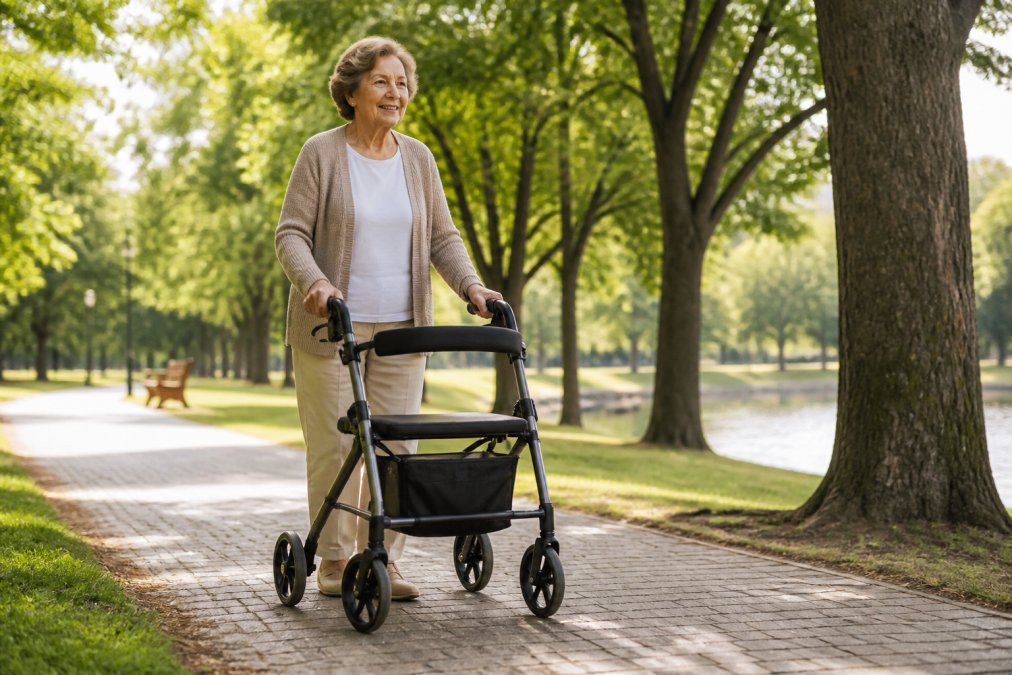
The core difference is the wheels. Indoor rollators typically run 6-inch casters that catch on every crack and threshold.
Wheel Size and Ground Clearance
Bigger wheels are not a marketing gimmick, they are physics. An 8-inch caster clears a 2-inch obstacle more easily than a 6-inch one because the wheel meets the edge at a shallower angle. That means less forward force needed from the user and less jolt traveling up through the handles.
Frame Material and Weight Capacity
Aluminum dominates outdoor rollators because it resists rust and stays light. Steel frames support more weight but weigh more and can corrode if the paint chips. Carbon fiber exists but costs considerably more.
Quick Comparison: Top Outdoor Rollator Walkers for 2026
Here is the short version before the detail. Prices reflect current EnhDme listings.
| Model | Wheel Size | Weight Capacity | Seat | Price |
|---|---|---|---|---|
| Drive Nitro DLX Rollator | 10" front | 300 lbs | Firm padded | $379.00 |
| Carex Crosstour Rolling Walker | 8" front | 300 lbs | Padded + backrest | $169.99 |
| Hugo Elite Rolling Walker | 8" | 300 lbs | Dual-height padded | $249.00 |
1. Drive Nitro DLX Rollator: Best for All-Terrain Stability
The Drive Nitro DLX Rollator is a highly capable outdoor rollator. Those 10-inch front casters roll over asphalt seams, paver gaps, and driveway lips that stop smaller wheels cold. The frame is high-strength aluminum and rated to 300 lbs.


2. Carex Crosstour Rolling Walker: Best Lightweight Option
The Carex Crosstour Rolling Walker is a lightweight rollator, and that can be a significant benefit if the user or a caregiver loads it into a car several times a week. The aircraft-grade aluminum frame still supports 300 lbs despite the low weight.
3. Hugo Elite Rolling Walker with Seat: Best for Adjustable Comfort
The Hugo Elite Rolling Walker with Seat offers an adjustable seat height. It adjusts between 20 and 22 inches, so shorter users are not left with their feet dangling and taller users are not dropping into a deep crouch to sit down.
How to Maintain a Rollator for Outdoor Use
Outdoor rollators take abuse that indoor ones never see, and most owners never service them until something breaks. A five-minute monthly routine prevents nearly all of it, but the checklist only works if you understand why each item matters and what a failing part actually looks like before it fails.
The Monthly Walk-Around
- Wipe down the frame with a damp cloth to remove grit and road salt
- Check brake cables for fraying or slack, and test the parking lock
- Spin each wheel and listen for grinding or wobble
- Inspect the rubber tread for flat spots and embedded debris
- Tighten handle height knobs and folding joints
- Test the seat for cracks or compression
Wheels and Bearings: Where Failures Start
Wheels are the part that fails first, and the cause is almost always the same: hair, grit, and grass wrap around the axle and slowly seize the bearing. A wheel that spins freely when new will start to drag within a season of daily outdoor use if it is never cleaned.
Brakes and Cables
Brake cables stretch with use, and the first sign is a handle that needs to be squeezed further before the brake engages. Test the parking lock by engaging it and pushing the rollator forward firmly, if it rolls, the cable needs adjustment or the brake pad is worn.
Frame, Folding Joints, and Fasteners
Folding joints are the second most common failure point. Grit works into the hinge, the joint loosens, and the frame develops a wobble that feels unstable under load. Tighten the joint hardware monthly, and if a joint has visible play after tightening, stop using the rollator until it is serviced.
Seasonal Care
Road salt is the quiet killer of outdoor rollators. It corrodes fasteners, pits aluminum, and accelerates bearing failure. After any walk on treated pavement, wipe the frame and wheels with a damp cloth. In winter, store the rollator indoors rather than in a cold garage, where condensation cycles speed corrosion.
Rollator Safety Tips for Seniors on Uneven Ground
Uneven ground is where rollators earn their keep and where most accidents happen. The difference between a confident walk and a fall usually comes down to matching technique, and wheel size, to the surface underfoot.
How Wheel Size Performs on Real Surfaces
Most buying guides talk about wheel size in the abstract. Here is what it actually means on the ground:
- Concrete and asphalt sidewalks: 6-inch casters are adequate on smooth, well-maintained pavement, but they catch on every crack and expansion joint. 8-inch casters roll over the same seams without the stutter.
- Brick and paver paths: The gaps between pavers act like small curbs. 8-inch wheels handle them; 6-inch wheels require a lift at every joint, which is exhausting over a long walk.
- Gravel and packed dirt: This is where 10-inch front casters separate themselves. Smaller wheels sink and plow; larger wheels ride on top and keep momentum. If gravel is a regular surface, 10-inch front wheels are worth the extra bulk.
- Grass: Traction is the issue, not obstacle clearance. Wider tread and larger diameter both help, but no rollator handles wet, sloped grass well, plan a different route after rain.
- Root-heaved pavement: The most unpredictable surface. Ground clearance of at least 1.5 inches under the frame crossbar prevents the frame from scraping and catching when a wheel rides up over a root.
Technique That Prevents Falls
Lock the brakes before sitting. Every time. Both handles, clicked fully down. The seat is not a chair and it will slide if the wheels are free.
Getting the Rollator Into a Vehicle
Transport is the part of outdoor rollator ownership that guides rarely address, and it is where many caregivers quietly struggle. A rollator that is perfect on the trail can be a daily frustration if it does not fit the car.
- Sedans: Trunk openings are low and shallow. A side-folding rollator that stands on its own when collapsed is far easier to load than one that must be laid flat. Measure the trunk opening height before buying, a 10-inch-wheel model may be too tall to slide in upright.
- SUVs and hatchbacks: The taller opening accommodates larger wheels easily, and the lift height is lower on the back than on a sedan trunk, which reduces strain on the caregiver's back.
- Lifting technique: Remove the storage bag and any accessories before lifting. A rollator that weighs 14 lbs bare can feel like 25 lbs with a loaded bag attached. Lift with the frame close to the body, not at arm's length.
- If lifting is not realistic: A rollator that folds compactly enough to roll into the back seat, or one light enough for the user to manage alone, changes the daily routine more than any other feature.
Frequently Asked Questions
What features make a rollator walker suitable for outdoor terrain?
For outdoor use, prioritize large wheels (8 to 10 inches) that handle cracks and gravel, a sturdy frame like aluminum or steel, and hand-operated brakes for control on slopes. A padded seat and adjustable handle height add comfort for longer walks. Look for models with good ground clearance and shock absorption to reduce joint strain on uneven paths.
How do I choose the right wheel size for an outdoor rollator?
Wheel size affects how smoothly you roll over obstacles. Smaller 6-inch wheels are fine for indoor floors, but for outdoor use, choose 8-inch or 10-inch wheels. Larger wheels provide better ground clearance and shock absorption on gravel, grass, and sidewalk cracks. If you often walk on rough terrain, a 10-inch front wheel offers the best stability and ease of pushing.
Are there specific rollator designs for uneven surfaces like gravel or grass?
Yes. All-terrain rollators feature pneumatic or large polyurethane wheels, a wider wheelbase for stability, and sometimes a suspension system. These designs reduce vibration and prevent the rollator from getting stuck. Look for models with a durable frame and hand brakes that can lock, so you can stop safely on slopes. Some also include a curb climber to help lift the front wheels over obstacles.
How can I ensure my rollator is safe for outdoor use?
Check the brakes regularly to ensure they engage fully. Inspect wheels for wear and replace them if they become smooth or cracked. Adjust handle height so your wrists rest comfortably at your sides. Always lock the brakes before sitting. On uneven ground, keep both hands on the handles and avoid sudden turns. A rollator with a stable frame and proper weight capacity is essential for safety.
What is the difference between an indoor and outdoor rollator?
Indoor rollators are lighter and have smaller wheels for tight spaces. Outdoor rollators are built with larger wheels, more durable frames, and often a seat for resting. They may also include features like shock absorption and reflective trim for visibility. While some rollators work for both, an outdoor-specific model handles rough terrain better and provides greater stability on uneven surfaces.
Leave a comment