

Is a Gel Seat Cushion Worth It for Pressure Relief?
Where the Weight Lands
When your loved one spends most of the day in one chair, all of that weight presses on a few small spots. The right cushion can spread it out and keep the seat cooler. It can't do the whole job, though, and knowing where it falls short matters as much as knowing where it helps.
Every year, about 2.5 million U.S. patients develop a pressure injury. Many of them begin with long hours in the same seat. A good cushion helps spread the load. But research on everyday wheelchair use shows the other half of the plan, shifting weight often, slips easily. Rehab teams teach every 15 minutes. In real life, full pressure reliefs happened about once every hour and a half.
Last Updated: October 13, 2026
Is a Gel Seat Cushion Worth It for Pressure Relief?
For many people who sit for long stretches, a gel seat cushion is worth it for pressure relief because the gel shifts weight away from bony areas like the tailbone and sit bones, and it stays cooler than solid foam.

A gel cushion helps most when the problem is comfort during long sitting, not an existing wound or a diagnosed condition. Those need a clinician involved.
Below, we break down how gel works, where it falls short, and how to pick one that fits your chair and body.
How Gel Cushions Distribute Weight and Relieve Pressure
A gel cushion works by flowing. When you sit, the gel shifts away from the points carrying the most weight and spreads that load across a wider area.
The result is lower peak pressure at the bony areas.
That said, gel does not eliminate pressure. It redistributes it. Anyone at risk of skin breakdown needs a cushion chosen with clinical guidance, not just a comfortable one.
What the Evidence Does and Does Not Show
Here is the honest part most product pages skip: the evidence for gel cushions is strongest for comfort and for reducing peak pressure readings in seating assessments, and weaker for claims that a gel cushion alone prevents or heals pressure injuries.
What the research generally supports
- Gel and gel-foam cushions can lower interface pressure compared with a hard or flat seat
- Cooling properties help with heat and moisture buildup, which matters for skin health
- Comfort improves sitting tolerance, which helps people stay positioned correctly
What it does not support
- Any single cushion as a substitute for repositioning and skin checks
- A guarantee that a cushion prevents sores in high-risk users
- One "best" material for every body type
If your family member has an existing wound, a history of pressure injuries, or a condition affecting sensation, talk to an occupational therapist or physician first. A cushion is one part of a seating plan, not the whole plan.
A cushion is one part of a seating plan, not the whole plan.
A gel cushion that feels comfortable can still allow skin damage in someone with reduced sensation. Comfort is not the same as protection. If your relative cannot feel or report discomfort, have a clinician assess the seating setup.
Gel vs Memory Foam Seat Cushion: Which Material Helps More?
Neither material wins outright, because they solve different problems.
Here is the trade-off in plain terms:
| Feature | Gel | Memory Foam |
|---|---|---|
| Cooling | Stays cooler, better airflow | Traps heat and moisture |
| Pressure distribution | Flows and shifts under weight | Conforms, then compresses |
| Durability | Holds shape well | Can flatten over time |
| Weight | Heavier | Lighter |
| Best for | Heat, tailbone relief, long sitting | Light support, short sessions, budget |
A gel-foam cushion combines both. It uses a gel layer over a dense foam base, so you get the cooling and flow of gel with the structural support of foam.
What most guides miss is that thickness matters as much as material. A cushion that is too thick changes your seat height and throws off posture.
How to Match the Material to the Problem
-
Hot, sweaty seat after an hour
Gel or a ventilated gel grid.
-
Tailbone pain on a hard chair
Gel with a coccyx cutout.
-
Mild discomfort, short sitting sessions
Memory foam is usually enough.
Gel and memory foam are not competitors so much as tools for different jobs. Pick the material that matches your main complaint, then confirm the thickness keeps your feet flat and your hips level.
The Best Seat Cushion for Pressure Relief: What to Look For
The best seat cushion for pressure relief matches your chair, your body, and your sitting routine. There is no single winner: a cushion that fits a wheelchair may not fit an office chair, and one that suits a lighter user may not hold up for a heavier one.
Start with these criteria:
- Fit: Measure seat width and depth before ordering
- Thickness: Enough to cushion, not so much that it changes your posture
- Material: Gel, gel-foam, or air cells depending on your needs
Honeycomb, Gel Grid, and Dimensional Gel Designs
Cushion design affects how well the gel performs. A honeycomb or gel grid pattern uses open channels that let air move and the gel flex independently under each contact point, while dimensional gel uses a structured shape rather than a flat bladder.
These designs matter because a flat gel bladder can migrate, pushing gel away from where you need it. A grid or honeycomb structure keeps the gel in place and adds ventilation.
Cooling, Ventilation, and Breathability
Heat and moisture build up fast during long sitting, and that buildup is hard on skin. Open-cell gel, honeycomb channels, and breathable stretch covers help air move and moisture escape.
This is where gel pulls ahead of solid foam. If your relative feels hot or sweaty after sitting, prioritize a ventilated gel design over a solid pad.
Gel Cushion for Pressure Sores: Comfort and Support During Long Sitting
A gel cushion can improve comfort and support during long sitting, but it is not a treatment for pressure sores. If a sore already exists, cushion selection should be guided by a clinician, because the wrong cushion can make things worse.

For someone without an existing wound, a gel cushion helps by:
- Reducing peak pressure at the sit bones and tailbone
- Keeping the seat surface cooler and drier
- Making it easier to sit through a meal, a drive, or a work session
For someone with an existing sore or high risk, the cushion is only one piece. Repositioning, skin checks, and a professional seating assessment matter more.
more blood flow under the sit bones when manual wheelchair users leaned forward with their elbows on their thighs, compared with sitting upright. Small, everyday weight shifts count.
DMI Gel Seat Cushion 17x15x1.3 in
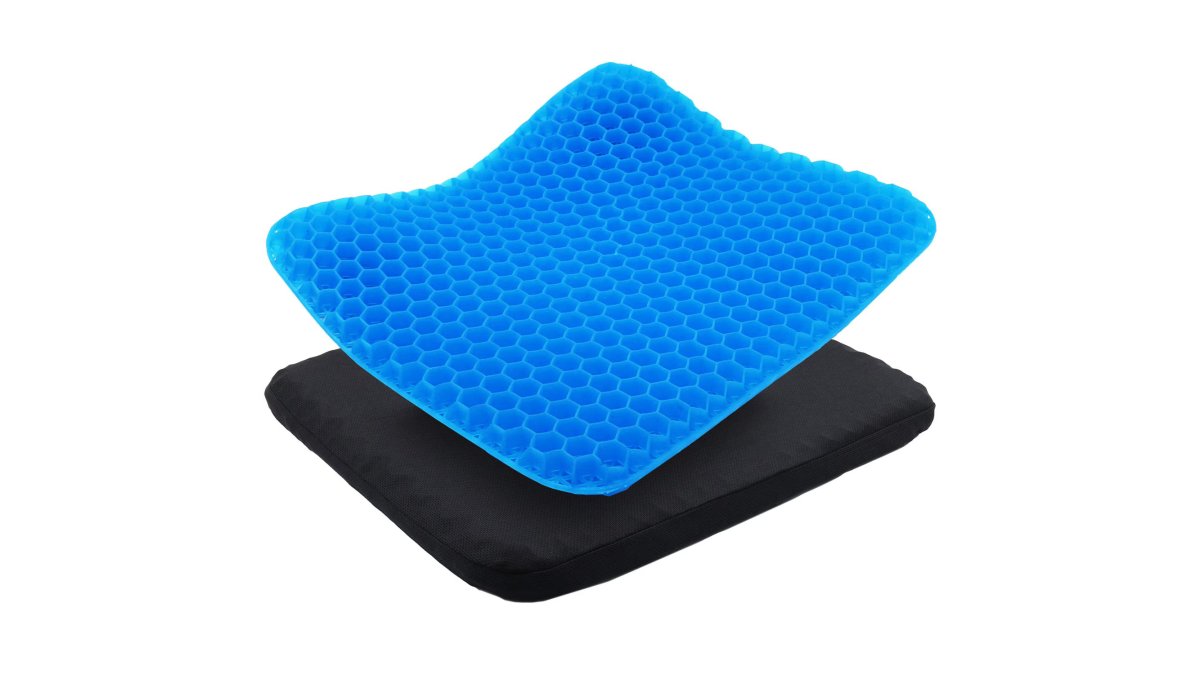
At 1.3 inches thick, the DMI Gel Seat Cushion adds comfort and support without changing seat height much, which helps keep feet flat and hips level. Measure the seat first to confirm the 17 x 15 inch footprint fits.
View the CushionIf you are buying for a wheelchair, measure the seat pan, not the frame. Seat width and depth are what determine fit, and a cushion that overhangs or leaves gaps will not stay in place.
Tailbone, Coccyx, and Sciatica Support
A tailbone cutout is the key feature for coccyx discomfort.
For sciatica and lower-back discomfort, the picture is different. A cushion can reduce the pressure and postural strain that aggravate symptoms, but it does not treat the underlying nerve issue.
If back or nerve pain is the main complaint, a cushion may help you sit more comfortably, but it is not a substitute for a proper evaluation.
How to Choose a Seat Cushion for Your Chair and Body
Choosing well comes down to measurement and matching. Get the fit right first, then pick the material and features that address your main complaint. A poorly fitting cushion will slide, bunch, or change your posture in ways that cancel out any pressure relief.
Use this checklist before you buy:
- Measure seat width and depth with a tape measure
- Note the user's weight and confirm the cushion's capacity
- Decide the main goal: cooling, tailbone relief, or general comfort
Fit, Posture, and Chair Compatibility
A cushion only works if it stays in place and keeps you positioned well. One that slides forward or bunches under the thighs does more harm than good.
Match the cushion footprint to the seat. Too wide and it curls at the edges; too narrow and the hips go unsupported. For a desk chair, keep the added height modest so your feet rest flat and your elbows stay comfortable.
Three fit rules that matter more than any product feature:
- Seat depthLeave about two to three inches between the back of your knees and the front edge of the cushion. Less than that presses on the nerves behind the knee; more leaves the thighs unsupported.
- Seat heightAfter adding the cushion, your feet should still rest flat on the floor or on a footrest. If your knees sit higher than your hips, the cushion is too thick for that chair.
- StabilityThe cushion should not shift when you push down and slide forward, the way you would during a transfer. A non-slip base or a strap helps.
A Practical Trial and Decision Framework
A cushion is worth it if it improves how you sit through a normal day, not just how it feels in the first five minutes. Use this short test:
-
Day 1: Sit for your usual longest stretch
Note where you feel pressure and whether you feel hot or damp.
-
Day 2: Check your posture
Are your feet flat, hips level, and knees at or below hip height?
-
Day 3: Do a transfer or stand-and-sit test
Does the cushion stay put?
Durability, Cleaning, and Long-Term Performance
Gel and gel-foam cushions generally hold their shape well, but covers wear out first. Look for a removable, machine-washable cover, and check regularly for flattening or cracking.
Replace the cushion when it stops springing back. A bottomed-out cushion no longer redistributes pressure, even if it looks fine outside. A well-made gel cushion often keeps its shape for a year or more of daily use, while a cheap gel bladder can migrate or split within months.
If you are unsure which cushion fits your chair and body, browse the EnhDme seating collection to compare sizes and materials, or reach out to our team for guidance. We recommend the DMI Gel Seat Cushion 17x15x1.3 in for added comfort and support, the Drive DualEase Gel Cushion 16-20in for dual-firmness and pressure relief, the ROHO Mosaic Wheelchair Cushion for air cell technology and a heavy-duty cover, the McKesson Gel Seat Cushion with Molded Foam, 22 x 18 x 3 Inch for comfort and pressure relief, and the Skil-Care Coccyx Gel-Foam Wheelchair Cushions for tailbone relief.

Who Should Avoid a Gel Cushion or Seek Professional Advice First
A gel cushion is not right for everyone. Some people should talk to a clinician first, and a few should avoid gel entirely.
Seek professional advice first if the person:
- Has an existing pressure sore or open wound
- Has reduced sensation or cannot feel discomfort
- Has a history of pressure injuries
Avoid gel if the main issue is positioning rather than comfort. An air-cell or specialized positioning cushion chosen with a therapist is often the better fit. Gel is a comfort and pressure-redistribution tool, not a positioning device.
If you are unsure which category you fall into, that uncertainty itself is the signal to ask a professional.
Conclusion: Making the Decision for Yourself
The real challenge is that a cushion has to fit a specific person, a specific chair, and a specific daily routine, and no product page can tell you whether it will. That is why we built EnhDme around caregiver guidance rather than a bare catalog: our team has walked families through this decision, and we stock seating and positioning products from established manufacturers so you can compare real options in one place.
Frequently Asked Questions
Are gel seat cushions good for pressure sores?
A gel cushion for pressure sores can help by redistributing weight away from bony areas like the tailbone and sit bones, which may reduce pressure buildup during long sitting. However, no cushion replaces regular position changes or clinical care. If you or a loved one already has a pressure sore, talk with a doctor or occupational therapist before choosing a cushion, since the right support depends on the wound's location and stage.
How does a gel seat cushion compare with memory foam for pressure relief?
Memory foam softens with body heat and molds to your shape, which feels comfortable but can compress over time and trap heat. Gel, especially honeycomb or gel grid designs, stays cooler and resists bottoming out, so it often holds up better for prolonged sitting. Gel cushions usually weigh more. Your choice depends on how long you sit each day and whether cooling matters to you.
What is the best type of seat cushion for pressure relief?
There is no single best type. A gel seat cushion with a honeycomb or gel grid design works well for cooling and pressure distribution. A gel-foam combination adds firm support for wheelchair users. An air cell cushion offers deep immersion for those at higher risk of skin breakdown. Match the cushion to your chair, your body size, and how long you sit. Ask an occupational therapist if you are unsure.
Can a seat cushion replace regular position changes?
No. A gel seat cushion or any other cushion supports comfort and helps spread pressure, but it does not replace shifting your weight every 15 to 30 minutes or standing when you can. Cushions work best as part of a routine that includes movement, skin checks, and proper seating. If you cannot reposition on your own, a caregiver should help you change position regularly throughout the day.
How do I know if a gel cushion is worth the cost?
Start by measuring your chair seat and noting how long you sit each day. If you sit for hours and feel pressure or heat buildup, a gel seat cushion with a non-slip base and breathable cover is likely worth it. If you only sit briefly, a basic foam pad may be enough. Look for a cushion with a washable cover and a firm base so it does not flatten quickly.
Shop Pressure Relief & Positioning
Gel, gel-foam, and air-cell cushions in one place, so you can compare sizes and materials side by side.
Shop NowFamily Caregiver Resources
Guidance, tools, and support from EnhDme to help you care safely and take a real break.
Explore Resources
For more than 25 years, Valerie has seen home care from every side of the front door. She built and led a home care agency, cared for her own parents, and has long championed older adults and the families who love them. Today she brings that hard-won perspective to EnhDme, helping caregivers find the equipment and supplies that make home a safer, gentler place to give and receive care.
Sources
Agency for Healthcare Research and Quality. Preventing Pressure Ulcers in Hospitals: Are We Ready for This Change?
University Health Network, Toronto Rehab. Spinal Cord Essentials: Pressure Relief Techniques
Sprigle S, Sonenblum S. (2016). Pressure Injury Prevention: Seated But Not Still. Rehab Management.
Leave a comment