

Medical Equipment for Home Care Agencies: 2026 Guide
Table of Contents
- What Home Care Agencies Need to Know About Medical Equipment for Home Care Agencies
- Home Care Equipment Checklist: Essential Items for Every Client
- Best Practices for Medical Equipment Maintenance
- How to Choose Reliable Medical Equipment Suppliers
- Comparing Types of Medical Equipment for Home Care Agencies
- Home Environment Assessment Checklist for Agencies
- Conclusion
- Frequently Asked Questions
Last Updated: September 25, 2026
What Home Care Agencies Need to Know About Medical Equipment for Home Care Agencies
Medical equipment for home care agencies is the durable goods, mobility aids, and daily living supplies that let a caregiver deliver safe, dignified care inside a client's own home rather than a facility. Getting the right mix matters as more adults age in place.
Home Care Equipment Checklist: Essential Items for Every Client
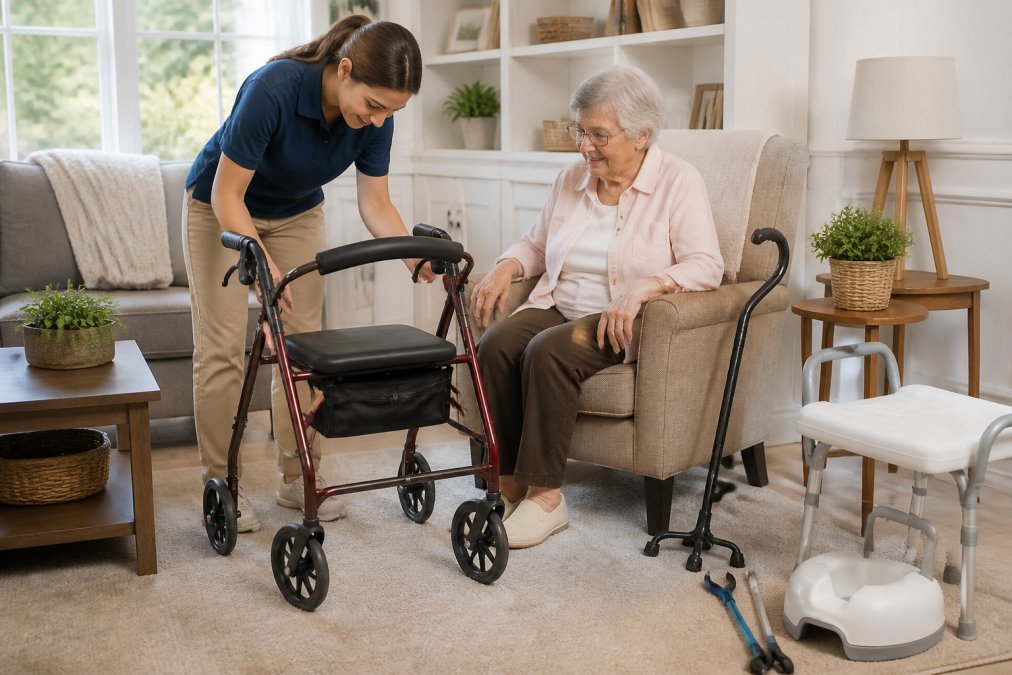
A home care equipment checklist is a standardized list of mobility, safety, and daily living items an agency verifies before and during every client engagement, so every client gets the same baseline of safety.
Mobility and Transfer Equipment
Start with how the client moves and gets in and out of bed, where most injuries happen.
- Rollators and walkers with four wheels, hand brakes, and a padded seat for rest stops
- Transfer aids such as standing transfer devices for clients who can bear some weight
- Full-body lifts for clients who cannot, including bariatric-rated options
- Adjustable homecare beds with electric positioning and side rails
- Orthopedic support items like cushions and positioning wedges
Daily Living and Safety Supplies
The unglamorous items prevent the most falls. Grab bars, a raised toilet seat, non-slip mats, and a shower chair do more for independence than almost anything else here. Add adaptive utensils, a bedside commode, and wound care basics like sterile gauze and antiseptic solution.

Best Practices for Medical Equipment Maintenance
Maintenance is where agencies quietly lose money and trust. Equipment that isn't cleaned, inspected, and repaired on schedule fails at the worst possible moment, a liability event, not just a replacement cost.
Cleaning and Sanitation Protocols
Between clients, every reusable item needs a documented cleaning step, and the step depends on the surface. One wipe-down with a single product across every device leaves residue on grips and damages the wrong plastic.
- Hard frames, handles, and rails: wipe with a facility-approved disinfectant, then let the surface air-dry for the full contact time on the label. Wiping dry early is the most common reason a clean doesn't actually disinfect.
- Casters and wheels: hair, lint, and carpet fiber wrap around the axle and cause the uneven roll that precedes a tip. Pull the wheel, clear the axle, and check that it spins freely before it goes back into service.
- Fabric components: slings, seat cushions, and positioning wedges follow the manufacturer's laundering instructions. Heat that's too high shrinks webbing and weakens stitching, and a weakened sling is a fall waiting to happen.
- Suction-mounted bathroom aids: remove, clean, and re-seat the suction cups. A cup that has lost its seal looks fine on the wall and releases under load.
- Shared devices between clients: treat these as a full decontamination, not a spot clean. Anything that touches skin, hair, or a wound gets the complete protocol every time.
Inspection and Repair Schedules
Set inspection intervals by risk, not convenience. High-use items like lifts and transfer aids need a check before every use and a deeper inspection monthly; lower-risk items like adaptive utensils can run quarterly. The pre-use check is a 30-second visual and functional pass; the deep inspection is scheduled and signed off.
| Equipment Type | Pre-Use Check | Deep Inspection | Typical Repair Signal |
|---|---|---|---|
| Full-body lifts | Sling straps, battery charge, emergency lowering | Monthly | Sluggish lift, frayed strap, battery that won't hold |
| Transfer aids | Casters, base width, hand grips | Monthly | Wobble, brake drag, cracked base |
| Homecare beds | Pendant, side rails, cord condition | Quarterly | Slow motor, stuck rail, drifting position |
| Rollators | Brakes, grips, wheel spin | Quarterly | Uneven roll, worn tips, brake that won't lock |
| Bathroom aids | Suction seal, bolts, mounting points | Quarterly | Loose mounting, discolored suction cup |
| Positioning wedges and cushions | Cover integrity, foam shape | Quarterly | Flattened foam, torn cover, compressed seam |
Parts, Spares, and the Cost of Downtime
A device with no available replacement part is a device you'll replace entirely. Before standardizing on any model, confirm that slings, casters, brake assemblies, batteries, and mounting hardware are orderable separately. Keep a small spares bin for the highest-use categories.
A Maintenance Calendar That Survives a Busy Week
Assign every device to a client and a caregiver, then tie the inspection to the visit rather than a separate trip. Monthly deep inspections land on the first visit of the month; quarterly inspections on the first visit of the quarter. Log results where you log cleaning, and pull anything that fails from service immediately.
How to Choose Reliable Medical Equipment Suppliers
The right supplier answers three questions before you ask: what's in stock, how fast it ships, and who fixes it if something breaks.
A practical vetting checklist:
Drive DeVilbiss Bariatric Homecare Bed →
- Can they confirm current stock on the exact model you need?
- Do they publish realistic delivery windows, not just "fast shipping"?
- Do they stock replacement parts for the items they sell?
- Is there a real person you can reach about a specific client's needs?
- Do they understand the difference between a home setting and a facility?
Comparing Types of Medical Equipment for Home Care Agencies
Different equipment categories solve different problems, and agencies that treat them as interchangeable end up overbuying in one area and underbuying in another.
| Category | Primary Purpose | Best For | Watch Out For |
|---|---|---|---|
| Mobility aids | Walking support, fall prevention | Clients with some weight-bearing ability | Wrong wheel count for the home's flooring |
| Transfer equipment | Moving a client safely | Clients with limited standing ability | Capacity rating mismatches |
| Homecare beds | Positioning, pressure relief | Bedbound or high-acuity clients | Power access and outlet placement |
| Bathroom safety | Fall prevention in wet areas | Nearly every client | Improper mounting, not the product |
| Daily living aids | Independence with eating, dressing | Clients with grip or range limits | Fit and sizing |
| Wound care supplies | Dressing changes | Clients with ongoing wound needs | Storage and expiration tracking |
Home Environment Assessment Checklist for Agencies
Before any equipment is delivered, someone needs to walk the home. This step determines whether the equipment you bought actually gets used. An assessment isn't a tour, it's a measurement pass that produces a specific equipment list. Bring a tape measure, a level, and a phone for photos.
What to Measure, and Why Each Number Matters
- Entryways: measure the clear door width and the step or threshold height. A standard interior door is about 32 inches clear, and a rollator or wheelchair needs that width plus a little margin to pass without scraping knuckles. A threshold over about half an inch is a trip point and usually calls for a threshold ramp.
- Hallways and turns: measure the narrowest point and the tightest turn. A rollator needs room to rotate; a lift needs even more. A hallway that fits a walker may not fit a four-wheel rollator with a padded seat, and it will not fit a full-body lift.
- Bathroom: note toilet height, whether grab bar mounting points land on studs or need blocking, and how the client gets in and out of the shower or tub. A raised toilet seat and a shower chair solve most of this; a walk-in shower with a bench solves more.
- Bedroom: measure bed height against the client's transfer ability. A bed that's too low forces a caregiver to lift from a bad angle; a bed that's too high makes it hard for the client to get a foot down. Note outlet locations and whether the cord for an electric bed reaches without crossing a walking path.
- Flooring: carpet versus hard floor changes which wheel type works. Thick carpet drags small wheels and makes a rollator feel heavy; hard floors let a wheeled device roll faster than the client expects.
- Lighting: walk the night path between bed and bathroom after dark. Motion-sensor night lights along that route prevent more falls than almost any single piece of equipment.
- Storage: decide where supplies live so they're reachable without a ladder or a stretch. If the caregiver can't reach it in one motion, it won't get used.
Turning Measurements Into an Equipment List
The assessment only pays off if it changes what you order. Use these decision rules:
- Narrow hallway plus thick carpet: choose a device with larger wheels and a narrower frame, or switch to a walker with a smaller footprint. A wide four-wheel rollator is the wrong tool here no matter how comfortable it looks.
- No studs where grab bars are needed: plan for blocking or a floor-to-ceiling support pole rather than a suction-mounted bar. Suction aids belong on smooth, non-porous surfaces only.
- Bed height mismatch: an adjustable homecare bed with electric positioning solves both the caregiver's lifting angle and the client's foot-down problem, but only if an outlet is within cord reach and out of the walking path.
- Client can bear some weight but tires quickly: a rollator with a padded seat gives a rest stop mid-route, which keeps the client walking instead of giving up and staying seated.
- Client cannot bear weight: a full-body lift, and the assessment needs to confirm ceiling height, floor space for the base, and a clear path from bed to bathroom.
A Repeatable Assessment Workflow
Run the same sequence on every first visit:
- Walk the entry-to-bedroom path and note every threshold, turn, and narrow point.
- Measure the bathroom and check mounting surfaces.
- Measure the bed and confirm outlet access.
- Walk the night path with the lights off.
- Photograph each area and note measurements on the photo.
- Match findings to the equipment list using the decision rules above.
- Re-assess after any change in condition, after a fall, or when a new device is introduced.
Document what you find and keep it with the client's file. A client with a narrow hallway and thick carpet needs different wheels than one with open hardwood, and the next caregiver should inherit your measurements, not start over. When you're ready to match findings to devices, the EnhDme store collection pages group equipment by category so you can compare features against the measurements in hand.
Conclusion
The hardest part of equipping a home care agency isn't finding products. It's building a repeatable system for stocking, maintaining, and matching equipment to real homes without letting a single client fall through the gap.
Frequently Asked Questions
What equipment is needed for home care?
Home care equipment typically includes mobility aids such as rollators, canes, and transfer lifts; bathroom safety items like grab bars and shower chairs; and daily living aids such as adaptive utensils and dressing tools. Agencies also provide wound care supplies and incontinence protection when prescribed. The right mix depends on each client's mobility, medical needs, and home layout, so a formal assessment before delivery helps avoid gaps.
What are some basic medical supplies I should have at home?
Basic supplies include a well-stocked first aid kit, antiseptic solution, sterile gauze, adhesive bandages, disposable gloves, and a thermometer. For clients with specific conditions, add wound dressings and incontinence pads. Keep a written inventory so you can reorder before supplies run low. Store items in a dry, accessible place and check expiration dates monthly.
How do home care agencies verify the quality of durable medical equipment?
Agencies verify quality by checking manufacturer certifications, requesting documentation of testing standards, and inspecting equipment upon delivery for defects or damage. They also review warranties and replacement part availability. Establishing a relationship with a registered healthcare provider that sources from verified manufacturers gives agencies confidence in long-term reliability. Regular maintenance logs and user feedback further confirm equipment performance in real home settings.
How can caregivers ensure equipment safety for seniors?
Caregivers should inspect equipment before each use, follow the manufacturer's weight limits, and check for worn parts such as frayed slings or loose brakes. Keep floors clear of cords and clutter, and make sure the senior knows how to use the equipment correctly. Schedule professional servicing for complex devices and document any repairs. A home environment assessment can identify hazards like uneven flooring or poor lighting that increase fall risk.
Leave a comment