

Preventing Caregiver Burnout With Home Equipment
Table of Contents
- How Home Equipment Reduces Caregiver Burnout
- Ergonomic Tools for Caregivers That Protect Your Body
- Transfer Aids for Home Care: Safer Moves, Less Strain
- Reducing Physical Strain in Caregiving With Monitoring Systems
- A Step-by-Step Home Safety Audit Checklist
- Equipment Training, Maintenance, and Storage Tips
- When to Bring in Respite Care and Professional Support
- Frequently Asked Questions
Last Updated: September 24, 2026
How Home Equipment Reduces Caregiver Burnout
Preventing caregiver burnout with home equipment starts with one honest fact: caregiving is physical work, and the body pays for it.
The Physical Toll of Daily Caregiving
Most people picture caregiving as emotional labor. It is also lifting, bending, and twisting.
The strain shows up in small ways first:
- A sore lower back after morning routines
- Wrists that ache after helping someone stand
- Shoulders that stay tight all week
- Feeling wiped out by 2 p.m.
Ergonomic Tools for Caregivers That Protect Your Body
Ergonomic tools for caregivers move the work from your back and wrists to the tool itself, keeping your body safe while you help someone else. Start with the items that match your daily routine.
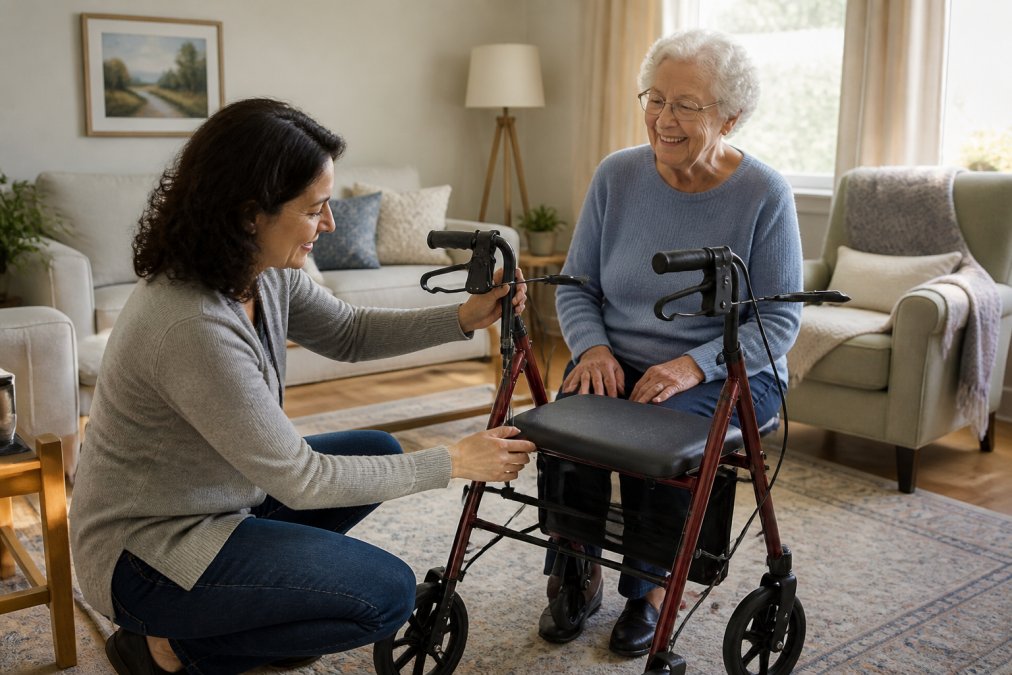
For standing and walking support:
- A lightweight 4-wheel rollator with a padded seat and hand brakes
- A height-adjustable cane that fits the user's wrist crease
- Non-slip socks and supportive footwear for the person you care for
For bathing and toileting:
- A shower chair with adjustable legs
- A raised toilet seat with grab handles
- A long-handled sponge to reduce bending
For the bedroom:
- A bed rail for steadying during turns
- A wedge pillow to raise the head without stacking pillows
- A cordless bed monitor that alerts you before a fall happens
Transfer Aids for Home Care: Safer Moves, Less Strain
Transfer aids for home care help move a person from bed to chair, chair to toilet, or floor to standing without lifting them by hand. They are the single biggest change you can make to protect a caregiver's back, and the right aid depends on how much help the person needs.

| Situation | Recommended Aid | Why It Helps |
|---|---|---|
| Can bear some weight | Transfer belt with handles | Gives you a grip point, keeps you close |
| Needs steadying to stand | Stand-assist handle or bed rail | Reduces pulling on your arms |
| Limited standing ability | Sit-to-stand lift | Moves weight to the device |
| Cannot bear weight | Full sling lift | Removes manual lifting entirely |
The Mechanics of a Safe Transfer
Most caregiver back injuries happen in the two seconds between "ready" and "standing." The tool helps, but your body position decides whether you stay safe.
A common pattern practitioners teach:
- Plan the path first. Clear the route before you touch the person. Move the walker, the chair, and any cords out of the way.
- Get the person to the edge of the seat. Scooting forward puts their feet flat and their weight over their own legs, not yours.
- Set your feet shoulder-width apart. One foot forward, one back. Never twist your spine while bearing weight.
- Bend at the hips and knees, not the waist. Keep the person close to your body. Reaching out multiplies the load on your back.
- Count out loud. "One, two, stand." A shared rhythm prevents the sudden jerk that strains muscles.
- Pivot with your feet, not your torso. Turn by stepping, never by twisting.
The Learning Curve Nobody Warns You About
- Practice on a calm day. Run through the transfer when no one is rushed, in pain, or anxious.
- Learn one device at a time. Master the transfer belt before adding a sit-to-stand lift.
- Watch the setup, not just the use. Where the brakes lock, where the sling hooks, where the battery lives.
- Ask for a hands-on walkthrough. A physical therapist can watch you do it once and correct your form.
- Write down the steps. Tape a short note to the wall near where the aid is stored.
What most guides miss is the floor. If a loved one has slid to the floor, do not try to lift them. Call for help or use a lift designed for it. Trying to lift from the floor is how caregivers get hurt most often.
Reducing Physical Strain in Caregiving With Monitoring Systems
Reducing physical strain in caregiving often means reducing the number of times you get up at night. A cordless bed monitor places a sensor pad under the person; when they start to rise, an alert sounds on a portable monitor you keep nearby, so you get there before the fall, not after.
The same idea applies to chairs, hallways, and doors.
- Bed and chair sensors alert you when someone tries to stand alone
- Motion sensors watch hallways and bathrooms at night
- Door bar systems alert you if someone with memory loss tries to leave
A Step-by-Step Home Safety Audit Checklist
A home safety audit is a walk-through of each room to spot fall risks and fix them before an accident happens. Set aside an hour and work room by room:
Smart Caregiver CordLess Bed Monitor →

- Clear all walkways of cords, rugs, and clutter
- Add grab bars in the shower and beside the toilet
- Place a non-slip mat inside and outside the tub
- Check that all stairways have working handrails on both sides
- Raise toilet height with a raised seat if standing is hard
- Move daily items to waist height in the kitchen
- Improve lighting in hallways and near the bed
- Test smoke and carbon monoxide alarms
- Secure loose carpet edges and threshold strips
- Keep a phone or alert button within reach of the bed and chair
How to Prioritize What to Fix First
A checklist can feel overwhelming. Rank each item by two questions: How likely is a fall here, and how much strain does this task put on my body?
- High priority: bathrooms, stairs, and the path from bed to toilet at night. These combine slippery surfaces, low light, and rushed movement.
- Medium priority: the chair the person rises from most often, and the kitchen items they reach for daily.
- Lower priority: rooms the person rarely enters, and cosmetic fixes.
The Clutter Problem Equipment Creates
Here is the angle most guides skip: the equipment that protects you can also become a trip hazard if it has no home. A walker parked in a hallway, a lift charger cord across the floor, a shower chair blocking the tub, each adds a new fall risk. Managing that clutter is part of the safety audit, not separate from it. A few habits that help:
- Give every aid a parking spot. Mark it with tape or a small mat so it goes back to the same place.
- Keep the most-used aid within arm's reach. If you have to dig it out of a closet, you will skip it on a tired day.
- Route cords along walls. Never across a walking path, even for a few minutes.
- Fold and store what you are not using. A spare walker in the way is worse than no walker.
- Group small items. Batteries, wipes, and manuals in one labeled bin saves hunting later.
Room-by-Room Equipment Priorities
Not every room needs the same investment. Start where falls are most likely.
Equipment Training, Maintenance, and Storage Tips
Training is the step most families skip, and it is where injuries happen. A device only helps if you know how to use it correctly.
Training basics:
- Ask a physical therapist to walk you through setup
- Practice each transfer with the person before you need it in a hurry
- Keep the user manual in a drawer you can find
Maintenance:
- Check brakes, wheels, and grips monthly
- Wipe sensor pads and check batteries every week
- Look for cracks in plastic parts after any drop
Storage:
- Keep aids within arm's reach of where they are used
- Fold and store walkers near the door, not in a closet
- Label backup batteries so you are never caught short
When to Bring in Respite Care and Professional Support
Respite care is short-term relief that gives a caregiver time away from their duties, from a few hours a week to a longer break, provided by a family member, a volunteer, or a paid professional. Equipment lowers the physical load; it does not lower the emotional one, so knowing when to ask for help matters just as much.
Signs it is time to bring in support:
- You feel dread before each caregiving shift
- You are sleeping poorly even when the night is quiet
- You have stopped seeing friends or family
- You feel irritable or numb most days
- You have missed your own medical appointments
Frequently Asked Questions
What is one way to prevent caregiver burnout?
One practical step is using home equipment that reduces the physical demands of caregiving. Ergonomic tools for caregivers, such as transfer aids and monitoring systems, cut down on lifting, bending, and nighttime checks. This lowers physical strain and emotional exhaustion. Pair equipment with scheduled micro-breaks, a support network, and respite care to protect your long-term well-being.
What are the physical signs of caregiver burnout?
Watch for chronic back pain, shoulder tension, fatigue that sleep does not fix, and frequent headaches. These often stem from repeated lifting, poor ergonomics, and physical strain during transfers. Emotional exhaustion and irritability often accompany the physical signs. If these persist, talk with a mental health professional and review your care plan for equipment that reduces strain.
How can home modifications reduce the daily strain on caregivers?
Simple changes like grab bars in the bathroom, raised toilet seats, and ramps reduce the number of times you need to lift or steady someone. A bed-exit monitor can alert you before a fall, so you are not sprinting to the bedroom. These modifications lower physical strain, improve patient safety, and free up energy for other activities of daily living.
What types of equipment are most effective for preventing caregiver injury?
Transfer aids such as slide sheets and transfer boards reduce lifting. Ergonomic tools like adjustable beds and lift chairs minimize bending. Monitoring systems, including bed and chair sensors, cut down on rushed trips. Together they address the most common injury sources: lifting, twisting, and nighttime falls. Check the EnhDme store collection for options that match your specific caregiving situation.
Leave a comment