

7 Portable Wheelchair Ramp Tips for Home Accessibility
One Step Between Home and the World
It's only one step. But when your loved one can't get over it, that step decides whether they make the doctor's appointment, get the mail, or sit on the porch in the sun. A well-chosen portable ramp can open the door again, without a contractor or a permit.
In 4.2 million American households, someone has trouble simply getting through the front door. Nearly half of US homes still have steps at every entrance, and about one in eight adults has serious difficulty walking or climbing stairs. If that step is the thing keeping your loved one inside, a portable ramp may be the simplest fix there is.
Last Updated: October 31, 2026
Portable wheelchair ramps restore independent access at a single step without a contractor, permit, or permanent change to the home. Measure the rise and available run first, then aim for roughly one inch of rise per twelve inches of ramp length. Check the setup every time you place it.
- Measure the rise at the highest point of the threshold, not the middle.
- A six-inch step needs about six feet of ramp at a one-to-twelve slope.
- Allow a top landing 36 to 48 inches deep so the chair sits fully before turning.
- Three-wheel scooters suit a solid single-piece ramp, not a track-style ramp.
- Run a setup check for rocking, engaged pins, edge rails, and a dry non-slip surface.
Why Portable Wheelchair Ramps Change Daily Life at Home
A single step at the front door can quietly end a person's ability to leave the house on their own. For broader guidance, see home safety modifications for aging parents.
The change is practical, not symbolic. A ramp restores the morning routine, the trip to the mailbox, the doctor's appointment that used to require two people and a lift.
Below, we'll show you how to measure, choose, and check a ramp so it fits your home and your mobility device the first time.
A single step at the front door can quietly end a person's ability to leave the house on their own.
How to Measure for a Wheelchair Ramp
Start with two numbers: the vertical rise and the available horizontal run. Everything else follows from those. Measuring twice and writing the numbers down helps avoid a common first-purchase mistake: buying a ramp that fits the step but not the space in front of it.
Measure the rise from the ground to the top of the step or threshold, in inches. Then measure how far out from the step you can place a ramp before hitting a wall, planter, or walkway edge.
A simple measurement worksheet:
- Rise at the main entrance: ____ inches
- Available run in front of the door: ____ inches
- Doorway width: ____ inches
A common mistake is measuring the rise at the threshold and forgetting the door swing. If the door opens outward, the ramp has to start far enough back to clear it.
Worked Examples: From Measurements to a Safe Configuration
Numbers on a worksheet only help if you know what they mean. Here are two worked examples that show how the measurements translate into a ramp choice.
Example 1: Front porch with a 6-inch step
- Rise: 6 inches
- Available run: 84 inches (7 feet)
- Doorway width: 34 inches
With a 6-inch rise and 7 feet of run, you have room for a gentle slope of roughly 1 inch of rise per 12 inches of run (about 6 feet of ramp), leaving a foot of margin. The 34-inch doorway clears a 26-inch wheelchair with 4 inches on each side, enough for hands on the push rims. The 36-inch landing at the top gives the rider room to stop, open the door, and turn before descending. This configuration suits a portable ramp that stays in place at one door.
Example 2: Garage entry with a 4-inch lip and a tight approach
- Rise: 4 inches
- Available run: 30 inches
- Doorway width: 32 inches
Here the run is short, so a full-length ramp won't fit. A threshold-style ramp that bridges the 4-inch lip is the practical choice, but the slight slope toward the drain means the ramp base needs a firm, level footing or it will shift.
Landing Space and Doorway Clearance
Landing space is the flat area at the top and bottom of the ramp where the rider stops, turns, and opens the door.
Doorway clearance matters as much as ramp length. Measure the narrowest point the chair must pass through, then add a few inches on each side for hands, push rims, and door frames. If the doorway is tight, a narrower ramp won't solve it: the chair still has to fit through the door.
Measure the rise at the highest point of the threshold, not the middle. A threshold that looks flat can hide a half-inch lip that catches a front caster.
Wheelchair Ramp Slope and Length: Getting the Numbers Right
Slope is the rise divided by the run, and it decides how hard the push will be.
As a working rule, many caregivers aim for roughly one inch of rise for every twelve inches of ramp length. That ratio has a solid basis: 1:12 is the steepest running slope the 2010 ADA Standards allow for ramps in public buildings. Those rules don't govern a private home, but they're a sensible guide for what most riders can manage.
This is where most first purchases go wrong. People buy for the step they see, not for the effort the person can actually manage.
Once you have your length, a longer portable option like the DECPAC Ramp - 5’5” Fiberglass Portable Ramp (MP55) gives you room to soften the incline without building anything permanent.
Choosing a Threshold Ramp for Wheelchair Access at Doorways
Fit matters more than length here. The ramp needs to sit flush against the threshold, with no gap where a front caster can catch.
A threshold ramp that shifts under load is worse than no ramp, because it teaches the rider to distrust the setup.
DECPAC MP44 Fiberglass Portable Ramp 4'4"

If you want a specific portable doorway ramp you can act on, the DECPAC MP44 Fiberglass Portable Ramp 4'4" is a 4-panel portable option.
View the MP44 RampPortable vs. Permanent Wheelchair Ramp: Which Fits Your Home
Portable ramps win on flexibility and cost. They move between doors, travel with the chair, and need no construction. Permanent ramps win on stability and daily convenience: they never need setting up, and they handle a higher rise more gracefully.
The honest trade-off is this. A portable ramp has to be placed and checked every time, and it depends on a flat, firm surface underneath. A permanent ramp is a project, often with permits and a contractor.
Pros and Cons at a Glance
| Factor | Portable Ramp | Permanent Ramp |
|---|---|---|
| Setup | Placed in minutes | Built once, stays put |
| Cost | Lower upfront | Higher, plus labor |
| Flexibility | Moves between doors | Fixed to one entrance |
| Storage | Folds or collapses | None needed |
| Best for | Renters, travel, short rises | High rises, daily long-term use |
| Watch out for | Shifting on uneven ground | Permits and construction time |
DMI Telescoping Aluminum Wheelchair Ramps, 3–5 ft Pair

If you're comparing a telescoping portable option against a permanent setup, the telescoping aluminum ramp pair adjusts from 3 to 5 feet and packs into a carry bag, which suits renters and families who split time between homes.
View the Telescoping RampsSafety, Setup, and Seasonal Checks for Portable Ramps
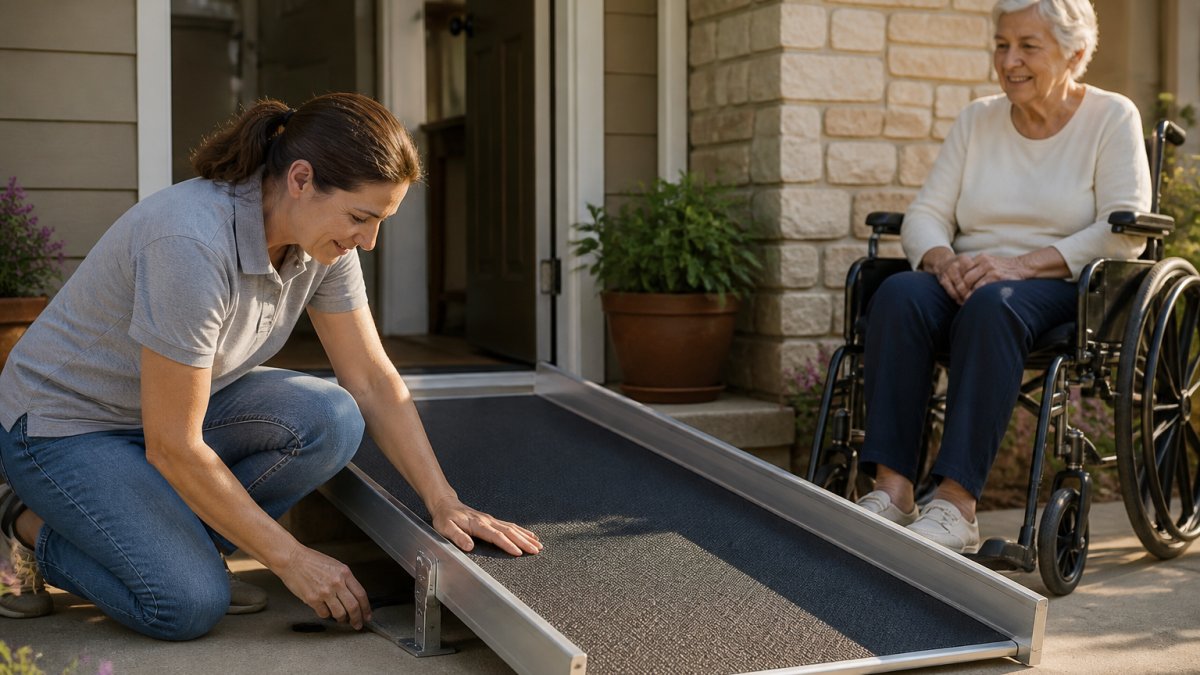
A ramp is only as safe as its last setup. Run this check every time you place it, and again after weather changes.
- Ramp sits flat, with no rocking when weight is applied
- Safety pins or locking mechanisms are fully engaged
- Edge protection rails are intact on both sides
Seasonal use matters more than most guides admit. Wet leaves, ice, and loose gravel all cut traction. An anti-slip mat at the base helps, and so does sweeping the approach before each use.
Matching a Ramp to a Wheelchair, Scooter, or Caregiver
Not every ramp suits every device. The four factors that decide fit are width, weight capacity, wheel configuration, and traction. Get those right and the ramp will feel stable; get them wrong and even a gentle slope becomes a daily struggle.
Among households headed by an older adult, one in three with a member who uses a wheelchair, crutch or other mobility aid reports difficulty getting around or using the home. In older households without a mobility-aid user, it's just 2%.
Manual Wheelchairs
Manual wheelchairs with standard tires work well on most track-style and solid ramps. Check two numbers before you buy: the chair's overall width (wheel to wheel) and its combined weight with the rider. A ramp should clear the chair with a few inches on each side so hands on the push rims don't scrape the edge rails. Track-style ramps, the kind with two parallel channels, suit manual chairs because the rear wheels ride in the channels and the front casters follow.
Power Wheelchairs
Power wheelchairs are heavier, so check that any ramp's listed weight capacity covers the chair and rider together. A wider, solid surface is generally easier to use with a heavier chair than a narrow track.
Scooters
Three-wheel scooters are the exception to the track-style guidance, because their single front wheel has no track to ride in. A solid single-piece ramp with a continuous surface is generally a better match for this type of scooter. Four-wheel scooters are more forgiving but still benefit from a solid surface and edge protection.
Walkers and Rollators
Walkers and rollators need a ramp too, but the considerations shift. The wheels are smaller, so gaps and lips that a wheelchair rolls over can catch a walker wheel. A ramp with a low entry lip and a non-slip surface is generally helpful, and edge protection matters because a walker can slide sideways off an open edge. Width is less of an issue, but the ramp still needs to be wide enough for the walker's wheelbase plus the user's stride.
Caregiver Assistance Changes the Math
If someone always pushes, a steeper ramp is manageable because the caregiver supplies the force. If the rider is alone, choose the gentlest slope the space allows and add a resting platform for longer runs. A caregiver also needs room to stand beside or behind the chair on the ramp, so a wider ramp and clear edge protection make the push safer for both people.
Match the ramp to the device first (width, weight capacity, wheel configuration, and traction), then match the slope to the person who will use it. A ramp that fits the chair but not the rider is still the wrong ramp.
Pick Your Ramp and Check the EnhDme Collection
The right ramp comes down to your rise, your space, and who is doing the pushing. Measure first, choose the gentlest slope you can fit, and check the setup every time.
Wheelchair/Scooter Ramps, Multiple Lengths Available

At EnhDme, we're caregivers first, and we stock ramps in multiple lengths so you can match the slope to your door instead of guessing. Browse the full range of wheelchair and scooter ramps to compare lengths and pick the one that fits your entrance.
View Ramp LengthsFrequently Asked Questions
How do I choose a portable wheelchair ramp for my home?
Start with three measurements: the vertical rise at the entrance, the available horizontal space, and the width of the wheelchair or scooter. Then match the ramp length to the rise so the incline stays gentle enough for the person pushing or riding. Check the weight capacity, edge protection, and non-slip surface before buying. If the entrance has more than one step or the rise is high, a longer folding or multi-panel ramp usually works better than a short threshold piece.
How steep should a wheelchair ramp be?
A gentler slope is safer and easier to use. A common rule of thumb is about 1 inch of rise for every 12 inches of ramp length, which works out to roughly a 5-degree incline. Steeper ramps are harder to push up and riskier to come down, especially in wet weather or with a caregiver assisting. When space is tight, a slightly steeper ramp may be the only option, so plan for a helper and take it slowly.
Are portable wheelchair ramps safe to use in wet weather?
They can be, with care. Look for textured or non-slip treads and add an anti-slip mat if the surface gets slick. Wipe down or sweep the ramp before use, and avoid icy or heavily wet conditions when possible. Make sure the ramp is fully seated on stable ground and secured with pins or straps. If the ground is soft or uneven, move the ramp to a firmer spot or wait for better conditions.
Can a portable wheelchair ramp be used on stairs?
Portable ramps can bridge a step or two, but they are not a safe substitute for a full staircase. For more than a low rise, you need a longer ramp with landings and proper support, or a permanent solution. Short telescoping or threshold ramps work well for single steps, curbs, and doorways. For a full flight of stairs, talk with a qualified professional about a permanent ramp or lift.
The hardest part isn't buying a ramp. It's trusting that it will hold. EnhDme was founded by experienced caregivers, and every product we carry is sourced through verified manufacturer relationships so families can set up home access with confidence. Start with our ramp collection, measure your rise, and get the entrance working again.

Shop Wheelchair & Scooter Ramps
Portable ramps in multiple lengths, so you can match the slope to your step instead of guessing.
Shop RampsFamily Caregiver Resources
Guidance and tools from EnhDme to help you make home safer and easier for the person you care for.
Explore Resources
For more than 25 years, Valerie has seen home care from every side of the front door. She built and led a home care agency, cared for her own parents, and has long championed older adults and the families who love them. Today she brings that hard-won perspective to EnhDme, helping caregivers find the equipment and supplies that make home a safer, gentler place to give and receive care.
Sources
Scheckler, S., Harvard Joint Center for Housing Studies (2022). Does the House Fit? Residents' Experiences of Home Accessibility (2019 American Housing Survey analysis).
Centers for Disease Control and Prevention (2024). Disability Impacts All of Us.
U.S. Department of Health and Human Services, Healthy People 2030. Increase the proportion of homes that have an entrance without steps (DH-04).
U.S. Access Board. Guide to the ADA Accessibility Standards, Chapter 4: Ramps and Curb Ramps.
Leave a comment