

Signs It's Time for a Walker: A Guide for Seniors
Reaching for the Wall: When a Walker Becomes the Kind Choice
It rarely happens all at once. Steps get shorter, a hand drifts to the counter, a favorite outing quietly drops off the calendar. Here's how to read those signs, choose the right walker, and talk about it in a way that protects your parent's pride as well as their safety.
Every year, one in four Americans 65 and older reports a fall. Long before that first fall, the body usually sends quieter signals: a shuffle, a reach for the wall, a reason to stay home. More than one in ten older adults already use a walker. Knowing the signs means your parent can choose that support on their own terms, rather than after an emergency room visit.
Last Updated: October 15, 2026
Physical Symptoms That Suggest You Need a Walker
Recognizing the physical signs that it's time for a walker helps you maintain independence and safety. Many seniors notice gradual changes, like a shuffle in their gait, stiffness in joints, or weakness, that signal the body needs extra support to move safely and confidently.
Catching these signs early means you can find the right mobility aid before a fall or injury forces the issue.
Gait Changes and Walking Difficulty
If your steps are shorter, slower, or less steady than before, pay attention. Gait instability often develops gradually: shuffling feet, reduced knee lift, or legs that feel heavier or less responsive.
Muscle weakness, nerve changes, or joint wear can all affect how you walk. The key is noticing when the change affects daily life, like taking longer to cross a room or feeling tired after short walks.
A walker provides stability, reduces pressure on joints, and gives your upper body support, changing how safely you can move.
Pain and Joint Weakness
Joint pain during walking is a clear indicator. When knees, hips, and ankles weaken or become painful, walking becomes harder and riskier.
Pain may be sharp or a dull ache that worsens with walking. Hip weakness affects balance and confident stepping; knee instability makes stairs and uneven surfaces feel dangerous.
Pain is your body's signal that it needs help. A walker reduces load on painful joints by spreading weight through your arms, letting you walk farther and do more.
Signs of Balance Issues in Seniors
Balance problems are among the key signs that it's time for walker support. Feeling unsteady when standing, or reaching for walls and furniture more often, signals your balance is changing.
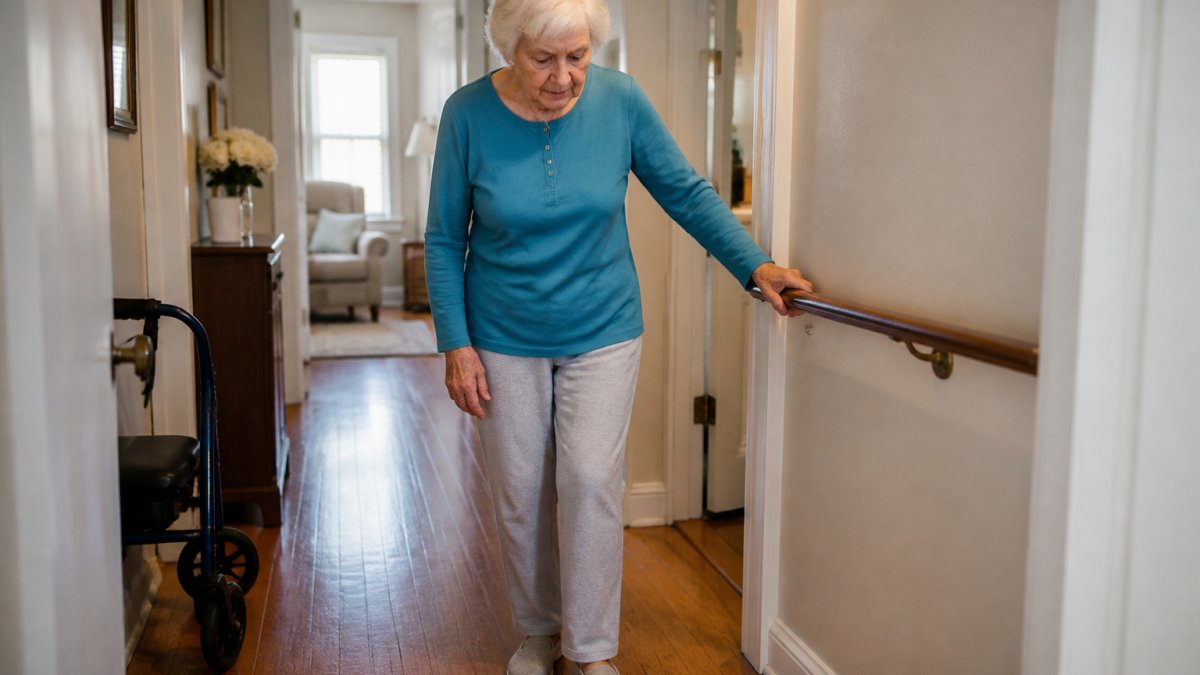
Balance issues may feel like vertigo, dizziness, or wobbly uncertainty. You might walk slower for stability or watch your feet more carefully, all signs a walker could help.
Balance problems stem from inner ear issues, medication side effects, vision changes, or neurological shifts. Tell your doctor about any new dizziness or unsteadiness, since some causes are treatable. Whatever the cause, you need extra stability while you move.
A walker gives you more points of contact with the floor than two feet alone, restoring confidence and helping reduce the risk of a fall. Feeling steady means you move more, which keeps strength up.
"A walker isn't the end of independence. For many people, it's what lets them keep going to the places and people they love."
Fall Risk and Safety Indicators
Falls are serious: broken bones, lost confidence, reduced independence. The good news: many falls can be avoided with the right support.
Watch for these fall risk signs:
- You've already had a fall or near-fall in the last year
- You feel afraid of falling, so you move less
- You hold onto furniture or walls to move around your home
- You've tripped or stumbled recently
- Your home has stairs, rugs, or uneven surfaces you navigate regularly
- You take medications that make you dizzy or drowsy
- You live alone and have no one nearby if you need help
If several of these apply to you, a walker isn't just helpful. It's an important layer of protection, like having a steady third hand on every trip across the room.
Dim lighting, clutter, and slippery surfaces increase fall risk. Even in a safe home, if balance or strength is declining, a walker can be one of your most important supports.
How to Choose the Right Walker for Seniors
Not all walkers are the same. Choosing the right one depends on your specific needs, your strength, and how you plan to use it.
Standard Walkers vs. Rollators
A standard walker is a frame you lift and move forward with each step. It requires upper body strength but offers excellent stability, ideal if you have weak balance but decent arm strength.
A rollator has wheels and hand brakes; you roll it instead of lifting. Rollators are easier on arms and shoulders and often include a seat for rest. They work better for longer distances or limited arm strength.
The right choice depends on your strength and lifestyle. Both work; the right one is the one you'll actually use.
Weight, Adjustability, and Comfort Features
A heavy walker becomes a burden. Lightweight aluminum walkers are easier to manage than steel frames, especially if you'll carry or lift it regularly.
Adjustable height is essential. Your walker's handgrips should line up with the crease of your wrists when your arms hang naturally; improper height reduces support and increases fatigue.
Comfort features matter: padded hand grips reduce strain, and a seat lets you rest without searching for a chair. These make a walker something you'll use consistently.
At EnhDme, we carry options from simple standard walkers to premium rollators. Check out our walker collection to find a lightweight standard walker, a lightweight 4-wheel rollator with a padded seat, or an upright walker with posture support, whatever fits your needs.
DMI Lightweight Aluminum Folding Walker, Silver

A light aluminum frame that's easy to lift with each step, with adjustable height to match your wrist crease. A single release folds it flat for the car trunk or a closet when you don't need it.
View the DMI WalkerTips for Walker Safety at Home
Having a walker is one thing. Using it safely is another.
Keep these practices in mind:
- Wear proper footwear. Closed-back shoes with non-slip soles are safer than slippers or loose shoes that might catch on the walker.
- Check your walker regularly. Make sure wheels roll smoothly, brakes work, and there are no cracks or loose parts.
- Clear your walking paths. Remove rugs, cords, and clutter from hallways and rooms where you walk.
- Use good lighting. Dim areas are fall hazards. Bright, even lighting helps you see where you're stepping.
- Take your time. Rushing increases fall risk. Move at a pace that feels comfortable.
- Practice first. If you're new to a walker, practice in a safe space before relying on it for longer distances.
- Know your limits. Don't try to carry things in your hands while using a walker. Make multiple trips if needed.
Your home should work with your walker. Better lighting, removing obstacles, and securing rugs make a big difference.
How to Talk to Parents About Using a Walker
The conversation about using a walker is often harder than the physical decision. Many seniors feel it means accepting decline or losing independence. These feelings are real and deserve to be taken seriously.
For many seniors, a walker represents aging and vulnerability, a public announcement of limitation. Your parent might worry about how others perceive them or how they see themselves.
This is about identity. After decades of independence, needing help to walk can feel like losing control. Some seniors worry it signals the beginning of unstoppable losses.
Ask your parent what concerns them most: appearance, fear of dependence, worry about health, or uncertainty about need. Listen without interrupting. Often the emotional barrier is more powerful than the practical one.
Statements like "I'm not that bad off yet" reveal the real issue. It's not medical necessity, but whether accepting a walker feels like accepting a diminished identity.
A walker isn't a sign of decline; it helps guard against it. It can be the difference between staying active and becoming sedentary, between maintaining independence and losing it.
Use concrete examples: "With a walker, you can still visit your friends, go to your appointments, and do the activities you enjoy. Without it, you might stop going out because you're afraid of falling."
Compare it to other tools people use without shame: glasses help you see, hearing aids help you hear, a cane helps you walk. A walker is no different.
If your parent worries about how a walker looks, acknowledge that concern.
You might say: "I know you're worried about appearance. But I've seen plenty of people using walkers who look strong and capable. And honestly, people notice confidence more than they notice equipment."
Many seniors resist a walker because they imagine using it everywhere, all the time. That feels like a big identity shift.
So start with one setting. Suggest the walker just for longer outings, like the grocery store or a doctor's visit, or just for the night-time walk to the bathroom. Small, specific uses feel like a choice rather than a sentence.
Often, once your parent experiences how much easier and safer movement becomes, resistance fades. They realize they can walk farther, do more, and feel more confident. That's powerful.
Let your parent choose the walker. If they pick the color, style, or type, they're more likely to use it.
This conversation may not happen in one sitting. Your parent might need time to adjust to the idea. Keep the door open. Share stories of other people they know who use walkers.
Remind them that accepting help isn't weakness; it's wisdom. It's the choice to stay active, independent, and engaged in the life they've built, for as long as possible.
When to Seek Professional Assessment
Sometimes you need expert guidance to know if a walker is right for you. A physical therapist, occupational therapist, or physician can assess your specific situation using standardized clinical tests and make evidence-based recommendations.
Professionals use several objective measures to evaluate whether a walker is necessary:
-
The Timed Up and Go (TUG) Test
One of the most common. You sit in a chair, stand up, walk 10 feet, turn around, walk back, and sit down again, all while being timed. The CDC treats a time of 12 seconds or more as a sign of fall risk. Along with any signs of instability during the test, that helps the therapist decide whether a walker, and which kind, would help.
-
The Berg Balance Scale
Assesses your ability to maintain balance during 14 different activities, from standing unsupported to picking something up off the floor. A lower score suggests higher fall risk and a stronger case for walker use.
-
Gait analysis
A professional watches how you walk, noting your stride length, step width, walking speed, and any asymmetry or shuffling. They're looking for patterns that suggest weakness, neurological changes, or compensation strategies that increase injury risk.
-
Strength testing
Checks your leg, hip, arm, and grip strength using simple movements. Together with balance, these results help point to the type of walker that fits best: a standard walker needs enough arm strength to lift it, and a rollator needs enough grip to work the brakes.
-
Home environment assessment
A professional may visit your home to evaluate stairs, hallway width, lighting, flooring, and obstacles. They can identify specific environmental factors that make a walker necessary and recommend modifications that improve safety.
or more to stand up, walk 10 feet, turn, walk back, and sit down signals that an older adult is at risk of falling, according to the CDC's Timed Up & Go assessment. Ask your loved one's therapist to run it.
See a professional if:
- You're unsure whether a walker is necessary or if another device might work better
- You've had a fall or injury that's changed your mobility
- Your walking has changed significantly in a short time
- You have multiple health conditions affecting your movement (arthritis, Parkinson's, stroke recovery, neuropathy)
- You want to learn proper walker technique to avoid injury and get the most benefit
- You're experiencing balance problems but aren't sure of the cause
A professional assessment removes guesswork. Instead of wondering whether you need a walker, you'll have concrete data about your balance, strength, and fall risk. This clarity helps you make a confident decision and choose the right device for your specific needs. An assessment can help reduce falls and injuries and extend your independence, making it one of the most valuable decisions you can make for your long-term safety.
Frequently Asked Questions
What are the most common physical signs that a senior needs a walker?
Common signs include difficulty rising from chairs, unsteady gait, shuffling feet, balance problems when turning, hip or knee pain during walking, and needing to hold walls or furniture for support. Fatigue during daily activities and a fear of falling are also important indicators. If you notice these changes, a physical therapist can assess whether a walker would help maintain independence and safety.
How can I tell if a loved one is becoming unsteady on their feet?
Watch for slowed walking speed, wider stance, shorter steps, hesitation before moving, or grabbing nearby objects for balance. They may also avoid walking alone, become anxious about stairs or uneven surfaces, or report dizziness. These signs suggest balance changes that a walker or professional assessment could address. Trust your instinct if something feels different about how they move.
What should I look for when choosing a walker for a senior?
Consider weight capacity, adjustable height to fit their frame, grip comfort, and whether wheels or a seat would help their specific needs. A lightweight aluminum walker is easier to lift for those with less arm strength, while a rollator with wheels suits people who need to rest frequently or can't lift a frame with each step. Visit the EnhDme store to explore options with different features and find what matches their lifestyle and home environment.
How can a walker help prevent falls at home?
A walker provides stability and support during movement, reducing the risk of losing balance on uneven floors or when turning. It spreads weight through the arms and gives your hands something steady to hold. Combined with removing tripping hazards, adequate lighting, and grab bars in bathrooms, a walker is a key part of a fall-prevention plan that helps seniors move with confidence and independence. Walkers should not be used on stairs unless a therapist has shown you how.
Shop Kevin and Val's Top Picks
Walkers, rollators, and home safety equipment, hand-picked by our caregiver team.
Shop NowFamily Caregiver Resources
Guidance, tools, and support from EnhDme to help you care safely and take a real break.
Explore Resources
For more than 25 years, Valerie has seen home care from every side of the front door. She built and led a home care agency, cared for her own parents, and has long championed older adults and the families who love them. Today she brings that hard-won perspective to EnhDme, helping caregivers find the equipment and supplies that make home a safer, gentler place to give and receive care.
Sources
Centers for Disease Control and Prevention. Older Adult Falls Data.
Gell NM, Wallace RB, LaCroix AZ, Mroz TM, Patel KV (2015). Mobility Device Use in Older Adults and Incidence of Falls and Worry About Falling: Findings from the 2011–2012 National Health and Aging Trends Study. Journal of the American Geriatrics Society.
Centers for Disease Control and Prevention (2009). Falls Involving Walkers and Canes Send Older Adults to Emergency Departments (reporting Stevens et al., Journal of the American Geriatrics Society).
Centers for Disease Control and Prevention, STEADI. Assessment: The Timed Up & Go (TUG) Test.
Leave a comment