

This one's for the guys - a tribute to male caregivers

Welcome back. Last week we talked about breathing easier at home. This week we’re talking about someone who rarely gets talked about at all: the man doing the caregiving.
Picture a “caregiver” and most people picture a woman. But roughly 2 in 5 family caregivers in this country are men — husbands, sons, brothers, and friends quietly showing up every day. They’re less likely to call themselves caregivers, less likely to ask for help, and far more likely to carry the load in silence.
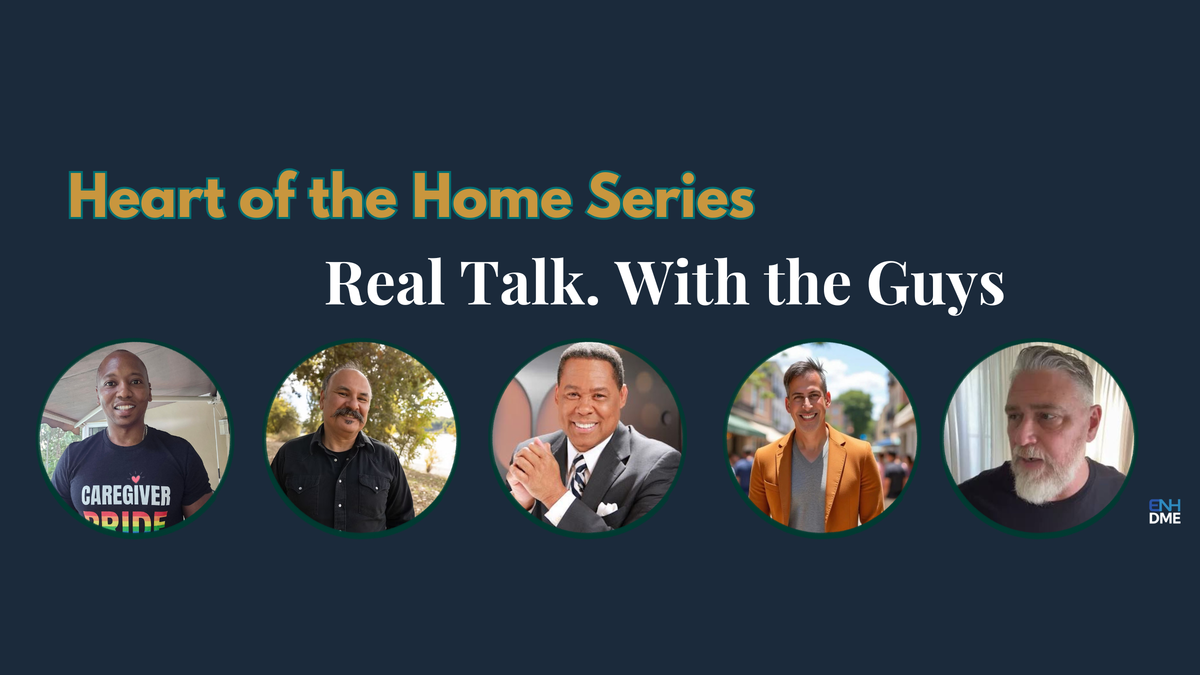
So this issue is a salute to the strong, quiet type — with a few facts, a few tools, and hard-won advice from five men who’ve lived it.
Know a man carrying this load — a brother, a neighbor, your dad? Send him this article. It might be the first time anyone’s called what he does by its name.
Twenty million — and yet male caregivers rarely see themselves in the caregiving articles, the support groups, or the ads. Many never use the word “caregiver” at all. They’re “just helping Mom out” or “just doing what a husband does.” The trouble is, a man who doesn’t claim the title usually doesn’t claim the help that comes with it, either.
And the load is real. In a landmark study of older spousal caregivers, those who reported caregiving strain carried a 63% higher risk of death than non-caregiving peers (Schulz & Beach, JAMA, 1999). Add to that the fact that the average American man already lives about 4.9 fewer years than a woman (76.5 vs. 81.4, per CDC/NCHS), and carrying it all in silence stops looking noble — and starts looking dangerous.
The good news: none of this is fixed by working harder. It’s fixed by working smarter — and every item below is something the men in this week’s featured story wish they’d done sooner.
If last week’s issue on breathing hit home, this one’s worth a minute. We’re proud to announce that EnhDme now carries CAIRE — a manufacturer that has spent more than 50 years doing exactly one thing: oxygen. Home, hospice, hospitals, even the military. When a company has that kind of single-minded focus, it shows in the equipment.
Two portable concentrators lead the lineup, built for two different lives:
The simplest way to choose: if the prescription calls for continuous flow — or oxygen overnight — the Eclipse 5 is the safer fit. For a pulse-dose user who wants the lightest possible carry, the FreeStyle Comfort is hard to beat. (Both are prescription items; orders hold until we verify the Rx, and our team walks you through it.)
Why does this fit a men’s issue? Because the whole CAIRE story — told in the blog below — starts with a veteran who rode his Harley across America with a SeQual on board. The right tool doesn’t shrink a life. It gives it back.
That line comes from one of the men in this week’s story, caring for his 92-year-old mother — and it belongs on a workshop wall. Carrying everything yourself isn’t strength; it’s a fast track to burnout, and burnout makes you a worse caregiver for the person counting on you.
So this week, borrow the smallest tool in their kit: the micro-break. Five minutes on the porch. A slow walk to the mailbox. One quiet cup of coffee before you walk back in. Small resets add up — and they’re how you stay in the fight for the long haul. Please take care of yourself.

Next issue we’re tackling end-of-life planning — advance directives, healthcare power of attorney, and how to actually start the conversation — in the same plain language we’d want someone to use with us. Not morbid, not legal jargon: just the small, doable steps that spare your family confusion later and make sure your loved one’s wishes are honored. It’s the kindest paperwork you’ll ever do.
Got a topic you wish someone would just explain clearly? Join the newsletter at www.EnhDme.com and hit reply to any issue — the best topics come straight from the people reading them.
Take care of yourself this week. You’re doing more than enough.
— The Heart of the Home team
Enter by signing up for our mailing list at www.EnhDme.com and staying subscribed until the contest ends. Winners are drawn from active subscribers on December 25, 2026.
• You must sign up for our newsletter to qualify
• One entry per person
• Must be 18 years of age or older
• Must reside in the continental US (no shipping to Alaska or Hawaii)
This content is for educational purposes only and is not a substitute for professional medical advice. Always seek the advice of a physician or qualified health provider regarding any medical condition or treatment.
Copyright © 2026 EnhDme. All rights reserved.
808 N 20th Ave N, Columbus, MS 39701
Sign up for the Heart of the Home newsletter at www.EnhDme.com
Leave a comment