

10 Balance Exercises for Seniors to Do at Home
Steady, One Small Step at a Time
Losing your balance rarely happens all at once. It slips a little at a time, until a quick turn in the kitchen feels risky. The good news is that balance can be practiced, right at home, with a counter, a sturdy chair and a few minutes a day.
Every year, more than 14 million Americans age 65 and older report a fall. That is about one in four. Many of those falls happen at home, during ordinary moments like turning, reaching or standing up. Research points to a hopeful answer: across more than 100 studies, older adults who exercised had about a quarter fewer falls, and balance work was at the heart of the programs that helped most.
Last Updated: November 4, 2026
The best balance exercises for seniors at home are simple, controlled moves done a few minutes a day, such as standing weight shifts, supported single-leg stands, heel-to-toe walking, side stepping, chair-supported marching and sit-to-stand practice. Start with two hands on a counter or chair, and progress slowly one variable at a time.
- Clear loose rugs and cords, and keep a sturdy chair or counter nearby for support.
- Aim for about 10 to 15 minutes of practice, five days a week, with rest days as needed.
- Do standing weight shifts with 10 shifts, holding each for three seconds.
- Hold a supported single-leg stance for five seconds, lifting the foot just one inch.
- Stop any session if you feel dizziness, pain or shortness of breath, and ask a doctor first after a recent fall.
Why Balance Exercises Matter for Seniors Living at Home
Falls are one of the biggest risks for older adults who live at home.
fewer falls among older adults living in the community who did exercise programs, compared with those who didn't. Programs built around balance and functional exercises performed especially well.
A short daily routine can be easier to keep up than occasional long sessions. A few minutes each day adds up.
Balance exercises are also a good way to keep independence. When a senior feels steady, they are more likely to keep doing everyday tasks on their own, like cooking, gardening, and getting dressed.
Safety Checks Before You Start a Balance Routine
Before starting any new exercise, take a few minutes to check the space and the person's health. A practical fall-risk guide for caregivers walks through what to look for before a balance routine begins.
- Clear loose rugs, cords, and clutter from the area
- Make sure there is a sturdy chair or counter nearby for support
- Wear supportive shoes with a non-slip sole
It is also smart to talk with the senior about how they feel. Dizziness, pain, or shortness of breath means the session should stop. Always keep a phone close by in case help is needed.
Beginner Balance Exercises for Elderly Adults
Start slowly. The goal is controlled movement, not speed or hard effort. Hold onto a counter or chair the first few times, and let go only when it feels comfortable.
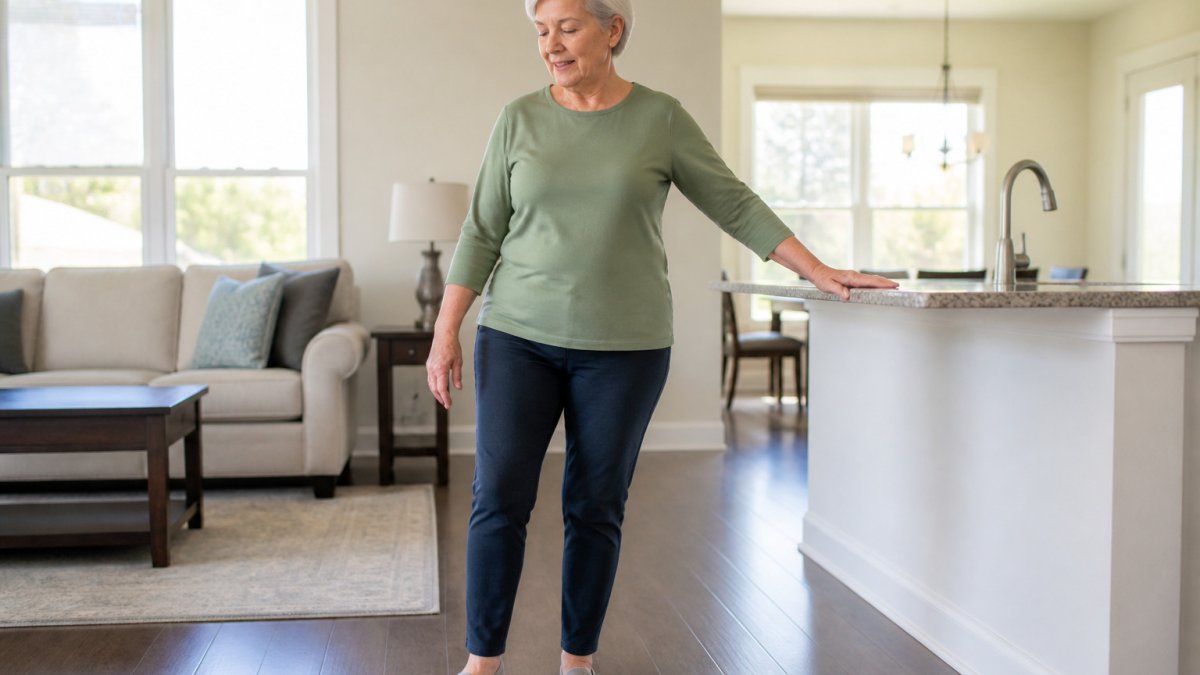
Introducing one new exercise at a time and practicing it for a week or two before adding the next can keep the routine from feeling overwhelming and make progress easier to notice.
Static Balance: Standing Weight Shifts and Single-Leg Stance
Standing weight shifts teach the body to move its center of gravity. Stand with feet hip-width apart and hands on a counter.
Once weight shifts feel easy, try a supported single-leg stance. Stand behind a sturdy chair and hold the back with both hands.
If the senior starts gripping the chair back hard or holding their breath, the exercise may be too advanced for that day.
Dynamic Balance: Heel-to-Toe Walking and Side Stepping
Heel-to-toe walking is a step up. Place the heel of one foot directly in front of the toes of the other foot, then take a step and repeat. Use a wall or counter for support.
Side stepping trains a different direction of movement and is easy to set up along a kitchen counter. Stand facing the counter with hands resting lightly on it.
Reactive Balance: Chair-Supported Marching and Sit-to-Stand Practice
Marching in place works the hips and builds stability. Stand behind a sturdy chair, hold the back, and lift one knee at a time as if marching. Keep the movement small and steady.
Sit-to-stand practice builds the leg strength needed for getting up from a bed, couch, or toilet. Sit near the front edge of a firm chair, cross the arms over the chest, and stand up slowly.
How to Progress Without Overdoing It
Progress one variable at a time: more repetitions, a longer hold, less hand support, or a softer surface. Changing all four at once is how people get hurt. A simple progression ladder for most of these exercises looks like this:
- Two hands on a counter10 repetitions
- One hand on a counter10 repetitions
- Fingertips on a counter10 repetitions
Stay at each rung for at least a week before moving up, and drop back a rung on days when the senior feels tired or unwell. You can browse a cushioned foam fall mat for safe balance practice to see the bi-fold and tri-fold options. Browse the fall prevention collection for options that fit your space.
Skil-Care Balance Stability Foam Beam - 68 x 4 in

When heel-to-toe walking and side steps start to feel easy on a flat floor, a low foam beam is a gentle next rung. It adds a softer surface to practice on, one of the four variables above, so change only that and keep the hand support the same.
- Size: 68 inches long and 4 inches wide, low to the floor.
- Storage: folds in half to tuck away between sessions.
- Setup: lay it on a flat, non-slippery floor beside a counter or wall, with clear space on both sides and you within arm's reach.
Here is a quick reference for the three balance skills and the starter exercises that train them.
| Skill | Exercise | Starting point |
|---|---|---|
| Static balance | Standing weight shifts | 10 shifts, hold 3 seconds each |
| Static balance | Supported single-leg stance | Lift foot 1 inch, hold 5 seconds |
| Dynamic balance | Heel-to-toe walking | About 10 steps, using a wall or counter |
| Dynamic balance | Side stepping | 5 steps each direction along a counter |
| Reactive balance | Chair-supported marching | 20 total marches, 2-second pauses |
| Reactive balance | Sit-to-stand practice | 5 to 8 repetitions from a firm chair |
Building a Daily Balance Routine for Seniors
A simple routine is easier to stick with than a long, complicated plan. Aim for about 10 to 15 minutes, five days a week, and add rest days as needed. The sample below is a starting point, not a prescription. Adjust the time in each block to match how the senior feels that day.
- Warm up with 2 minutes of slow marching
- Do standing weight shifts for 1 minute
- Practice heel-to-toe walking for 2 minutes
- Complete chair-supported marching for 2 minutes
Adapting the Routine to Different Ability Levels
A routine that works for one person can be too much or too little for another. Use these three versions as a guide and move between them as ability changes.
-
Just getting started
Two hands on a counter for every standing exercise, 5 repetitions per exercise, 8 to 10 minutes total, three days a week.
-
Building confidence
One hand or fingertips for support, 10 repetitions per exercise, 12 to 15 minutes total, four to five days a week.
-
Maintaining gains
No hand support while standing near a counter, 10 to 15 repetitions, add side stepping and a longer single-leg hold, 15 minutes total, five days a week.
A good rule of thumb is that the senior should finish a session feeling like they could do a little more, not exhausted. If a session leaves them shaky or sore the next day, the routine was too long or too hard.
Scheduling Around Energy and Medication Timing
Most people have more steady energy in the morning than late in the day. A common pattern is to schedule balance practice after breakfast and after any morning medication has had time to take effect, rather than right after a meal or right before bed. If the senior takes medication that can cause dizziness, ask their doctor or pharmacist about the best time of day to exercise.
Keeping a Simple Progress Log
Keep a simple log on the fridge so progress is easy to see. A notebook with four columns works well: date, exercise, repetitions or hold time, and how it felt. Small wins, like holding a position for a few extra seconds, help keep motivation high. Bring the log to medical appointments. It gives a doctor or physical therapist a clear picture of what the senior is actually doing week to week.
Maintaining Your Equipment
Safety equipment degrades with use, and a wobbly chair or a worn mat is worse than no equipment at all. Check the following on a regular schedule:
-
Chairs and counters used for support
Confirm the chair does not slide or rock, and that the counter edge is clear of loose items. Check the chair's leg tips and tighten any loose hardware every month.
-
Foam beams and mats
Look for cracks, compressed spots, or curling edges each week. Replace a mat or beam once it no longer lies flat or has lost its cushioning.
-
Rollators and walkers
Check the brakes, wheel tread, and hand grips monthly, and confirm the height is still set correctly. A rollator that has been adjusted for a taller family member is a fall risk for the senior using it.
-
Footwear
Replace shoes once the tread is worn smooth or the sole is compressed. Supportive shoes with a non-slip sole are part of the equipment, not an afterthought.
A suction-mounted grab bar or support handle that shifts even slightly when pulled should be checked carefully before it is used again.
When to Bring In a Professional
Some situations call for more than a home routine. Consider asking a doctor for a referral to a physical therapist if the senior has had a fall in the past year, feels unsteady even with two-handed support, has new numbness or weakness in the legs, or has stopped doing everyday tasks because of balance concerns. A therapist can assess gait, recommend an assistive device, and design a program matched to the specific problem.
Safety Equipment for Home Exercise Practice
The right equipment can make balance practice safer and more comfortable. EnhDme carries several options that suit home exercise routines.
- Balance foam beam: The Skil-Care Balance Stability Foam Beam is a long, low foam beam, 68 inches long and 4 inches wide, that adds a gentle challenge to heel-to-toe walking and side steps. Place it on a flat, non-slippery floor with clear space on both sides. It folds in half for easy storage. See the Skil-Care balance beam for details.
- Gait training bar: The Med-Mizer Gait Training Bar is an accessory for the Med-Riser that gives seniors a stable hold during standing rehab. Explore the Med-Mizer gait training bar if you are working with a therapist on supported standing.
- Rollator walker: A lightweight 4-wheel rollator with a padded seat can give support when walking around the house. See the Carex aluminum folding rollator walker to compare features.
If you are weighing other home safety aids, see whether a bariatric shower chair is worth it for home safety.


Look at the full fall prevention collection for more products that support safe home practice.
How Caregivers Can Support Balance Training Safely
Caregivers play a big role in keeping balance training safe. You do not need to be a therapist to help, but a few habits make a real difference.
- Stay within arm's reach during every exercise
- Let the senior lead the pace and rest when they need to
- Celebrate small improvements to build confidence
- Watch for signs of fatigue, like shaky legs or slower movement
Steady isn't something you either have or don't. It's something you practice, a few quiet minutes at a time, with someone close enough to reach.
Caregiver strain is real. Our guide on reducing your own strain with home equipment offers ideas for sharing the load while you support training. If you feel stretched thin, it can help to share the routine with another family member or ask a home health professional about extra support.
Fall Prevention Exercises for Seniors: Next Steps for Your Home Routine
Balance work is one part of a bigger fall prevention plan. Start with the exercises above, keep the home clear and well lit, and check in with a doctor or physical therapist about any concerns. Over time, a steady routine can help your loved one feel more secure and more independent at home. Explore the EnhDme store to find safety equipment that fits your space and your needs.
Frequently Asked Questions
What are the best balance exercises for seniors to do at home?
Good starting exercises include standing weight shifts, heel-to-toe walking along a wall, and chair-supported marching. Each one can be done beside a sturdy counter or chair so the person has something to hold. Start with a few repetitions and build up slowly as balance improves. A physical therapist or doctor can recommend a routine that fits the individual's health needs and fall risk.
How often should seniors practice balance exercises?
Many programs suggest short sessions several days a week, and daily practice works well for building a habit. Ten to fifteen minutes is often enough for a beginner. Rest between sessions and stop if dizziness, pain, or unusual fatigue appears. Consistency tends to matter more than long, tiring workouts, so a short routine done regularly is a practical goal.
Can balance exercises help prevent falls in the home?
Balance training can improve stability, coordination, and confidence while walking and turning, which are common situations where falls happen. It works best alongside other steps such as clearing walkways, adding good lighting, and using grab bars where needed. Exercise cannot remove every risk, so it is most helpful as one part of a broader home safety plan.
What safety precautions should be taken before starting a balance routine?
Check with a doctor before beginning, especially after a recent fall, surgery, or diagnosis that affects balance. Choose a flat, non-slip floor with clear space around the exercise area. Keep a sturdy chair or countertop within reach, wear supportive shoes, and have a caregiver or spotter nearby during early sessions.
Shop Fall Prevention
Foam mats, balance beams, rollators and more to support safe practice at home.
Shop NowFamily Caregiver Resources
Guidance, tools, and support from EnhDme to help you care safely and take a real break.
Explore Resources
For more than 25 years, Valerie has seen home care from every side of the front door. She built and led a home care agency, cared for her own parents, and has long championed older adults and the families who love them. Today she brings that hard-won perspective to EnhDme, helping caregivers find the equipment and supplies that make home a safer, gentler place to give and receive care.
Sources
Centers for Disease Control and Prevention. Older Adult Falls Data.
National Safety Council. Injury Facts: Older Adult Falls.
Sherrington C, Fairhall NJ, Wallbank GK, et al. (2019). Exercise for preventing falls in older people living in the community. Cochrane Database of Systematic Reviews.
Sherrington C, et al. (2020). Exercise for preventing falls in older people living in the community: an abridged Cochrane systematic review. British Journal of Sports Medicine.
Leave a comment