

Best Home Hospital Beds: A Caregiver's 2026 Guide
The Bed at the Center of Everything
When your loved one starts spending most of the day in bed, that bed becomes where you eat, talk, change, turn and worry. The right frame, sized to the person, the room and the doorway, can make every one of those moments safer and easier on your back.
One in four adults over 65 falls each year, and many of those falls happen getting into or out of bed. Yet only about one family caregiver in ten has had any training in the daily care they give. A hospital bed sized to your loved one and your home won't do the caring for you, but it can take a lot of strain and risk out of every day.
Last Updated: October 22, 2026
Quick Comparison: Best Home Hospital Beds
Choosing the best home hospital beds starts with three numbers: the user's weight, the width of the narrowest doorway, and how much adjusting you want to do by hand. This guide from EnhDme covers full-electric and semi-electric frames, bariatric widths, mattress pairing, and daily-care accessories.
| Bed | Width & Capacity | Drive Type | Price | Best For |
|---|---|---|---|---|
| Drive Medical Competitor II Semi-Electric | 36 in, standard | Semi-electric | $759.00 | First bed, tight budgets |
| Drive Delta Ultra-Light 1000 | 36 in, 450 lb | Semi-electric | $789.00 | Lightweight setup, rentals |
| Dynarex Bari+Max Full Electric | 42 in, 600 lb | Full-electric | $1,190.00 | Bariatric entry point |
| Prime Care P503 Adjustable Care Bed | 36 in, 450 lb | Full-electric | $1,693.00 | Fall-risk, dementia care |
| Drive DeVilbiss 42" Bariatric | 42 in, 600 lb | Full-electric | $1,769.99 | One-person assembly |
| CostCare B148S Bariatric | 48 in, 800 lb | Full-electric | $2,791.00 | Intermediate bariatric |
| Bari+Max HD Full Electric | 48 in or 54 in | Full-electric | $2,799.00 | High-capacity home care |
| CostCare B154S Bariatric | 54 in, 1,000 lb | Full-electric | $3,416.00 | Maximum capacity |
Full-Electric Hospital Bed Features That Matter Most
The features worth paying for:

-
Hi-low functionality
The deck travels from roughly 13 to 26 inches. Low positions can make standing transfers safer; high positions bring the bed to a caregiver's waist.
-
Independent articulation
Separate motors for the backrest and kneebreak, typically up to about 70 and 40 degrees, reduce sliding down the mattress.
-
Hand pendant with lockout
A caregiver lockout helps prevent accidental movement during transfers.
-
Emergency backup
A 9V battery terminal or backup battery lowers the bed during a power outage.
-
Split-frame design
The frame separates into sections so it fits through doorways and up stairs.
Measure your narrowest doorway before ordering, not after. A 54-inch bariatric deck will not pass a standard interior door assembled, which is why split-frame models exist. Most delivery problems trace back to this one measurement.
On a semi-electric model, the head and foot move by motor but frame height adjusts manually at the leg pins. It costs less and stays locked at one height, which some families prefer.
Weight Capacity and Bariatric Home Hospital Beds
Bariatric home hospital beds start at 42 inches wide and 600 pounds of capacity, then step up through 48-inch and 54-inch decks rated to 750 and 1,000 pounds. Wider decks give room for turning, repositioning, and a properly sized pressure-redistribution mattress.
Widths to know:
- 36 inches: standard hospital width, up to about 450 pounds
- 42 inches: entry bariatric, 600 pounds
- 48 inches: intermediate bariatric, 750 to 800 pounds
- 54 inches: full bariatric, up to 1,000 pounds
Never put a 36-inch mattress on a 42-inch or wider deck. The perimeter gap it leaves is an entrapment hazard, and it also causes the mattress to slide during articulation.
Hospital Bed Mattress Types and Pressure Relief
Hospital bed mattress types fall into three groups: therapeutic foam, alternating pressure air, and hybrid foam-and-air systems. The right choice depends on time spent in bed and skin condition.
-
Therapeutic foam
Multi-layered foam with a firm base and softer top. Best for someone who is mobile and sits up daily.
-
Alternating pressure air
Cells inflate and deflate on a cycle to shift pressure points. Suited to anyone spending most of the day in bed.
-
Hybrid
Foam core with an air overlay. A middle option when full air therapy feels like more than you need.
Caregiver Tips for Home Patient Safety
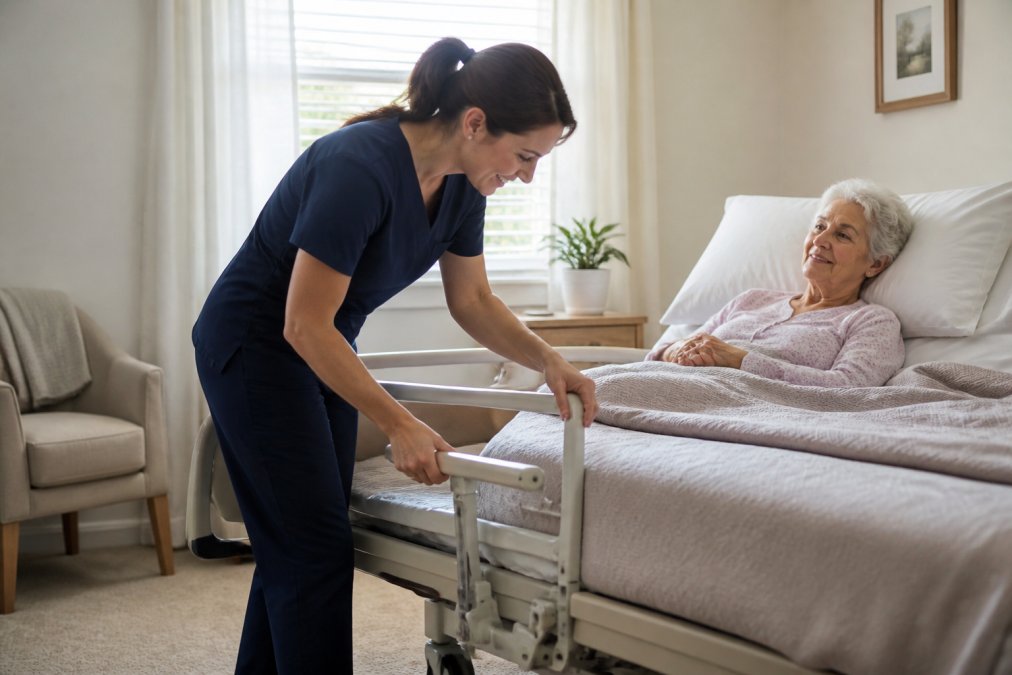
- Lock casters before every transfer
- Raise the bed to waist height for care, lower it for getting in and out
- Keep the call pendant within reach, not on the floor
- Clear a walking path on both sides of the bed
- Check rail fit monthly as mattresses settle
the all-industry rate: that's how often nursing assistants miss work with musculoskeletal injuries like back strain, mostly from lifting and moving patients. Family caregivers do the same lifting, usually without the lifts and training.
Back strain from repositioning someone at the wrong bed height is one of the most common caregiver injuries in home care. Hi-low adjustment can reduce physical strain for caregivers.
Hospital Bed Accessories for Comfort and Convenience
Accessories are where a hospital bed stops feeling like equipment and starts feeling like a bedroom. The right ones protect the caregiver's back as much as the user's skin; the wrong ones create new hazards.
Rails: match the type to the person, not the bed
Half rails cover the head section only, giving a handhold for sitting up and swinging legs to the floor. Full rails run the length of the deck and contain someone who rolls or cannot reliably judge the mattress edge. Because gaps around rails can trap a frail or confused person, ask your loved one's doctor or an occupational therapist which rail type fits their needs.
Trapeze bar: the single best caregiver-back accessory
A trapeze bar hangs over the head of the bed and lets the user pull themselves up with their own arms instead of being lifted, moving the effort from your lower back to their upper body. If the person can grip and pull, it most reduces how often you reposition them by hand.
The best accessories do two jobs at once: they keep your loved one safe, and they spare your back.
Overbed table: height-adjustable, with a lip
An overbed table rolls over the mattress for meals, medication, and reading. Two features matter: adjustable height for a low or raised deck, and a raised lip so a cup or pill organizer does not slide off when bumped.
Pressure-relief overlay: the affordable upgrade
If the mattress is still sound but the person is spending more hours in bed, a pressure-relief overlay adds redistribution without replacing the whole mattress. Alternating-pressure overlays cycle air through cells; static foam overlays spread load across a wider area. An overlay cannot fix a mattress that has already bottomed out. If the foam is compressed, replace the mattress.
The small items that prevent big problems
-
Bed rail organizer
Keeps the pendant, glasses, phone, and water within reach so nobody stretches across the mattress to grab them.
-
Waterproof mattress cover
Protects the mattress from spills and makes cleaning a wipe-down instead of a scrub. Choose one sized to the exact deck width.
-
Bedside commode or urinal
Reduces nighttime trips to the bathroom, when a tired, half-awake walk in the dark can lead to a fall.
-
Caster cups or a wheel lock check
Confirm every caster locks and stays locked.
What to skip
- A mattress or cover that doesn't match the deck width. Gaps at the edges are an entrapment hazard.
- An overlay on a mattress that has bottomed out. It won't restore support; replace the mattress instead.
- Rails and add-ons not made for your frame. Universal-fit pieces can leave gaps or loosen over time.
The best accessories do two jobs at once: they keep the person in the bed safe and comfortable, and they reduce how much lifting and reaching the caregiver has to do. When you are choosing between two items, pick the one that does both.
EnhDme carries rails, trapeze bars, overlays, and covers sized to match the frames in our bed collection, so everything fits together without guesswork. Browse the full bed collection at EnhDme to pair accessories with the right deck.
How to Choose the Right Home Hospital Bed
Choosing the right bed means working through a sequence, because each answer narrows the next. Most families get stuck on the same two questions: will it fit through the door, and what does it cost to keep running.
For larger users, the CostCare B148S Bariatric Full-Electric bed offers a 48-inch deck rated to 800 pounds.
Step 1: Add up the real load
Start with the user's weight, then add the mattress, side rails, and accessories. A pressure-redistribution air mattress can add meaningful weight on its own. Add 10 to 15 percent headroom so the frame is never working at its ceiling.
Step 2: Measure the narrowest path, not the room
The bed has to get to the bedroom before it can live there. Measure the narrowest doorway, hallway turn, and stairwell on the route, not the bedroom itself. A 54-inch bariatric deck will not pass a standard interior door assembled, which is why split-frame models exist: the frame separates into sections that fit through doorways and up stairs, then reassembles in the room.
Step 3: Plan the floor space around the bed
Measure the deck width plus clearance on both sides. You need room for a walker or wheelchair to turn and for a caregiver to stand beside the bed without twisting. A bed pushed against a wall forces every transfer from a single position, which is harder on your back. If the room is tight, a 36-inch deck with a pressure-relief overlay often serves better than a wider deck that leaves no working space.
Step 4: Decide who adjusts the bed most
If the user adjusts their own head, knee, and height, full-electric is worth it. If a caregiver handles height changes and the user only needs head and knee control, a semi-electric model saves money and keeps the bed locked at one height. The deciding question is who reaches for the control, and how often.
Step 5: Weigh fall risk
If fall risk is a concern, look for a low-profile frame that drops close to the floor. A lower deck can reduce the severity of a roll-out and can make standing transfers safer. Pair it with the right rail type and a clear path on both sides.
What it costs to keep running
Purchase price is the start, not the total. Plan for these recurring items:
-
Backup battery
Most frames use a 9V battery terminal or a backup battery to lower the bed during a power outage. Replace it on a schedule. A battery that has sat for a year may not hold enough charge when you need it.
-
Motors and hand pendant
These are the parts that move, so they are the parts that wear. Keep the pendant cord from being pinched and the control out of reach of children and pets.
-
Mattress replacement
Foam compresses over time, faster under a heavier user. Budget for replacement on a realistic cycle rather than waiting for a breakdown.
-
Cleaning and covers
A waterproof cover extends mattress life and makes routine cleaning a wipe-down. Replace covers when they crack or stop repelling.
Rent or buy?
Renting makes sense for a recovery of three months or less. Buying pays off past roughly six months of use, and you keep the bed for future needs. If you are unsure, buy the frame. A frame you own can be stored and brought back out, while rental payments stop building toward anything.
Putting it together
Before you order, walk the delivery path with a tape measure and write down the narrowest number. Then confirm the frame's assembled width and whether it ships split. That one measurement can help prevent common delivery problems.
EnhDme stocks these frames and the matching mattresses, rails, and overlays, so sizing stays consistent across the whole setup. You can browse the full bed collection at EnhDme.
Frequently Asked Questions
What is the difference between semi-electric and full-electric hospital beds?
A semi-electric home hospital bed has motorized head and foot adjustments, but the overall bed height is set manually with a crank or leg pins. A full-electric bed motorizes all three functions, including height, so a caregiver can raise or lower the entire frame with a hand pendant. Full-electric beds reduce physical strain on caregivers who adjust the bed frequently throughout the day.
How do I determine the right weight capacity for a home hospital bed?
Add the user's weight to the weight of the mattress and any accessories, then choose a bed rated above that total. Standard home hospital beds support around 450 pounds, while bariatric models range from 600 to 1,000 pounds. Always leave a safety margin rather than matching the limit exactly, and check that the frame width fits your bedroom doorway and turning space.
What features should I look for in a home hospital bed?
Prioritize full-electric height adjustment, a hand pendant with a lockout function, and a split-frame design that fits through residential doorways. Check the weight capacity, the height range for safe transfers, and whether the bed accepts side rails. Emergency battery backup matters if power outages are a concern in your area.
What accessories are essential for a home hospital bed setup?
A mattress sized to match the bed deck is the first essential, since mismatched sizes create gap hazards. Add side rails for transfer support, a pressure-redistributing overlay or mattress for anyone spending long hours in bed, and a trapeze bar if the user needs help repositioning. A bedside mat and a call button within reach round out a safer setup.
Matching a bed to a person, a room, and a caregiver is harder than it looks, and getting it wrong shows up as falls, back strain, and equipment that sits unused. EnhDme was founded by caregivers and carries frames from 36-inch semi-electric models up to 54-inch bariatric decks, along with the mattresses, rails, and overlays that pair with them. Browse the EnhDme bed collection to compare widths, capacities, and configurations side by side, and get a setup that fits your home the first time.
Shop Home Hospital Beds
Semi-electric, full-electric and bariatric frames, from 36-inch decks to 54-inch widths.
Shop NowFamily Caregiver Resources
Guidance, tools, and support from EnhDme to help you care with confidence and take a real break.
Explore Resources
For more than 25 years, Valerie has seen home care from every side of the front door. She built and led a home care agency, cared for her own parents, and has long championed older adults and the families who love them. Today she brings that hard-won perspective to EnhDme, helping caregivers find the equipment and supplies that make home a safer, gentler place to give and receive care.
Sources
Centers for Disease Control and Prevention. Older Adult Falls Data.
U.S. Food and Drug Administration. Hospital Beds.
AARP & National Alliance for Caregiving (2025). Caregiving in the US 2025.
Home Care Magazine (2025). Only 11% of Family Caregivers Receive Formal Training, Survey Says (reporting Caregiving in the US 2025).
Occupational Safety and Health Administration. Safe Patient Handling.
Leave a comment